
Lieferung heute & morgen

Qualitätsgarantie

Willkommens-Angebote freischalten: KOSTENLOSE Lieferung | Bis zu 80 % RABATT | Kostenlose 30-Tage-JoyPlus-Testphase
App herunterladen
Regularly monitoring your blood pressure is a key part of health management for many people. A reliable at-home blood pressure monitor allows you to track your readings independently, creating a solid data foundation for consultations with your doctor. However, with the vast array of models and features available, making the right choice can be complex.
This article serves as your guide. We'll introduce different types of devices, explain key features, and present a selection of top models to simplify your decision when buying a blood pressure monitor.
To find the right device, consider a few fundamental criteria tailored to your individual needs.
Choosing between an upper arm blood pressure monitor and a wrist blood pressure monitor is one of the first decisions you'll make.
Modern digital blood pressure monitors offer much more than just displaying systolic, diastolic, and pulse readings.
Look for certification as a medical device (e.g., in accordance with the European Medical Device Regulation, MDR). This certification ensures that the device meets defined standards for safety and measurement accuracy.
Here, we present three models that stand out for their distinct features and suitability for different user groups.
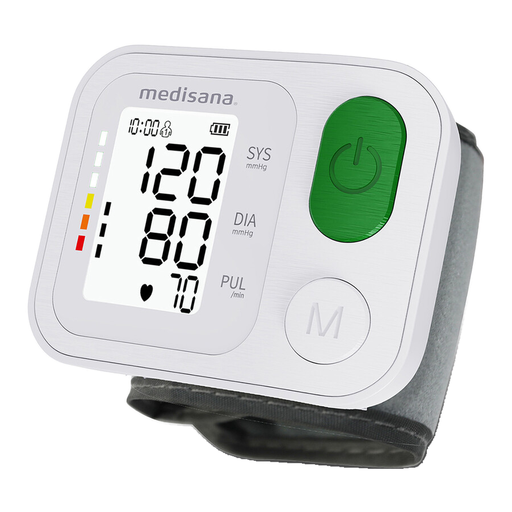
Why it stands out: The medisana BW 345 is a compact and user-friendly wrist blood pressure monitor. Its strengths lie in its straightforward operation and portability, supported by a clear display and useful extra features.
Advantages:
Who is it for? This model is an excellent choice for individuals looking for a straightforward and portable digital blood pressure monitor for regular checks at home or while travelling. Its simple operation and clear display also make it a great option for seniors.
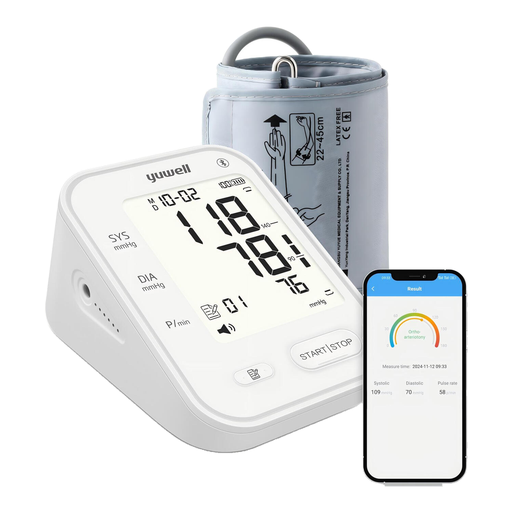
Why it stands out: The yuwell YE650AR combines upper arm measurement with modern connectivity. It is aimed at users who want to digitally manage and analyse their health data.
Advantages:
Who is it for? Ideal for tech-savvy, health-conscious individuals who want a blood pressure monitor with an app for detailed tracking of their readings. The large cuff and voice prompts also make it appealing to a broad spectrum of users.
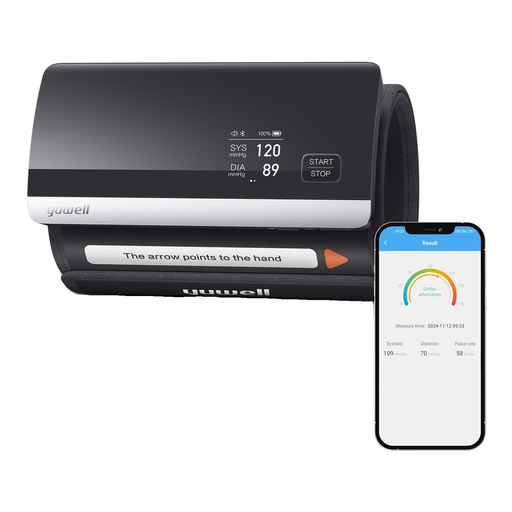
Why it stands out: This model is distinguished by its integrated all-in-one design and a special function for detecting atrial fibrillation. It offers advanced monitoring capabilities for users with specific health requirements.
Advantages:
Who is it for? This blood pressure monitor with atrial fibrillation detection is specially designed for individuals at an increased risk of heart arrhythmias or those who desire more comprehensive monitoring of their heart health. Its compact design and smart features also appeal to users who value convenience and modern technology.
If the models presented here don't perfectly match your needs, you can find a wider selection in our Health Monitors category. There, you can compare other devices with different feature sets and for various budgets.
Discover more models in the Battery Monitor category
For consistent results, you should follow a few rules: Always measure at the same time of day, ideally in the morning before breakfast and taking any medication. Sit down and rest quietly for five minutes before the measurement. Do not talk or move during the measurement. Place the cuff on your bare upper arm or wrist at heart level.
When used correctly, both types of devices can provide accurate results. Upper arm monitors are generally considered less prone to user error because ensuring placement at heart level is simpler. Wrist monitors require precise arm positioning to minimise the effects of gravity on blood flow. For regular home monitoring, upper arm devices are often recommended, while wrist monitors excel in portability.
Arrhythmia detection is a feature that can identify irregular heartbeats during a blood pressure measurement. The device analyses the pulse waves and displays a symbol if deviations from a normal rhythm are detected. This is not a diagnostic tool, but it can be an important indicator that should be discussed with a doctor. Some advanced devices also offer specific atrial fibrillation detection.