
Lieferung heute & morgen

Qualitätsgarantie

Willkommens-Angebote freischalten: KOSTENLOSE Lieferung | Bis zu 80 % RABATT | Kostenlose 30-Tage-JoyPlus-Testphase
App herunterladen
A blood pressure monitor for home use can make it easier to regularly record your blood pressure and pulse. However, to ensure your purchase remains practical in daily life, you shouldn't just focus on big promises like "precise", "smart" or "particularly comfortable". What really matters is the measurement method, the right cuff, and an operation that suits the person using it.
A cuff that is too tight or too loose can affect the measurement. With an upper arm blood pressure monitor, you should therefore measure the circumference of your upper arm before buying. Many models cover around 22 to 42 cm, while wrist models support significantly smaller circumferences.
A digital blood pressure monitor with arrhythmia detection, average value calculation or app connectivity can store extra information. However, these features cannot compensate for moving or talking during the measurement. Keeping your arm at heart level and taking a short rest period beforehand remain essential.
For older people and those with impaired vision, a blood pressure monitor with a large display is often more practical than a particularly compact model. Large digits, one-button operation and clearly recognisable symbols can simplify your daily routine. With app-enabled models, you should also check whether your smartphone is compatible and whether you want to transfer data on an ongoing basis.
An upper arm blood pressure monitor is fitted to the upper arm and is a good choice if you plan a regular measuring routine at home. Models like the Treesmile FC-BP100 or the Beurer BM 48 come with cuffs for an upper arm circumference of 22 to 42 cm, according to the product specifications.
A wrist blood pressure monitor is more compact and can be handy when you're on the go. However, you must hold your wrist exactly at heart level during the measurement. The medisana BW 345 is designed for a wrist circumference of 13.5 to 19.5 cm, according to the product specifications.
For a single user, a limited memory for readings is sufficient. In a household with several people, separate profiles are more useful. Depending on the model, you might get two memory banks with 90 or 120 readings each. A time stamp makes it easier to assign readings later.
If you want to document your readings over the long term, you can choose a blood pressure monitor with Bluetooth or a blood pressure monitor with an app. Before buying, check which apps and operating systems are supported. Some devices transfer readings to proprietary apps or to platforms like Apple Health, Samsung Health or Health Connect.
A blood pressure monitor with arrhythmia detection can alert you to irregular heartbeats during the measurement. Such alerts are not a diagnosis and should not be assessed in isolation. If you see repeated warnings or consistently unusual readings, you should seek medical advice.
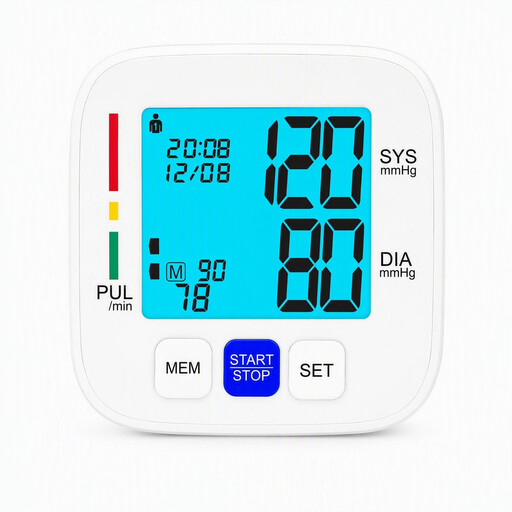
Why this product suits the profile: This automatic upper arm device focuses on the essential functions for daily home measurement and takes up relatively little space.
According to the product specifications, the cuff fits arms from 22 to 42 cm. This means you can check your arm circumference against it before buying.
Two memory banks with 90 readings each, average of three measurements and automatic switch-off.
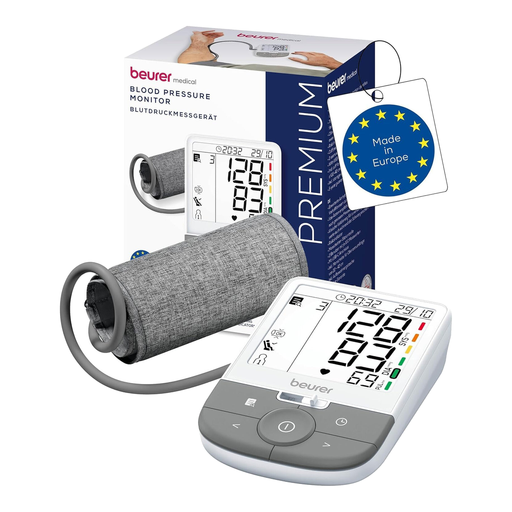
Why this product suits the profile: If you want to record your readings in an organised way, this device offers a large display, several monitoring functions and app synchronisation.
The cuff fit is checked according to the product specifications. This reduces the risk of overlooking an ill-fitting application.
Two memory banks with 100 slots each, 7-day average, advanced arrhythmia detection and synchronisation with health platforms.
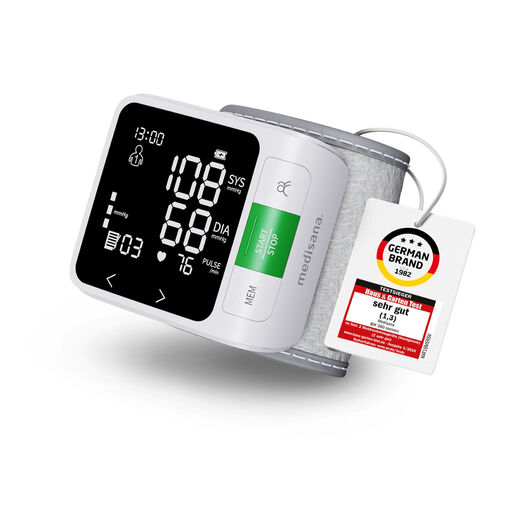
Why this product suits the profile: This wrist model is aimed at people who prefer a compact device for travel or regular mobile measurements.
The necessary positioning at heart level is explicitly taken into account in the application. This is especially important for wrist devices.
Bluetooth transfer to the VitaDock+ app, 199 memory slots for two users, average calculation and arrhythmia alert.
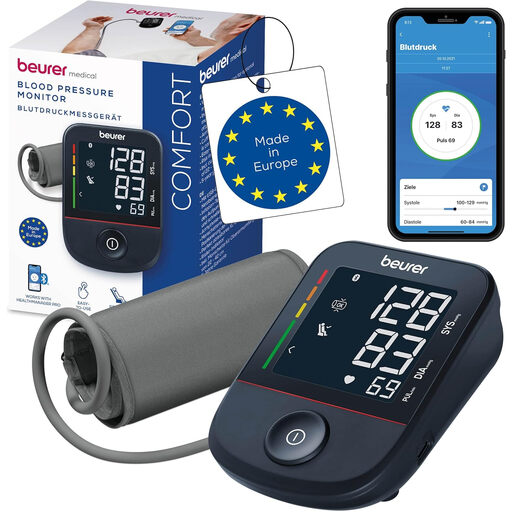
Why this product suits the profile: The one-button operation, large display and app connectivity make it suitable for households with different usage habits.
Cuff position and rest indicator support correct preparation. The cuff covers 22 to 42 cm, according to the product specifications.
Bluetooth transfer to beurer HealthManager Pro, Apple Health, Samsung Health and Health Connect, plus automatic arrhythmia detection.
We have put together a complete, regularly updated list of products that fully meet these strict selection criteria and the safety regulations in force in the EU.
A pulse oximeter is not a substitute for a blood pressure monitor. It typically measures oxygen saturation and pulse at the finger. The Treesmile GX5 displays both values on a rotatable screen and has an adjustable backlight, according to the product specifications. Nail polish, artificial nails or cold fingers can affect the measurement. The readings are for health information only and not a diagnosis.
Before measuring, sit quietly for a few minutes. Place the cuff on bare skin, keep your back as straight as possible and your feet flat on the floor. Do not talk or move during the measurement. With an upper arm device, rest your arm relaxed at heart level. For comparable trend readings, try to measure at roughly the same time each day.
The lifespan depends on battery care, the cuff, storage and handling. Keep the device dry, protected from knocks and stored according to the instruction manual. A damaged or hardened cuff can affect use and should not be reused. Before buying, check the availability of replacement cuffs and the battery type.
With battery-operated models, the main costs are for replacement batteries. Devices with a USB port or a rechargeable battery can be more flexible in daily use, but they also need a suitable power source. With a blood pressure monitor with an app, you should also check whether the app is free to use and what smartphone compatibility is required.