
Lieferung heute & morgen

Qualitätsgarantie

Willkommens-Angebote freischalten: KOSTENLOSE Lieferung | Bis zu 80 % RABATT | Kostenlose 30-Tage-JoyPlus-Testphase
App herunterladen
By a Joybuy Product Recommendation Officer, August 28, 2026
Daily screen time is on the rise for many people, whether for work, study, or leisure. This often brings concerns about eye strain. A tempered glass screen protector with a blue light filter promises not only to save the display from damage but also to protect the eyes. However, the market is confusing, and many products fail to deliver on their promises.
This guide will help you identify the crucial quality features and avoid common purchasing traps, enabling you to make an informed decision for an effective and durable screen protector.
Before investing in an eye-care screen protector, you should be aware of the common marketing traps that often lead to disappointment and unnecessary expense.
To separate the wheat from the chaff, you should focus on three verifiable technical features. These determine the actual protective performance and longevity of your screen protector.
Effective protection against HEV light is the core feature. Instead of blocking the entire blue spectrum, a good anti-blue light tempered glass should specifically reduce the wavelength range of approximately 415 to 455 nanometres. This is the range most commonly associated with digital eye strain. Look for product descriptions that mention targeted filtering of HEV light rather than broad and non-specific advertising claims. A minimal colour shift towards a warmer tone is normal and often an indicator that the filter is active.
The 9H hardness rating alone is not sufficient. The glass used is crucial. High-quality aluminosilicate glass is significantly more resistant to impacts and scratches than cheaper soda-lime glass. Another important feature is an oleophobic (oil-repellent) coating. It ensures that fingerprints and smudges are less likely to stick and are easier to remove, keeping the view of the display clear. A product declared as scratch-resistant should combine these properties.
A perfect fit is not a luxury but a necessity. A "2.5D" glass has slightly rounded edges but often does not cover the entire front of the smartphone. A "Full-Cover" or "3D" glass, on the other hand, is shaped to cover the entire front, including the curves. This offers more comprehensive protection and a better feel. Also, check if the manufacturer guarantees compatibility with common phone cases to avoid future problems. Some models also offer dust-proof grilles for the earpiece, further increasing the device's longevity.
Based on the criteria above, we have identified some products suitable for specific user profiles.
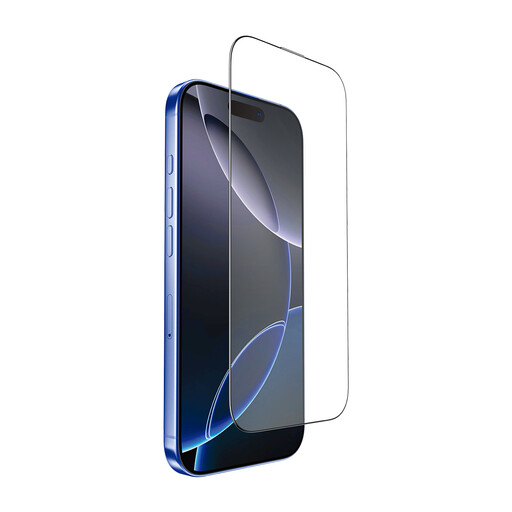
Why This Fits Their Persona: Ideal for users looking for reliable, straightforward protection for their new device. It combines screen protection and blue light filtering without unnecessary extras, focusing on core functions.
The 2.5D full-screen design ensures a good fit and edge coverage, while the blue light filter works without extreme colour distortion. The dust-proof mesh also addresses a common durability issue.
Combines a blue light filter and a dust-proof earpiece guard in one product. Offers a balanced solution for protection and eye comfort.
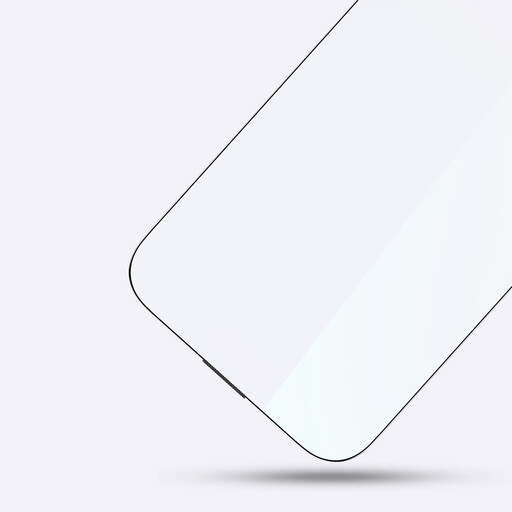
Why This Fits Their Persona: For users willing to invest in maximum durability. The detailed technical specifications on resilience and material quality appeal to users who value verifiable performance.
Instead of vague claims, the manufacturer provides concrete data: The 9H hardness rating is confirmed according to the ASTM D3363 standard, and its pressure resistance (up to 25 kg) and drop resistance (up to 1.5 m) are specified. This goes far beyond typical marketing buzzwords.
Uses TitanGlass for high resilience and features a DustShield system that, according to the manufacturer, blocks up to 98.2% of dust. The combination of a blue light filter and extreme robustness is the main advantage here.
Why This Fits Their Persona: Specifically designed for the largest smartphone models. Anyone who reads, works, or watches videos extensively on a large screen will particularly benefit from a reliable iPhone blue light screen protector that reduces eye strain during prolonged use.
Full-screen coverage is crucial for large displays to completely protect the sensitive edges. This model is explicitly designed for the Pro Max format, thus avoiding the typical fit issues of smaller, universal protectors.
Offers a precise fit for the largest iPhone model and combines the blue light filter with a dust-proof design. A practical solution for power users.
We have compiled a complete, real-time updated list of products that fully meet these strict selection criteria and our stringent quality standards.
A high-quality blue light filter screen protector is designed to filter only specific wavelengths of light, largely preserving colour accuracy. A slight, barely perceptible shift to a warmer tone is possible and indicates that the filter is working. Cheap products, however, can cause a strong and distracting yellow tint.
The filter function itself does not wear out. The lifespan of the screen protector depends entirely on physical impacts. It should be replaced as soon as it has cracks, deep scratches, or chipping at the edges, as this compromises both the protection for the display and the clarity of the view.
Most modern screen protectors come with a complete installation kit. This usually includes cleaning wipes, dust removal stickers, and often an alignment frame. If you follow the instructions carefully and work in a dust-free environment, a bubble-free application is generally straightforward.