
Lieferung heute & morgen

Qualitätsgarantie

Willkommens-Angebote freischalten: KOSTENLOSE Lieferung | Bis zu 80 % RABATT | Kostenlose 30-Tage-JoyPlus-Testphase
App herunterladen
A blood pressure monitor with Bluetooth can automatically transfer readings to an app, making it easier to keep track of them at home or on the go. But for many people, the wireless connection isn’t the only thing that matters. Cuff fit, ease of use, power supply and how you interpret the readings all have a significant impact on how useful the monitor is in practice.
If you’re buying a digital blood pressure monitor or a health tracker, it’s also important to distinguish between a cuff-based blood pressure reading and general smartwatch features. A watch may offer heart rate monitoring, sleep tracking or blood oxygen measurement, but it doesn’t automatically replace a medical blood pressure monitor.
Bluetooth describes how the monitor connects to your smartphone. It doesn’t tell you how to interpret the readings. Before you buy, check:
For example, the medisana BW 360 connect transfers readings to the VitaDock+ app. It has 199 memory slots for two users, making it a practical option for couples or families.
Taking your blood pressure with a smartwatch is convenient, but the features available vary depending on the model and measurement method. Smartwatches with heart rate monitoring, sleep tracking and blood oxygen measurement often provide additional readings to help you keep an eye on personal trends. They shouldn’t be used as the sole basis for medical decisions.
A wrist blood pressure monitor is compact and quick to put on. However, wrist position is particularly important: you should keep your wrist at heart level during the reading. If you regularly position the monitor incorrectly or move while it’s taking a reading, the results may be difficult to compare.
Check the recommended cuff size and follow the manufacturer’s instructions. A wrist monitor is worn directly against the skin, with the display facing upwards. Sit still, keep both feet flat on the floor and don’t talk during the reading.
These features can also make daily use easier:
A blood pressure monitor with an app should do more than transfer readings: it should also make it easy to track your results over time. Before buying, check that the app is available for your smartphone’s operating system and that the Bluetooth connection remains reliable after setup.
Calculating an average can help you put individual readings into perspective. The medisana BW 360 connect calculates the average of the last three readings. It also has a colour-coded risk classification and an irregular heartbeat detection feature. These indicators are not a substitute for medical advice.
A smartwatch or fitness tracker with blood pressure monitoring can bring together several everyday health readings. Depending on the model, these may include:
When comparing models, also consider battery life, water resistance, operating systems and Bluetooth range. According to the product information, the VoxorAI GTL2 has Bluetooth 5.0, a range of around 8 to 10 metres, an IP67 rating and up to seven days of operating time or up to 30 days on standby. Blood pressure and oxygen readings should be treated as a personal guide, not a medical diagnosis.
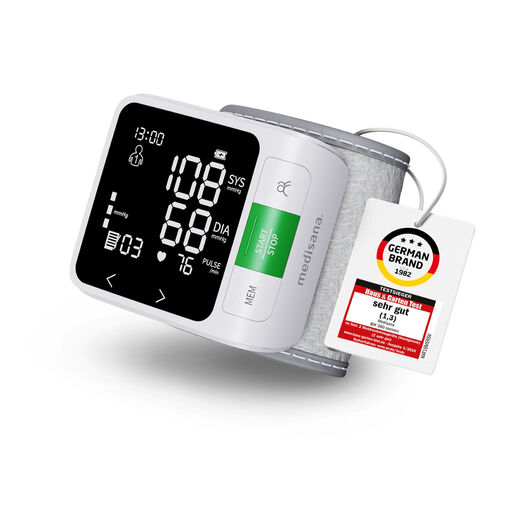
Why this product suits this profile: This compact wrist blood pressure monitor combines straightforward measuring with Bluetooth connectivity. It’s ideal if you want to record your readings regularly at home or on the go.
Readings aren’t just shown on a small display: 199 memory slots for two users and the VitaDock+ app help you keep a record over time.
Large LCD display, Bluetooth, average of three readings, colour-coded classification and irregular heartbeat detection, according to the product description.
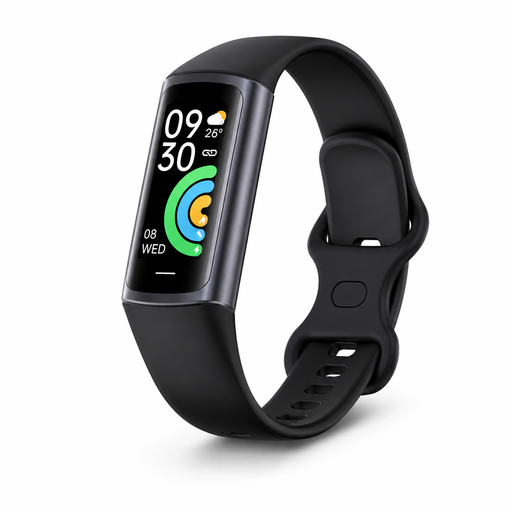
Why this product suits this profile: A good choice if you want to combine health and activity features in a wearable device and prefer an AMOLED display with several sports modes.
The product information specifies Bluetooth 5.0, an IP67 rating and compatibility with iPhone and Android systems. It’s still worth checking app compatibility before buying.
1.1-inch AMOLED display, heart rate, sleep, blood pressure, blood oxygen and body temperature features according to the product information, plus up to 30 days of standby time.
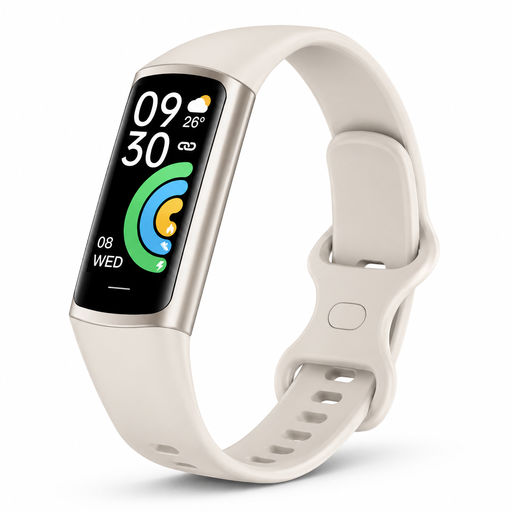
Why this product suits this profile: The white version is for anyone looking for a lightweight wristband for activity and sleep tracking, as well as everyday notifications.
The product information on operating systems, languages, battery life and Bluetooth range is clear before you buy. Health features shouldn’t be treated as a clinical diagnosis.
AMOLED touchscreen, various sports modes, sleep and activity tracking, IP67 rating and support for several languages, according to the product description.
If you use a blood pressure monitor at home, it’s best to follow a consistent routine:
These devices are designed to help you keep track of your readings over time. They don’t replace a medical diagnosis and shouldn’t be used as the sole basis for treatment decisions.
We’ve put together a complete, regularly updated list of products that meet these strict selection criteria and fully comply with the safety regulations in force in the EU.
First, install the app for your monitor, switch on Bluetooth and follow the pairing instructions in the app. The medisana BW 360 connect transfers readings to the VitaDock+ app. During setup, check the permissions requested and keep your smartphone within range.
Lifespan depends on build quality, batteries, storage and regular care. Battery-powered models don’t need a dedicated charging point, but you should use the right batteries. Store the monitor somewhere dry, preferably in its supplied case. For smartwatches, charging cycles and the manufacturer’s stated operating time also matter.
It depends on what you need it for. A fitness tracker can be useful for activity data, heart rate monitoring, sleep tracking or notifications. If you want to take regular cuff-based blood pressure readings and record them in an app, consider a digital blood pressure monitor designed for that purpose. Neither type of device replaces medical advice.