
Lieferung heute & morgen

Qualitätsgarantie
App herunterladen
Kategorien
The selection of Bluetooth headphones is vast and increasingly segmented by specific use cases. An informed decision isn't based on marketing promises, but on matching technical specifications to your individual needs. Whether for focused work, athletic activities, or undisturbed sleep, the form factor, audio technologies, and connectivity standards are the decisive parameters. This guide analyses the essential criteria and presents models for defined user scenarios.
Properly evaluating wireless headphones requires an understanding of the underlying technologies. The following aspects are crucial for making an informed choice.
The Bluetooth version (e.g., Bluetooth 5.3) affects the connection's stability, range, and energy efficiency. Battery life is usually specified for the earbuds individually, as well as the total playback time when combined with the charging case.
The following models were selected based on their technical specifications and their suitability for specific use cases.
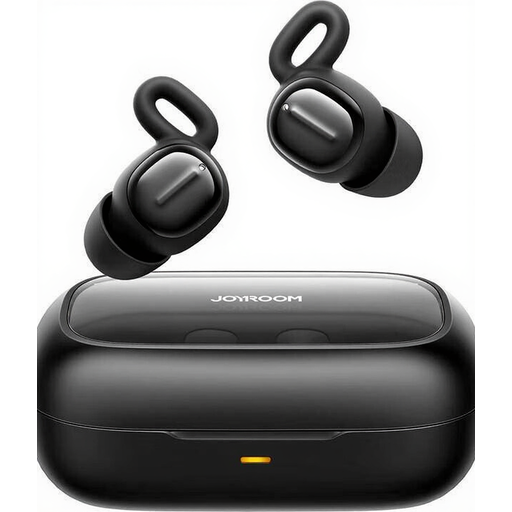
Why We Recommend It The JOYROOM JR-TS1 Cozydots are specifically designed for use during periods of rest and while sleeping. Their ultra-compact design and soft silicone eartips ensure a comfortable fit, even for side sleepers. The passive noise reduction of up to 24 dB is engineered to dampen ambient sounds that can disturb sleep.
Advantages
Who It's For Users seeking a solution to effectively block out ambient noise at night or in loud environments (e.g., on public transport) without sacrificing long-wear comfort.
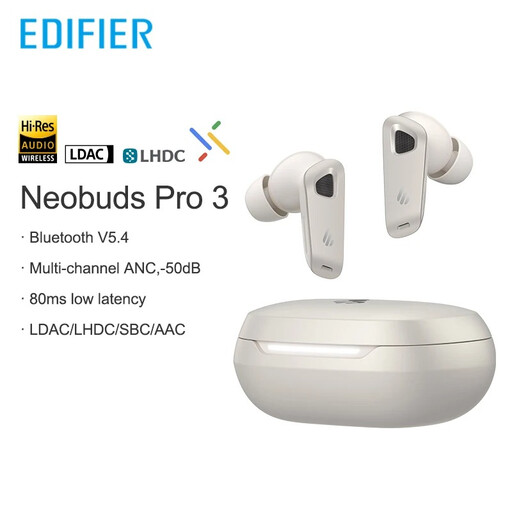
Why We Recommend It The Edifier NeoBuds Pro 3 are aimed at audiophiles who value maximum sound quality and powerful noise cancellation. Support for Hi-Res Audio via LDAC and LHDC codecs, along with adaptive active noise cancellation of up to -50 dB, positions this model in the high-fidelity segment of wireless earbuds.
Advantages
Who It's For Music lovers, commuters, and tech enthusiasts looking for uncompromising audio quality and one of the most powerful noise cancellation systems available for undisturbed music enjoyment or focused work.
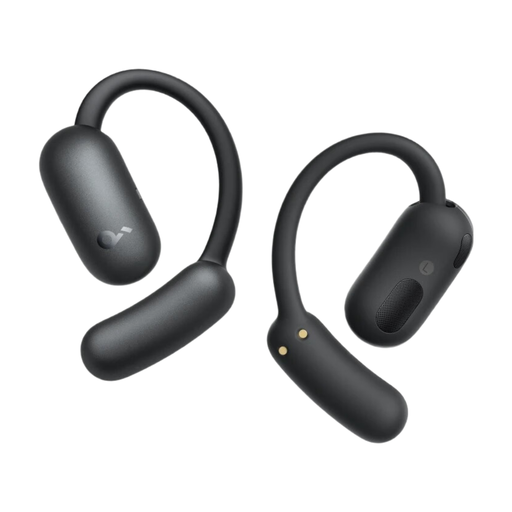
Why We Recommend It The Soundcore AeroFit 2 are designed as open-ear headphones, prioritising safety and comfort during active use. The air conduction technology leaves the ear canal open, so ambient sounds like traffic or announcements remain audible. This makes them ideal sports headphones.
Advantages
Who It's For Athletes like runners and cyclists, as well as any user who values being aware of their acoustic environment in daily life without giving up music or podcasts.
The models presented cover specific user profiles. If your criteria differ from these, or if you would like a broader overview, you can find more models and designs in our main category for Electronics and Audio Equipment.
1. What is the difference between ANC and passive noise isolation? Passive noise isolation is created by the physical barrier of the headphone sealing the ear canal (typical for in-ear headphones). It primarily dampens high frequencies. ANC (Active Noise Cancelling) is an electronic technology that actively reduces low-frequency, constant noises (e.g., engine hum, air conditioners) by generating anti-sound waves.
2. Are open-ear headphones better for sports? For outdoor sports, especially in traffic (running, cycling), open-ear headphones offer a significant safety advantage as ambient sounds remain fully audible. For workouts in the gym, where isolation from the surroundings may be desired, sweat-resistant in-ear headphones with a secure fit can be a suitable alternative.
3. What does Hi-Res Audio mean for wireless headphones? Hi-Res Audio on Bluetooth headphones means they are capable of processing audio signals at a higher sample rate and bit depth than a standard CD. This is made possible by advanced Bluetooth codecs like LDAC or LHDC, which provide higher bandwidth for data transmission. The potential result is a more detailed and nuanced sound, provided the audio source is also delivering a high-resolution signal.