
Lieferung heute & morgen

Qualitätsgarantie

Willkommens-Angebote freischalten: KOSTENLOSE Lieferung | Bis zu 80 % RABATT | Kostenlose 30-Tage-JoyPlus-Testphase
App herunterladen
If you’re buying batteries, the choice can seem straightforward: AA, AAA, D or 9V; alkaline or rechargeable; a single pack or a pack of 4. In practice, however, choosing the wrong size or voltage, or misreading battery-life claims, can quickly lead to unnecessary expense.
AA batteries are generally known as Mignon, LR06 or HR06. AAA batteries are also called Micro, LR03 or HR03. D batteries may be labelled Mono, LR20 or MN1300. 9V batteries are often marked 6LR61.
However, the name alone isn’t always enough. Before buying, check your device’s battery compartment, the instruction manual or the markings on the battery you’re replacing.
An alkaline battery typically provides 1.5 V, while many NiMH rechargeable batteries are rated at 1.2 V. Some devices work with either, while others need a specific voltage. Actual battery life also depends on power consumption, temperature and the device itself.
So don’t rely on claims such as ‘up to’ or ‘extra-long battery life’ in isolation. Check the battery chemistry, voltage, size and intended use too.
Alkaline batteries aren’t designed to be recharged. Rechargeable batteries need a suitable charger, such as one designed for NiMH batteries. Using the wrong charging method can cause overheating, leakage or damage.
You should also avoid mixing old and new batteries, different brands or different battery types in the same device. If a device takes several batteries, it’s best to use a full set of the same type.
AA batteries and AAA batteries are commonly used in remote controls, wall clocks, computer mice and many toys. Torches, radios and motorised toys may need D batteries instead. Smoke alarms often use a 9V battery.
Check the following:
Alkaline batteries are suitable for many household devices and appliances with occasional to moderate energy needs. For remote controls and clocks, a supply with a long shelf life can be useful. For toys, flash units or high-powered torches, check that the batteries can deliver the higher current required.
Rechargeable batteries make sense if you use a device regularly and have a compatible charger. NiMH batteries such as Energizer AA Recharge Power Plus or VARTA NiMH Mignon AA are rated at 1.2 V, with capacity given in mAh. USB-C rechargeable batteries, such as AAA models from VERICO, need a compatible USB-C charging cable and shouldn’t be confused with ordinary disposable batteries.
A pack of 4 batteries suits many devices that take four cells and reduces the chance of mixing batteries from different batches. Smaller packs of 9V or D batteries may be more economical if you only have a few devices that use them.
Store batteries in a dry place at normal room temperature. Remove them from devices that won’t be used for several months. Don’t store loose batteries with coins, keys or other metal objects.
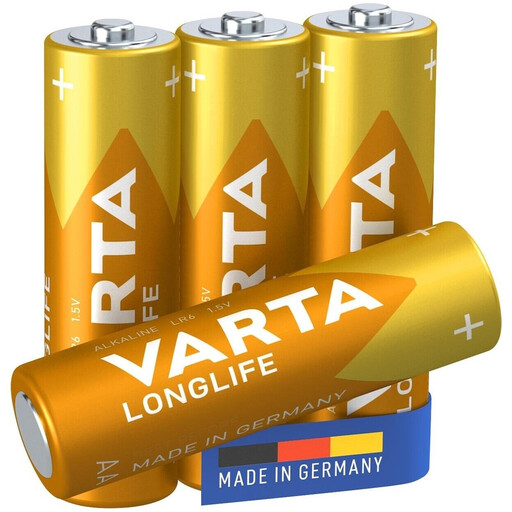
Why this product suits these needs: The pack of 4 covers everyday household devices such as remote controls, radios, toys and torches. The AA size and 1.5 V rated voltage are clearly stated.
The clear AA or LR06 marking helps you avoid confusing these with AAA batteries. These are non-rechargeable alkaline batteries.
4 batteries per pack, 1.5 V per battery and, according to the product information, a shelf life of up to 10 years.
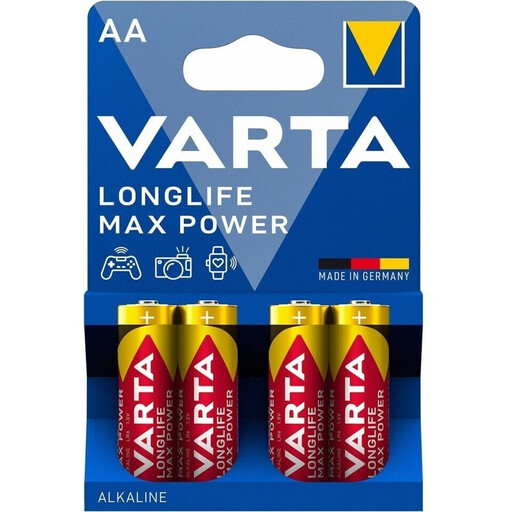
Why this product suits these needs: According to the product description, these AA alkaline batteries are designed for devices with higher energy demands, such as digital cameras, audio players and electronic recorders.
The choice is based on size, chemistry, voltage and stated intended use, rather than relying only on a general battery-life claim.
1.5 V, alkaline manganese chemistry, a pack of 4 and, according to the product information, a shelf life of 10 years.
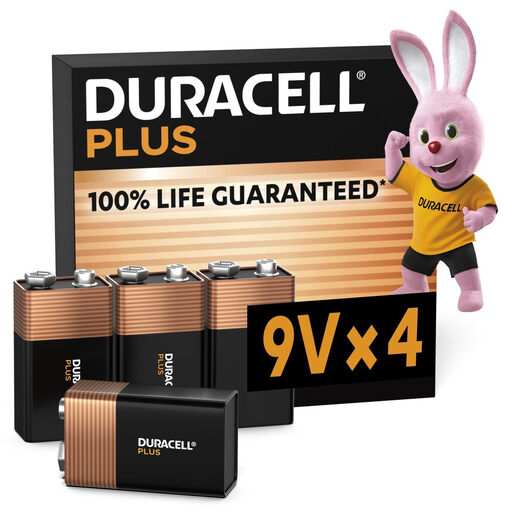
Why this product suits these needs: This pack of 4 is aimed at households with several devices that use 9V batteries. According to the product description, it’s suitable for smoke alarms and fire alarms.
The 9V block size, or 6LR61, is clearly stated. After fitting the battery, press the test button on the device.
Alkaline technology, a rated voltage of 9 V, 4 batteries per pack and, according to the product information, a shelf-life guarantee of up to 5 years.
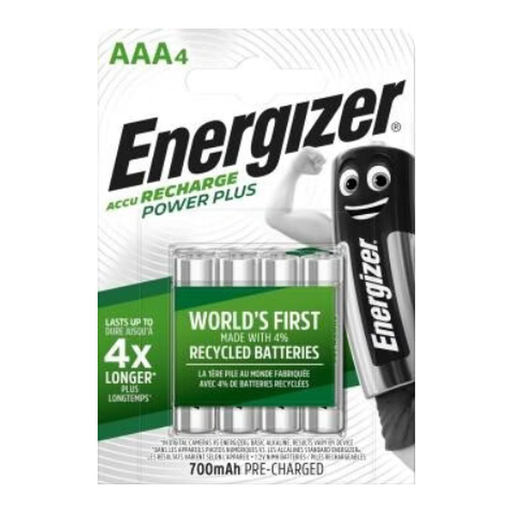
Why this product suits these needs: These NiMH rechargeable batteries are suitable for regularly used devices such as toys, remote controls, torches and portable electronics, provided the device supports 1.2 V.
The product information clearly specifies NiMH, 1.2 V and 2000 mAh, so you can distinguish these rechargeables from 1.5 V alkaline batteries.
Rechargeable, 2000 mAh, 4 batteries per pack and, according to the product information, supplied pre-charged.
We’ve put together a complete, regularly updated list of products that meet these strict selection criteria and fully comply with the safety regulations in force in the EU.
Remove batteries if they show visible damage, leakage or corrosion. Avoid contact with skin and eyes if a battery has leaked. In Germany, batteries must not be disposed of with household waste. Use collection boxes in shops or local authority collection points.
The pack price isn’t the only factor to consider when working out ongoing costs. Take into account:
Many remote controls use AAA batteries, though some take AA batteries. Check the markings in the battery compartment. For occasional use, alkaline batteries are usually the simplest option. If you replace them frequently, rechargeables may be more cost-effective, provided the voltage and charger are suitable.
Battery life depends on the device, its power consumption, the ambient temperature and the battery itself. So a general figure in hours won’t reliably apply to every situation. Check the recommended uses and store spare batteries in a dry place at room temperature.
If you use them regularly, rechargeable batteries can reduce the cost per use. However, you’ll need to pay for the charger and batteries upfront. For smoke alarms, devices you use infrequently or applications where a long shelf life matters, suitable alkaline batteries may be more practical. The right choice depends on how often you use them, whether they’re compatible with your device and how you dispose of them.