
Lieferung heute & morgen

Qualitätsgarantie

Willkommens-Angebote freischalten: KOSTENLOSE Lieferung | Bis zu 80 % RABATT | Kostenlose 30-Tage-JoyPlus-Testphase
App herunterladen
A Bluetooth selfie stick with tripod should perform several tasks: hold your smartphone securely, trigger shots from a distance and, when needed, allow hands-free filming. In practice, however, models differ considerably in terms of stability, range, extension length and additional features. If you only look for terms such as “AI tracking” or “professional shots”, you can quickly overlook important technical details.
A long telescopic pole widens the frame for group photos, travel shots or livestreams. However, as the height increases, so does the strain on the base and smartphone holder. A model measuring almost two metres requires a stable surface and should be used with particular care in windy conditions or on uneven ground.
That is why it is important to consider not only the maximum length, but also:
A selfie stick with remote control triggers photos or videos from a certain distance. To do this, the smartphone usually needs to be paired via Bluetooth. However, a remote control does not move the smartphone automatically.
An AI tracking tripod or gimbal model, on the other hand, can recognise a face and automatically follow the recording area, depending on the design. This function works within a specific detection range and should not be confused with complete camera control. Before buying, you should therefore check the tracking range, gesture control and supported smartphone sizes.
A selfie stick with lighting can provide additional brightness for indoor shots or in low ambient light. The number of LEDs alone says little about practical use. Other relevant factors include colour temperature, brightness, the position of the light and battery life.
For example, the Rollei Easy Creator Gimbal is specified as having seven warm-white and seven white LEDs, with an adjustable colour temperature of 3,000 to 6,500 Kelvin. This allows you to adapt the lighting to different atmospheres, but it does not replace even room lighting.
A phone tripod should hold your smartphone securely without applying excessive pressure. Check the stated clamp width and compare it with your device, including its protective case. The reference models cover a range of requirements:
The statement “compatible with iPhone and Android” primarily refers to the connection and mechanical attachment. Individual features such as gesture control or automatic face recognition may depend on the model and the smartphone being used.
Sufficient wireless range is essential for group photos or presentations. Several products specify a range of up to 10 metres. Obstacles, the surrounding environment and the smartphone can affect the actual range.
You should also consider the power source:
For devices with lithium-ion batteries, follow the manufacturer's safety instructions. Damaged or swollen batteries should not be used further. In Germany, batteries and electrical appliances must not be disposed of with household waste.
A mini tripod for a phone is suitable for desks, video conferences, webinars or close-range livestreaming. For full-body shots or group photos, a longer extension length is more practical.
Some examples from the selection:
This makes it clear that a smartphone tripod for a desk serves a different purpose from a livestreaming tripod for standing shots.
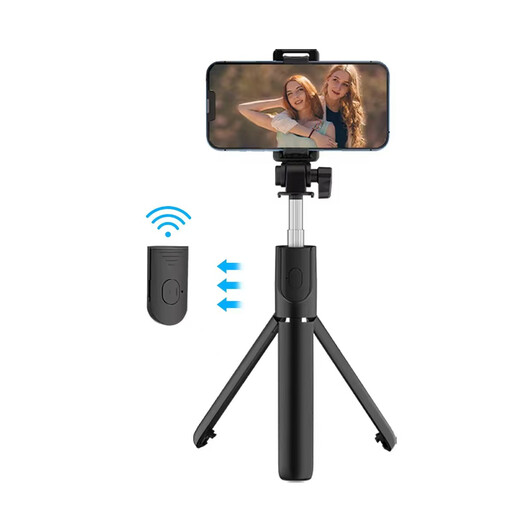
Why this product suits this profile: The combination of Bluetooth remote control, tripod function and a stated maximum length of around 193 cm covers selfies, group photos and straightforward video recording.
The stated range of approximately 10 metres and the clearly specified maximum smartphone size make it easier to assess before buying. The tripod feet should be fully opened before every shot.
Telescopic pole extending to approximately 193 cm, Bluetooth remote control and compatibility with iOS and Android according to the product details.
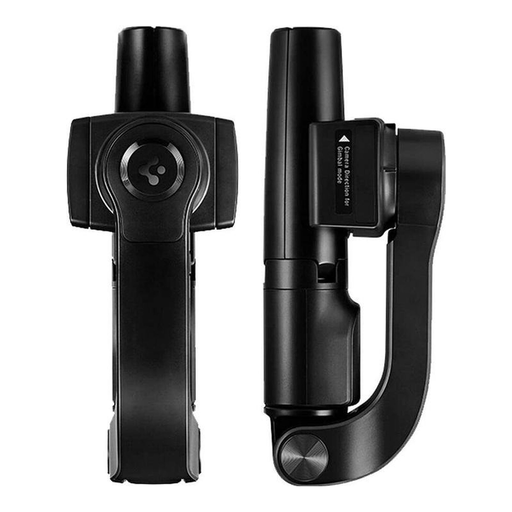
Why this product suits this profile: This model combines a gimbal, selfie stick and tripod function in a compact design and is specified as compatible with iOS and Android.
According to the data sheet, the maximum length without an additional extension is 54 cm. This gives it a clearer purpose than seemingly universal long selfie sticks.
Weight of 220 g, USB-C charging according to the product description, plus integrated Bluetooth connection and wrist strap.
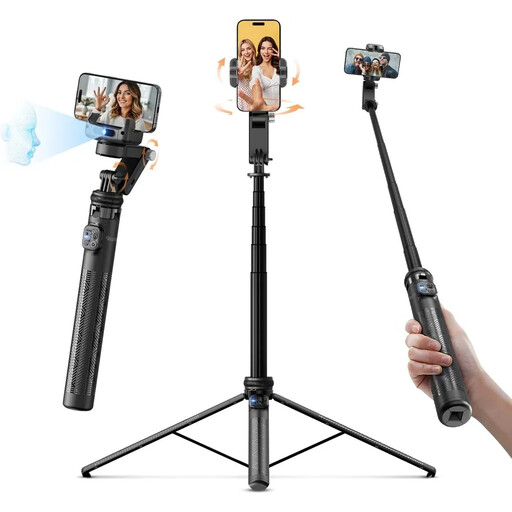
Why this product suits this profile: For vlogs, presentations and livestreams, it offers AI face tracking, gesture control, gimbal mode and adjustable lighting.
The technical limits are clearly specified: face recognition from 0.5 to 5 m, gesture control from 0.5 to 3 m and a maximum smartphone clamp width of 9.5 cm.
3-axis gimbal, 14 LEDs with 3,000–6,500 Kelvin and Bluetooth remote control with a stated range of 10 m.

Why this product suits this profile: The compact design is intended for video calls, presentations and recording at your desk, and rotates through 360° according to the product details.
The maximum load of 500 g and compact height clearly define its intended use. This prevents it from being mistakenly used as a floor tripod for heavy equipment.
AI tracking without requiring an app according to the product description, 360° rotation and 1/4-inch thread for additional accessories.
We have put together a complete, regularly updated list of products that fully meet these strict selection criteria and the safety regulations applicable in the EU.
Activate Bluetooth on your smartphone, switch on the remote control or device and select the displayed device name in the Bluetooth settings. Then open the camera app. Depending on the model, the shutter button may work straight away; certain devices may require additional settings.
That depends on the design. According to the product details, the Verbex K50 uses a CR1632 button cell and offers a standby time of more than one year. Gimbals with an integrated battery generally have a considerably shorter active runtime, but they can be recharged. Actual usage time depends on tracking, motors and lighting.
Yes, provided the smartphone is securely attached and the model has a suitable tripod or gimbal function. For moving shots, a gimbal selfie stick may be a sensible choice. For stationary presentations, a classic phone tripod with remote control is often sufficient.