
Lieferung heute & morgen

Qualitätsgarantie

Willkommens-Angebote freischalten: KOSTENLOSE Lieferung | Bis zu 80 % RABATT | Kostenlose 30-Tage-JoyPlus-Testphase
App herunterladen
A Bluetooth speaker should play music, podcasts or TV audio without fuss. In practice, however, unclear power ratings, misunderstood protection ratings and unsuitable connections often lead to the wrong purchase. A small speaker for your desk has to meet different requirements from a portable Bluetooth speaker for hiking or a soundbar with subwoofer for your television.
The stated power output doesn't solely describe how balanced or detailed a speaker sounds. What's more, rated power, RMS power and peak power differ depending on the manufacturer's specification. A model with a higher wattage isn't automatically better suited to every room.
Also look out for:
The IP rating is more precise than a general marketing claim. With IP67, the first digit 6 indicates dust protection, while the second digit 7 indicates limited protection against temporary immersion under the test conditions of the rating. IPX6, on the other hand, refers to protection against water jets, not automatically against immersion.
A waterproof speaker should therefore be chosen to suit its intended use. Splash protection may be sufficient for the balcony, whereas a model with IPX7 could be more sensible by the lake or in the bathroom. These ratings do not replace the manufacturer's safety instructions.
Bluetooth 5.3 or Bluetooth 5.4 can offer technical advantages in connectivity and power management. However, range, latency and sound also depend on walls, interference, codecs and the connected devices. A speaker with Bluetooth 5.3 is therefore not automatically superior in sound quality.
For your smartphone, tablet and days out, a battery-powered, wireless speaker is ideal. Check the playback time stated by the manufacturer, the charging time and the charging port. A claim of "up to 12 hours" is a guideline and can be shorter at higher volumes or with additional features activated.
For a fixed workstation, USB or mains-powered devices are practical. A USB port may only serve to supply power. With the Hama Sonic Mobil 183 and Sonic Mobil 185, for example, audio transmission takes place via 3.5 mm jack, while USB provides the power.
Bluetooth is suitable for smartphones, tablets, laptops and many televisions. For PC and gaming use, however, additional connections may be important:
A PC speaker or laptop speaker with USB power and AUX input can often be set up without drivers. When buying, make sure the cable length and footprint suit your desk.
Compact models save space and weight, but physically often produce less deep bass than larger cabinets. For a wider stereo image, two separate speakers or a TWS function, which lets you pair two compatible devices, are ideal. A single portable speaker, on the other hand, is often a mono system.
For parties or larger rooms, a higher sound pressure level, a stable footing and a sufficiently large battery are relevant. Sustained high volumes can strain your hearing. Manufacturer's instructions for safe use should be followed.
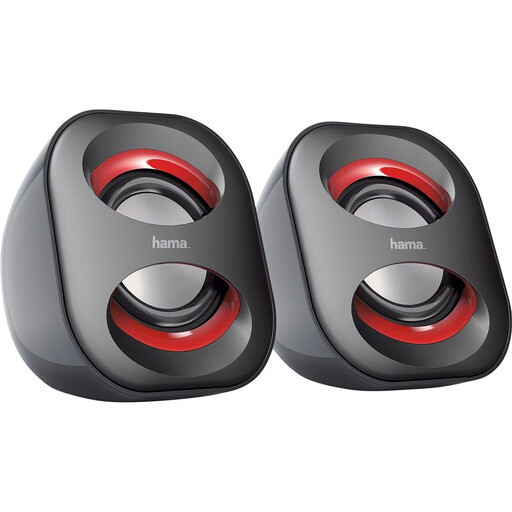
Why this product fits the profile: These compact 2.0 active speakers are designed for computers and laptops and don't require a separate mains adapter.
The specifications clearly state 3 W total power, 3.5 mm input and USB power supply, rather than vague Bluetooth or wattage claims.
Plug-and-play, integrated volume control and dimensions of 72 × 75 × 82 mm.
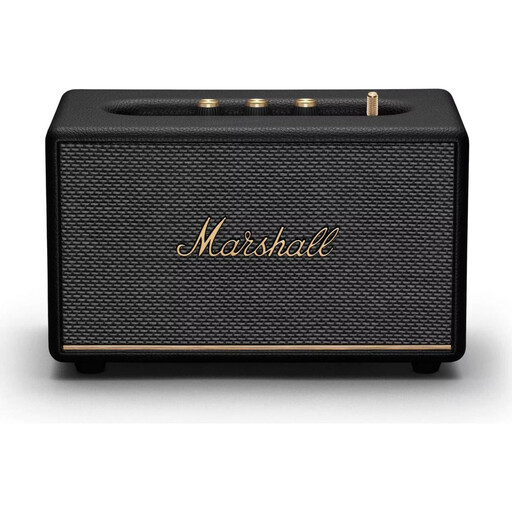
Why this product fits the profile: For fixed use in the living room, this stereo model offers a mains-powered solution with a classic cabinet and an analogue auxiliary input.
The product data lists Bluetooth 5.2, a range of up to 10 m, 3.5 mm AUX and the frequency range of 45 to 20,000 Hz.
60 W rated power, 2-way system with three speakers and a rotary control for volume.
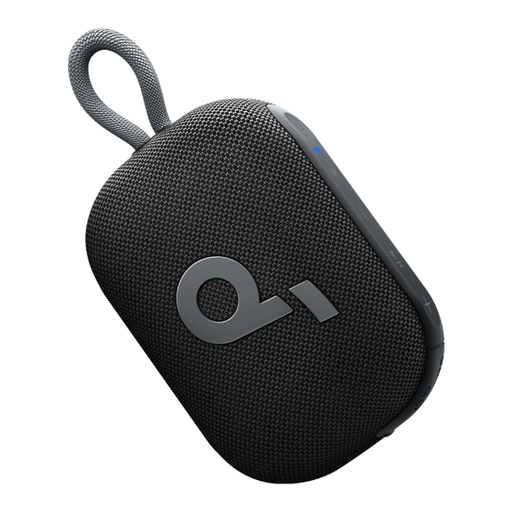
Why this product fits the profile: The low weight, IP67 rating and stated playback time of up to 20 hours suit hiking, beach trips and mobile use.
The IP67 classification and floating design are more specific than the blanket term "outdoor speaker".
5 W output power, TWS pairing and an integrated carry strap at around 264 g weight.
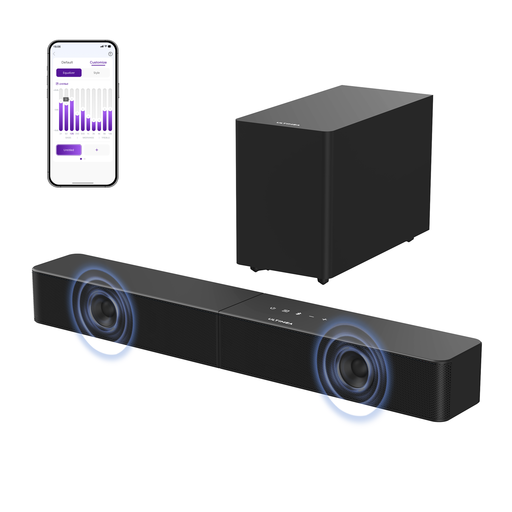
Why this product fits the profile: For TV, films and games, the 2.1 soundbar combines HDMI ARC, optical input, Bluetooth and a separate wireless subwoofer.
The connections are clearly specified. Before buying, you can therefore check whether your TV has HDMI ARC or an optical output.
Wireless subwoofer, 10-band equaliser via app and a stated peak power of 240 W.
We've put together a full, regularly updated list of products that fully meet these strict selection criteria and the safety regulations in force in the EU.
Switch on the speaker and activate pairing mode. Open the Bluetooth settings on your smartphone, select the device name shown and confirm the connection. With previously paired devices, the connection often happens automatically. Distance and obstacles can affect stability.
The runtime depends on battery capacity, volume, Bluetooth connection and additional features. Manufacturer claims such as "up to 12" or "up to 20 hours" refer to specific conditions. For regular use, a USB-C port and a clearly stated charging time are practical.
Battery models consume power when charging; the consumption depends on the battery, charger and charging frequency. Mains-powered devices such as stationary stereo speakers remain permanently connected and, depending on the model, consume energy even in standby mode. A switchable mains plug or a switched extension lead can reduce unnecessary standby consumption.