
Lieferung heute & morgen

Qualitätsgarantie

Willkommens-Angebote freischalten: KOSTENLOSE Lieferung | Bis zu 80 % RABATT | Kostenlose 30-Tage-JoyPlus-Testphase
App herunterladen
A Bluetooth speaker should play music effortlessly, perform reliably in everyday use and suit how you intend to use it. However, some product claims can often lead to disappointing purchases. A high wattage rating alone says little about the actual sound quality, long battery life depends on volume and content, and “waterproof” does not automatically mean protection against every type of contact with water.
These are the points you should check before buying:
Several technical features come together when choosing a wireless speaker. Pay attention to the frequency range, the number of speakers and the speaker configuration. A stereo Bluetooth speaker can provide a more spacious sound, while compact mono models are often easier to carry.
The casing also affects how the speaker can be used. A robust, larger casing may be suitable for a fixed position, but it takes up more space. A portable Bluetooth speaker, on the other hand, should have a sensible weight, easy-to-grip controls and a practical hanging loop.
According to the product specifications, the Marshall Acton III has a rated output of 60 W, three speakers, a 2-way system and a frequency range of 45 to 20,000 Hz. Measuring 26 × 17 × 15 cm and weighing 2.85 kg, it is designed for indoor use and a fixed position.
For a mobile model, the stated runtime is a guideline. High volume, bass content, Bluetooth range and the ambient temperature can all affect actual playback time. A Bluetooth speaker with USB-C can be used with widely available chargers and cables. Nevertheless, check the required charging voltage and do not use damaged cables.
The Marshall Emberton III is specified with a playback time of over 32 hours and weighs 670 g. The speaker has a USB-C port. For the Hama Buddy 3.0, the manufacturer states a runtime of up to 12 hours and a charging time of around three hours. Both figures depend on usage and should not be regarded as permanently guaranteed values.
A waterproof Bluetooth speaker is not automatically suitable for every environment. The IPX7 protection rating describes protection against temporary immersion up to a specified depth and for a specified period. IP67 additionally includes dust protection. High-pressure water jets, salt water and open ports can still cause damage.
After using the device by the pool or at the beach, rinse it with clean water, allow it to dry completely and only then charge it. For a model without a specified protection rating, such as a stationary mains-powered speaker, moisture and rain should be avoided.
Other practical features may include:
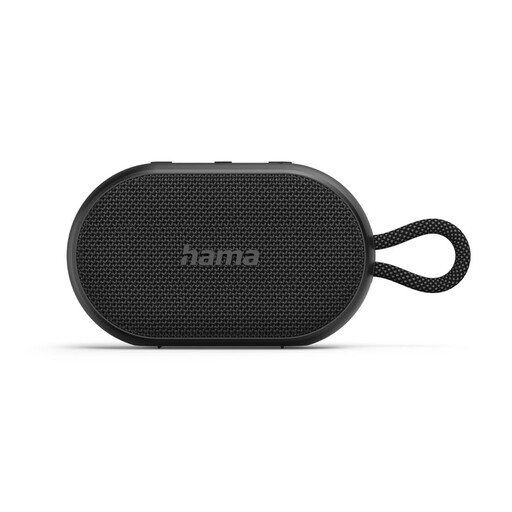
Why this product suits this profile: Weighing 206 g, this compact model is aimed at anyone looking for a simple Bluetooth speaker for the kitchen, shower, days out or balcony.
The IPX7 protection rating is clearly specified. The datasheet also lists USB-C, an integrated hands-free function and up to 12 hours of playback, rather than making vague claims about portability.
6 W output, Bluetooth 5.3, USB-C, TWS pairing and a hanging loop, all in a lightweight design.
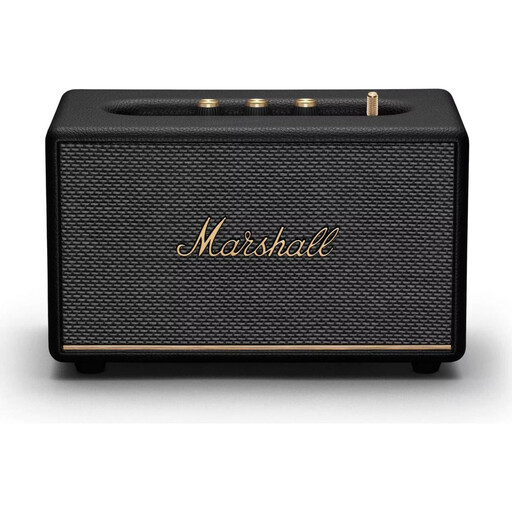
Why this product suits this profile: This stationary stereo Bluetooth speaker is suitable for living rooms, studies or other dry indoor spaces where a permanent power supply is available.
The product data clearly distinguishes between mains operation and mobile use. This avoids the common misconception that a larger casing is automatically suitable for outdoor use.
60 W rated output, stereo playback, 3.5 mm AUX port, Bluetooth 5.2 and a rotary volume control.
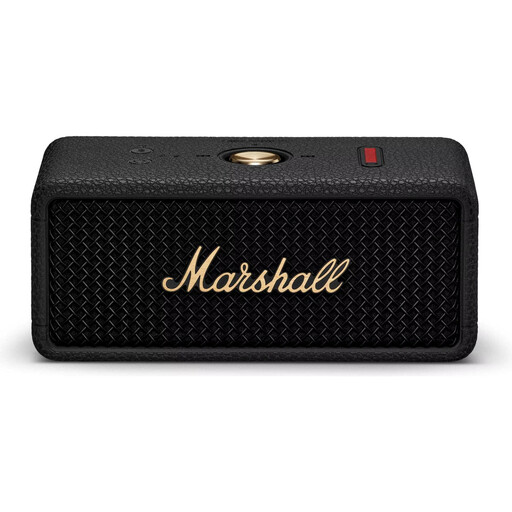
Why this product suits this profile: For frequent use in the garden, while travelling, at the beach or on the go, this model combines low weight with a battery, protection rating and hands-free function.
IP67 is clearly specified as the protection rating. The ports must be closed before immersion, and the device may only be charged once it is dry.
Stated playback time of over 32 hours, weight of 670 g, USB-C, integrated microphone and app support.
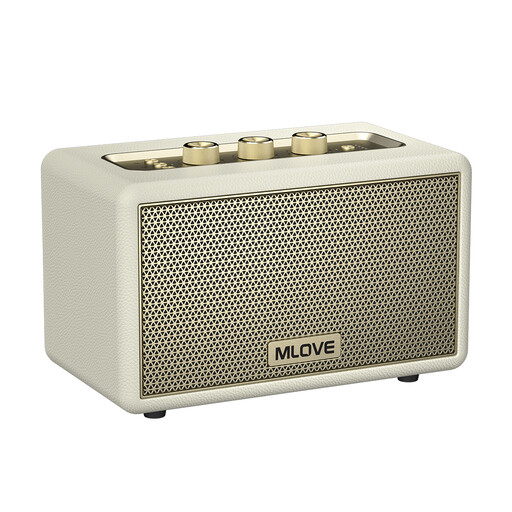
Why this product suits this profile: This retro Bluetooth speaker is designed for living rooms, offices, shelves or smaller gatherings, combining several playback sources with clearly visible controls.
The features are not described through design alone: Bluetooth 5.3, AUX, USB and TF card support, as well as TWS, are all clearly listed. Battery life is specified as approximately 8 hours.
Separate controls for treble, bass and volume, USB-C charging port, TWS support and several input options.
We have put together a complete, regularly updated list of products that fully meet these strict selection criteria and the safety regulations applicable in the EU.
To set up your speaker for the first time, activate Bluetooth on your smartphone, tablet or computer and select the speaker’s name from the device list. Keep the speaker close to the playback device while pairing. If you experience connection problems, it often helps to remove old pairings, switch Bluetooth off and on again or restart the speaker.
Care includes keeping the charging port dry, cleaning the speaker with a soft cloth and storing it at moderate temperatures. Batteries should not be opened or replaced yourself. If you notice unusual heat, swelling or an unusual smell, stop using the device. Electrical appliances and batteries must be disposed of at the designated collection points in accordance with local WEEE and battery regulations.
Its lifespan depends on charging cycles, temperature, volume and storage conditions. The stated playback time is an operating figure per charge and is not a guarantee of the battery’s overall service life. Avoid extreme temperatures and only charge the speaker with suitable cables and power adapters.
This depends on the manufacturer’s instructions. For portable speakers, follow the operating manual and avoid leaving the device connected to the charger unnecessarily for extended periods. A stationary mains-powered model is designed for the intended mains operation, but may only be used with the supplied or approved power adapter.
IP67 indicates dust protection according to the relevant protection rating and protection against temporary immersion under specified conditions. The classification does not automatically protect against high-pressure cleaning, permanent immersion, salt water or charging while wet. It is essential that all covers are closed and the ports are dry.