
Lieferung heute & morgen

Qualitätsgarantie

Willkommens-Angebote freischalten: KOSTENLOSE Lieferung | Bis zu 80 % RABATT | Kostenlose 30-Tage-JoyPlus-Testphase
App herunterladen
A Bluetooth speaker should play music, podcasts, films or games with ease. In practice, however, unclear performance specifications, misjudged water resistance and battery life that is too short often lead to disappointing purchases. Choosing the right model therefore depends less on eye-catching marketing claims and more on the technical specifications and where you plan to use it.
As a Joybuy Product Recommendation Officer, I assess the most important criteria objectively and show you which models suit different usage scenarios.
The stated power output in watts does not, on its own, describe how balanced or clear a speaker sounds. The speaker system, drivers, enclosure and tuning all play a role. A compact portable Bluetooth speaker with 5 or 6 W may be sufficient for a desk or small room. For a larger party, however, greater power reserves and, where appropriate, multiple speakers are advisable.
You should also distinguish between “maximum power” and rated or RMS power. For comparison purposes, the continuously stated power rating is generally more meaningful.
A waterproof speaker is not automatically suitable for every wet environment. The protection rating is indicated by an IP code. For example:
The protection rating also applies only to an undamaged device with its covers properly closed. Salt water, chlorinated water, high-pressure jets and charging while wet can still cause damage. For use in the garden, at the beach or by the pool, you should therefore look not only for the words “outdoor speaker”, but also at the specific IP rating.
The stated battery life depends on volume, the Bluetooth connection, lighting, equaliser settings and temperature. “Up to 12 hours” does not necessarily mean twelve hours at high volume. When planning your purchase, it is also important to check how long charging takes, whether there is a USB-C port and whether the speaker can be used while charging.
A Bluetooth speaker should be compatible with your smartphone, tablet, laptop or television. Bluetooth 5.x may indicate current connection technology, but on its own it does not provide a complete picture of range or sound quality. The supported profiles, surroundings and potential obstacles are more important.
An AUX, USB or optical input expands the speaker’s possible uses. For a PC speaker or computer speaker with wired power, a 3.5-mm connection can be practical. For a television, a soundbar with HDMI ARC or an optical input is often easier to integrate into an existing setup.
Compact devices often output sound through a single channel. For a wider, more spacious soundstage, two compatible devices can be paired using True Wireless Stereo (TWS). Before buying, check that this function is actually supported and whether a second unit is required.
A stereo speaker or a soundbar with multiple channels may be better suited to the desired sense of space for films and games. Room size, the distance from the wall and speaker placement also affect the result.
A battery-powered speaker is flexible for use on the go, but requires regular charging cycles. Stationary models such as PC speakers or larger soundbars are usually powered directly from the mains and do not need recharging. For a desk, dimensions, cable length and an integrated volume control are also relevant.
For safety, use only suitable power supplies and cables. Ventilation openings must not be covered. Once used, built-in lithium batteries should be disposed of through the designated battery and electrical waste collection system, not in household rubbish.
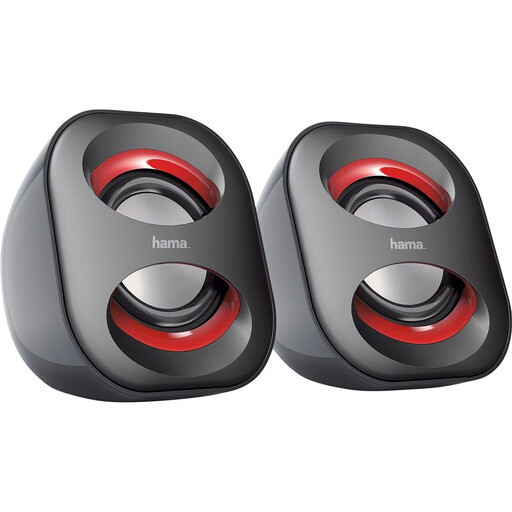
Why this product suits this profile: The compact 2.0 PC speakers are suitable for laptops, computers and small workspaces when battery or Bluetooth functionality is not required.
The stated total output of 3 W, the 3.5-mm input and USB power supply are clearly specified. This makes it easier to assess the intended use before buying.
2.0 channels, integrated volume control, USB power supply and a weight of 260 g.
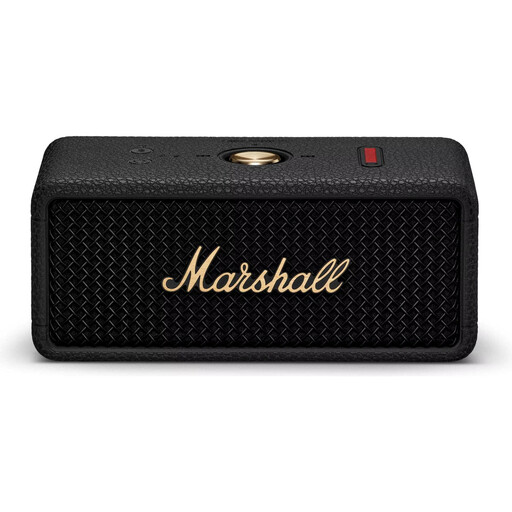
Why this product suits this profile: This model combines a portable design with app control, a hands-free microphone and a manufacturer-stated playback time of more than 32 hours.
The IP67 protection rating is clearly specified. USB-C, Bluetooth and the supported Marshall Bluetooth app are also listed.
20 W RMS power, 65–20,000 Hz frequency range, IP67 and a stated battery life of more than 32 hours.
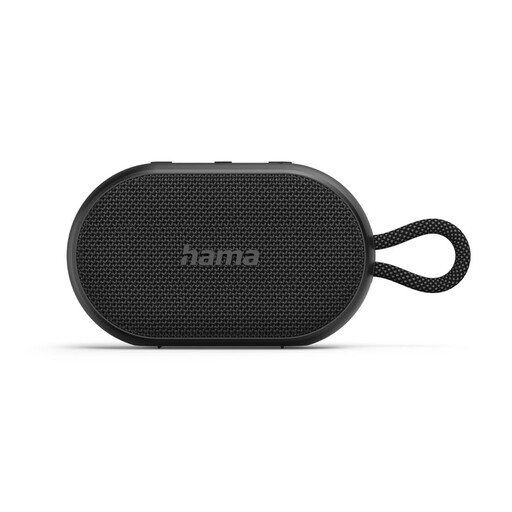
Why this product suits this profile: Weighing just 206 g, with a carry strap and IPX7 protection, this model is suitable for the shower, picnics, travel and occasional outdoor use.
The IPX7 rating is described with a specific limit of up to 1 m for 30 minutes. This prevents it from being mistakenly treated as suitable for unrestricted exposure to water.
6 W output, Bluetooth 5.3, up to 12 hours of battery life and TWS pairing.
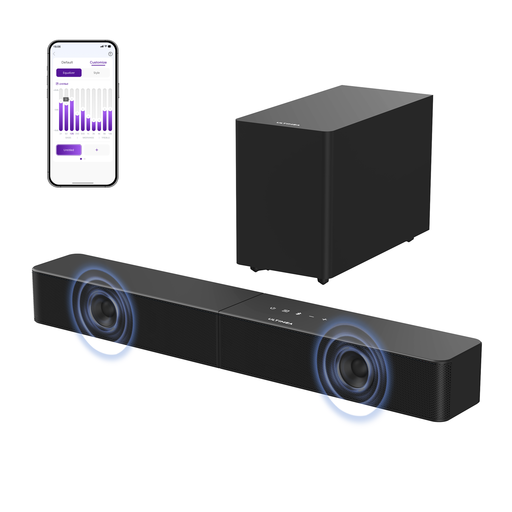
Why this product suits this profile: For a television or gaming setup, the combination of soundbar and wireless subwoofer offers several connection options and separate bass reproduction.
HDMI ARC, optical input, USB and Bluetooth 6.0 are all clearly listed. This means connecting to your TV is not limited to Bluetooth.
2.1-channel system, wireless subwoofer, app control with equaliser and a stated peak power of 240 W.
We have put together a complete, regularly updated list of products that fully meet these strict selection criteria and the safety regulations applicable in the EU.
Switch on the speaker and activate pairing mode. Then open your smartphone’s Bluetooth settings and select the device name shown. If the devices have already been paired, they will often connect automatically. If the model is still connected to another device, that connection must be ended first.
Battery lifespan depends on charging cycles, temperature, volume and storage conditions. Depending on the model and usage, playback time may be 12, 16, 20 or more than 32 hours, according to the manufacturer. To extend the product’s service life, avoid extreme temperatures and use only suitable chargers.
When using a wireless speaker, the main running cost is the small amount of electricity needed to recharge its battery. Stationary devices such as PC speakers and soundbars, on the other hand, consume electricity during operation and in standby mode. The actual cost depends on power consumption, daily usage time and your electricity tariff.