
Lieferung heute & morgen

Qualitätsgarantie

Willkommens-Angebote freischalten: KOSTENLOSE Lieferung | Bis zu 80 % RABATT | Kostenlose 30-Tage-JoyPlus-Testphase
App herunterladen
A Bluetooth speaker should work effortlessly on the go, sound pleasant in the living room and, when needed, accompany you to the garden, beach or pool. In practice, however, a few buying decisions can quickly lead to disappointment: a high wattage doesn't guarantee balanced sound, an IP rating doesn't automatically mean it's suitable for every water encounter, and long battery lives usually only apply under certain conditions.
This buying guide from the Joybuy Product Recommendation Officer will help you interpret technical specifications and choose a Bluetooth speaker that suits your own usage profile.
The output power describes how much electrical power a speaker can deliver. On its own, it tells you little about the sound tuning, cabinet construction or speech clarity. A compact portable speaker with lower power can be perfectly adequate for a hotel room or desk, while a party speaker for larger spaces needs more power in reserve.
So also pay attention to:
The markings IPX5, IPX6 or IPX7 describe different levels of protection. IPX5 typically stands for protection against water jets, IPX6 for stronger water jets. IPX7 refers to temporary immersion under the conditions specified by the manufacturer. Dust protection is indicated by the first digit, for example with IP67.
A waterproof Bluetooth speaker should still not be wet while charging. Covers must remain closed, and salt water should be rinsed off afterwards with clean water. The protection class is not a free pass for permanent immersion or use underwater.
The stated battery life depends on factors including volume, Bluetooth connection, bass boost and RGB lighting. With a speaker that has RGB lighting, the playback time can be shorter than with the light switched off. Also check the charging time, the connection type and whether a power adapter is included.
A speaker with a battery is particularly practical if it charges via USB-C and the capacity suits a day trip. For a desk or a soundbar, a fixed power cable is often sufficient.
For music lovers, it's not just about bass and volume. A two-way system with a separate tweeter can reproduce voices and details differently than a single full-range driver. With small devices, expectations should match the cabinet size: a mini speaker is easy to transport, but it doesn't automatically replace a larger stereo system.
With TWS, or True Wireless Stereo, two compatible devices can be connected wirelessly as left and right channels. This can improve spatial playback, but requires a second matching model.
For travel, cycling or the daily commute, weight, carrying handle, strap and cabinet shape all matter. A heavy outdoor speaker can be more robust and powerful, but is less comfortable in a rucksack. Also check whether the control buttons are easy to reach in the dark and with wet hands.
If you're looking for a speaker for your PC, pay attention to USB audio, AUX or low Bluetooth latency. For a TV, a soundbar with HDMI eARC, optical input and a separate subwoofer is usually more suitable than a classic portable Bluetooth speaker.
Bluetooth 5.x makes it easier to connect with current smartphones, tablets and laptops. The actual range depends on walls, sources of interference and the connected devices. AUX is useful if you want to use a wired source. Some models also offer USB playback, a power bank function, hands-free calling or app control.
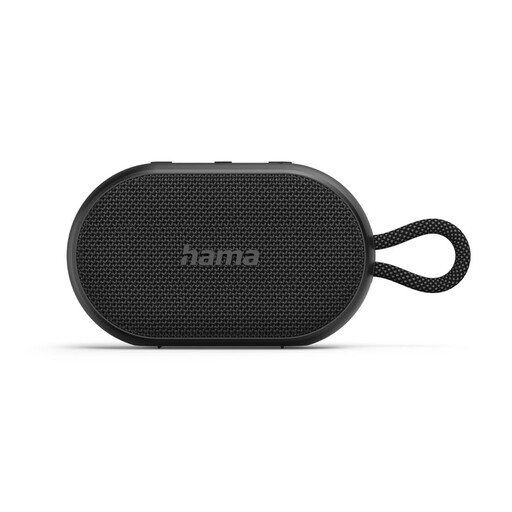
Why this product suits the profile: According to the product specifications, the compact speaker weighs 206 g, offers up to 12 hours of playback and can be attached using a strap.
The IPX7 rating is supplemented with specific usage limits. This makes it clear that water resistance is not the same as unlimited use in water.
Bluetooth 5.3, USB-C, TWS function and built-in microphone in a compact size.
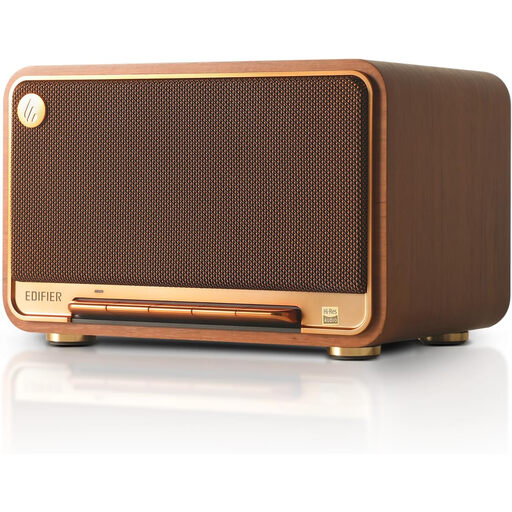
Why this product suits the profile: As a wireless speaker for the living room, office or desk, this model combines 60 W RMS according to the product specifications with Bluetooth 5.3, LDAC, AirPlay 2, USB-C and AUX.
Multiple inputs and a designated 2.1-channel system prevent the choice from being based solely on a wattage figure.
Hi-Res Audio up to 24 bit/96 kHz according to the product specifications and up to 11 hours of battery life.

Why this product suits the profile: The outdoor speaker is designed for the garden, camping and trips, and according to the product specifications offers 360° playback, IPX7 protection and up to 12 hours of battery life with the LED lighting switched off.
The battery life is stated separately for LED usage. This allows you to assess the impact of the additional lighting more realistically.
Bluetooth 5.3, TWS pairing, app equaliser and up to 18 m range in open areas according to the product specifications.
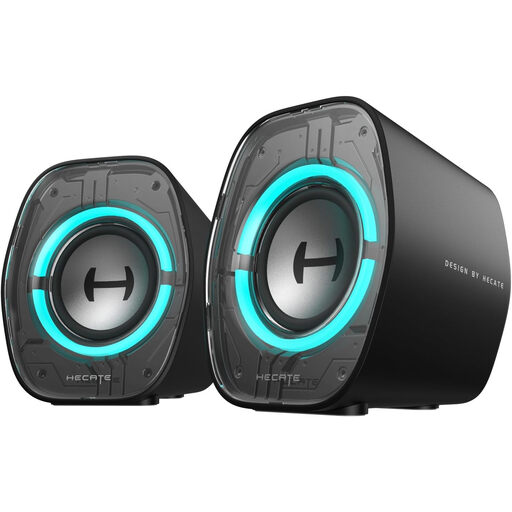
Why this product suits the profile: The compact speakers are designed for PC, laptop and tablet, and offer USB-C/USB-A, AUX and Bluetooth 5.4.
The wired power supply makes the actual battery life independent of the battery. For a desk, this is often more predictable than a portable speaker.
Three sound modes, nine RGB lighting modes and a stated Bluetooth latency of up to 40 ms.
We have put together a complete, regularly updated list of products that fully meet these strict selection criteria and the safety regulations in force in the EU.
Switch on the speaker and activate pairing mode. Then open the Bluetooth settings on your smartphone and select the device name that appears. With previously paired devices, the connection often happens automatically. If several speakers are nearby, it can help to temporarily disconnect any Bluetooth connections you don't need.
The manufacturer's stated figure varies by model, typically between around 7 and over 30 hours. In reality, volume, bass mode, lighting, temperature and Bluetooth usage all affect the battery life. For day trips, models with at least 10 to 12 hours of stated playback are practical; for longer journeys, a power bank function or an additional charging option can be useful.
The power consumption when charging is usually low compared to many larger audio systems. The running costs depend on the battery capacity, charging frequency and electricity tariff. With a wired speaker or soundbar, consumption occurs during the entire time of use, whereas a speaker with a battery mainly uses energy when recharging. For an accurate estimate, you can use the power consumption stated on the power adapter or in the technical data sheet.