
Lieferung heute & morgen

Qualitätsgarantie

Willkommens-Angebote freischalten: KOSTENLOSE Lieferung | Bis zu 80 % RABATT | Kostenlose 30-Tage-JoyPlus-Testphase
App herunterladen
A Bluetooth speaker should make it easy to play music, work reliably day to day and suit the way you plan to use it. But there are clear differences between a small Bluetooth speaker for taking out and about, a waterproof Bluetooth speaker for the beach and a stationary model for the living room.
If you focus only on wattage, battery life or eye-catching design, you can easily overlook important details. Here are three common pitfalls when buying:
The power of a portable Bluetooth speaker is often given in watts. A clear, verifiable figure such as RMS power is more useful, as it indicates the output power the speaker is designed to deliver continuously. However, wattage alone tells you little about speech clarity, bass performance or distortion at higher volumes.
A compact mono model may be enough for music in a small room. If you want to fill a larger space with sound, look for multiple drivers, passive bass radiators or a stereo system. A stereo Bluetooth speaker can give you a more spacious sound, but it usually takes up more room.
According to its product specifications, the CORE X1 Active Bookshelf Speaker System combines 40 W RMS with 4-inch bass drivers and 1.25-inch tweeters. Speakers like these are better suited to home use than to taking out and about.
The IP rating describes a product’s protection against the ingress of solid objects and water. The first digit indicates dust protection, while the second indicates water protection.
Even a waterproof Bluetooth speaker shouldn’t be left in water for long periods. After using it at the beach or pool, make sure the charging ports are closed and remove any salt, sand and moisture. Even with an IP67 rating, protection can be affected by damaged seals, drops or improper use.
Treat the stated battery life as a guide. Check whether it was measured at 50 per cent volume, with the lighting switched off or with additional features disabled. For camping and longer trips, USB-C, a clearly stated charging time and plenty of battery in reserve matter more than a single maximum figure.
Bluetooth 5.x can help provide a stable connection, but the actual range depends on walls, wireless interference and the smartphone you’re using. Multipoint is useful if you want to keep two devices connected at the same time. An AUX input can also come in handy if you want to connect a wired audio source.
The models below cover a range of needs, from a compact outdoor speaker to a stationary stereo system.
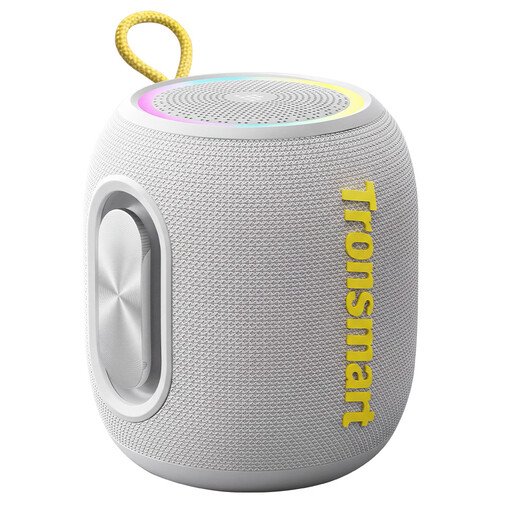
Why this product suits this profile: This compact Bluetooth speaker offers 16 W output power, 360-degree sound and USB-C. According to the product details, it plays for up to 20 hours at 50 per cent volume.
The specific IPX7 rating is more informative than a general description such as “suitable for outdoor use”. The stated battery life also comes with details of the usage conditions.
360-degree playback, IPX7 protection, Bluetooth 5.3 and a built-in microphone for calls.
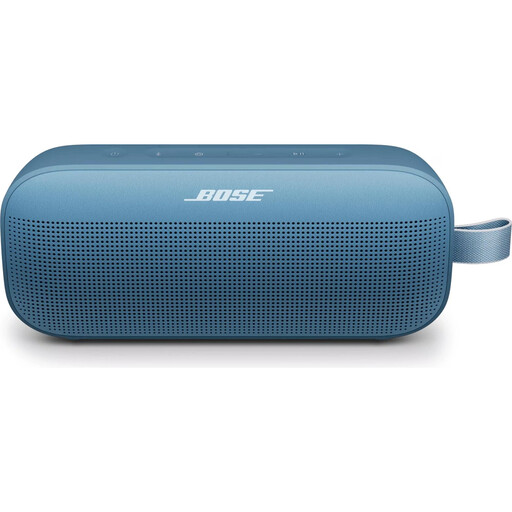
Why this product suits this profile: According to the product specifications, this portable Bluetooth speaker combines IP67 protection, Bluetooth 5.3 and Multipoint with a stated battery life of up to 12 hours.
The IP67 rating is clearly stated. Range, charging port and battery life are also listed separately, rather than relying on a vague promise of outdoor suitability.
IP67 protection, USB-C, built-in microphone, Multipoint and the option to pair compatible speakers.
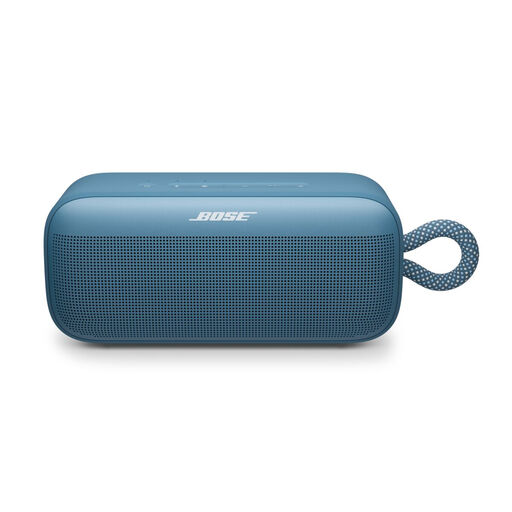
Why this product suits this profile: For longer trips, families and small parties, this model offers up to 20 hours of battery life, IP67 protection and a USB-C power bank function, according to the product details.
Battery life is considered alongside charging time and the USB-C port. The IP67 rating gives you a clear guide to how the speaker handles changing outdoor conditions.
Up to 20 hours of battery life according to the product details, IP67 protection, Multipoint and charging for mobile devices.
If your speaker will stay in the living room, study or on a desk, a battery-powered speaker isn’t essential. Mains-powered active or stereo Bluetooth speakers often offer more connections and separate left and right audio channels.
According to its specifications, the CORE X1 Active Bookshelf Speaker System has Bluetooth, HDMI ARC, an optical input, RCA, AUX and USB for MP3 files. This means you can connect it to a TV, games console, CD player or turntable, among other devices. Important: according to the product details, this model is not water-resistant and should only be used in dry indoor spaces.
If you’re happy with a larger cabinet, you could also consider the Marshall Woburn III, with 90 W rated power, HDMI, RCA and a 3.5 mm connection. For smaller rooms, the Marshall Acton III is a more compact option, with 60 W and an AUX input. Both models need to be connected to the mains and aren’t designed for outdoor use.
We’ve put together a complete, regularly updated list of products that meet these strict selection criteria and fully comply with the safety regulations in force in the EU.
Switch on the speaker, turn on Bluetooth on your smartphone and select the device name that appears. If it’s a new model, it’s a good idea to charge the battery first and, if needed, install the manufacturer’s app to get firmware updates. For use with a TV, check whether the speaker supports HDMI ARC, an optical input or Bluetooth only.
It depends on the battery capacity, volume, lighting and how long you use it for. A figure such as “up to 20 hours” is a maximum under certain conditions. If you use your speaker outdoors regularly, look for a model with USB-C and plenty of battery in reserve rather than one with a barely adequate run time.
For battery-powered devices, the main running cost is the small amount of electricity used to recharge them. Stationary models need to stay connected to the mains; their power consumption depends on the output, volume and standby mode. Check the power consumption figures and unplug the device if you won’t be using it for a while.