
Lieferung heute & morgen

Qualitätsgarantie

Willkommens-Angebote freischalten: KOSTENLOSE Lieferung | Bis zu 80 % RABATT | Kostenlose 30-Tage-JoyPlus-Testphase
App herunterladen
There is a huge choice of board games and card games: family games, strategy games for adults, fun party card games and compact travel games are all available in many different versions. However, the theme shown on the packaging is not the only factor that matters. The number of players, age rating, playing time and materials all determine whether a game will actually make it to the table regularly in everyday life.
Many games appear suitable for sociable gatherings, but are designed for only two to four people. Others require at least three or four players. If you are looking for a game for a family evening or party, you should check the player count specified by the manufacturer before buying.
The dynamics also change with the size of the group. A game designed for two people will not automatically work with eight participants. For larger groups, party games, music games or fast-paced card games with short rounds are often a better choice.
The age rating takes into account factors including understanding the rules, small components and the complexity of the gameplay. A game rated for ages 8 and over may be unsuitable for younger children, even if they already have experience with other family games. For games rated 12 or 16 and over, themes and content may also play a role.
You should also check the warnings about choking hazards. Small playing pieces, card tokens and dice should not be given to children below the stated age limit.
Descriptions such as “for the whole family”, “quick to learn” or “endless fun” reveal little about how a game is actually used. Verifiable details are much more helpful:
For games for children aged 8 and over, straightforward rules, easy-to-read cards and a suitable playing time are important. Simple card games such as UNO or SKYJO are usually easier to fit into a family evening than extensive strategy games with lengthy set-up times.
For games for adults, you should also consider the language, humour and thematic content. A party game featuring dark humour will not necessarily suit every birthday gathering.
The minimum and maximum number of players is a key consideration when choosing a game. According to the product details, Ticket to Ride: Europe is designed for 2 to 5 people, while Activity Original can be played by 3 to 16 people. For a game with friends, these differences are more important than the packaging design.
If you often play with different groups, look for flexible card games or games with team variants. With cooperative games such as EXIT: The Game, on the other hand, the focus is on solving a challenge together.
Short rounds are ideal for travelling, relaxing after work or getting a game night started. Longer board games require a sufficiently large, stable playing surface and a way to store games safely once they have been opened.
Card games and game boards are often made from paper or cardboard. They should be kept dry, protected from direct sunlight and cleaned with a dry cloth. For electronic games, the battery type and battery compartment should also be checked before buying. For products with app connectivity, check whether a smartphone and a compatible music or app service are required.
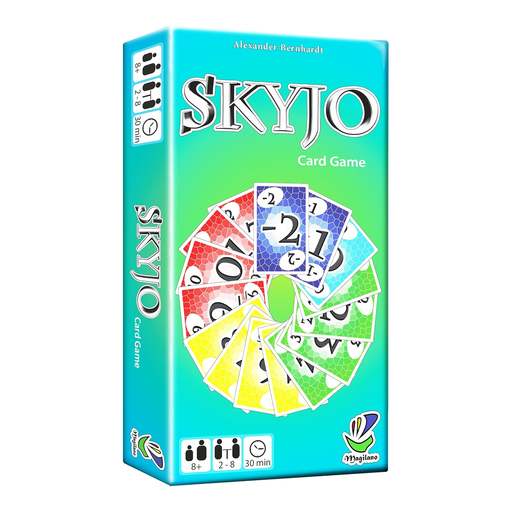
Why this product suits this profile: This card game is designed for 2 to 8 people aged 8 and over and requires no additional device. That makes it ideal for spontaneous family games and short game nights.
The stated player count and age limit are clearly specified. The rules are based on swapping cards, revealing cards and scoring points rather than extensive set-up.
Compact dimensions of 19,4 × 10,1 × 3,5 cm, 150 cards and multilingual instructions, including German.
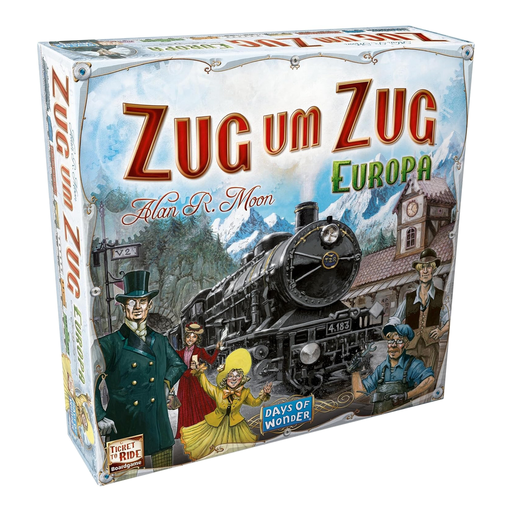
Why this product suits this profile: If you are looking for a structured family game with a visible game board and strategic decisions, this version is suitable for 2 to 5 people aged 8 and over.
The product details specify the player count, age range, materials and an approximate playing time of 45 minutes or more. The appeal therefore does not depend on an app or batteries.
Game board featuring European cities, 250 components according to the product description and a German language version.
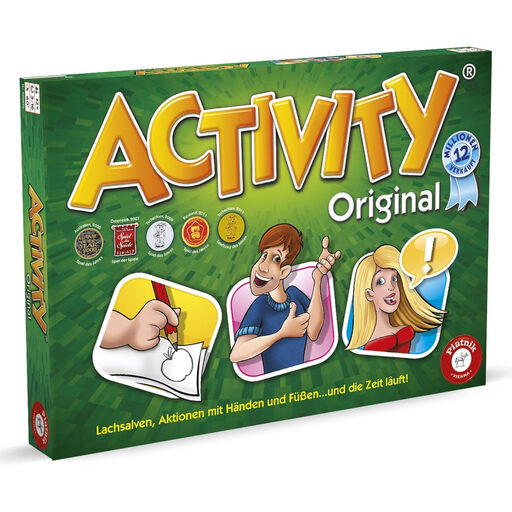
Why this product suits this profile: For large groups of friends, birthdays and party games, the design for 3 to 16 people is a major advantage. Drawing, acting and explaining take turns.
The high group capacity is clearly stated. With 2.640 terms, the game offers several types of challenge rather than relying on just one card mechanic.
Suitable for ages 12 and over, with dimensions of 28,5 × 40 × 5,5 cm and game materials made from cardboard.
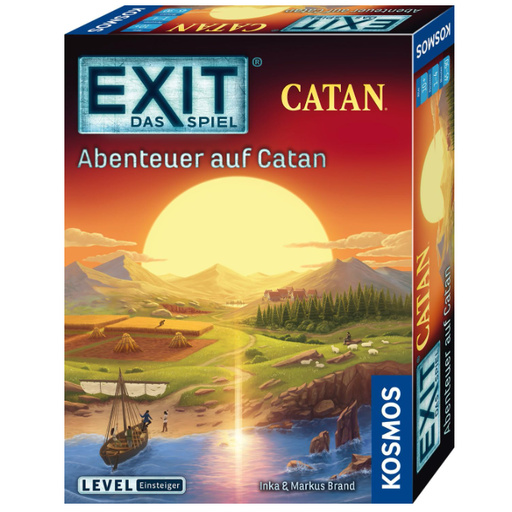
Why this product suits this profile: This escape-room game is designed for 1 to 4 people aged 10 and over, combining puzzles with joint decision-making.
The product description clearly highlights the age limit, optional app and cooperative gameplay. This helps you assess realistically how the game works before buying.
Beginner level, 1 to 4 people, no batteries required and a tutorial available through the optional KOSMOS app.
We have put together a complete, regularly updated list of products that fully meet these strict selection criteria and the safety regulations applicable in the EU.
Suitable options are games whose manufacturer gives an age rating of 8 and over and whose rules suit the group. According to the product details, Ticket to Ride: Europe, SKYJO, Yahtzee and Monopoly Harry Potter are suitable for this age group. Small parts should be kept away from younger children.
Lifespan mainly depends on the materials, storage and how the game is used. Cards and game boards will remain usable for longer if they are stored in a dry place, handled carefully and cleaned with a dry cloth. Before buying, it is worth checking the number of cards, the material details and whether all components can be stored in the original packaging.
The cost depends on the type of game, its contents and the size of the group. A compact card game may be all you need for spontaneous rounds, while larger board games offer more components and longer playing times. So do not compare only the purchase price. Also consider how often the game is realistically likely to be used and whether batteries, an app or additional accessories are required.