For sewing long bag seams
When sewing long side seams, check whether the fabric layers feed evenly and whether there is enough room beside the needle to handle your project.


For long bag seams, a well-controlled feed and enough room to guide the fabric matter more than a wide range of decorative stitches. Where several layers meet at corners, hems or handles, check the presser foot clearance, pressure settings and feed on your own fabric. For simple bags, an easy-to-use domestic machine may be all you need. Model specifications are not a comparative hands-on test for board game bags.
When sewing long side seams, check whether the fabric layers feed evenly and whether there is enough room beside the needle to handle your project.
With sturdy fabrics, lined edges or attached handles, it matters how well the machine handles the thickest seam you plan to sew. Suitability depends on how your fabric is constructed.
If you mainly want to sew straight seams, corners and bag openings, clear controls and a manageable speed may matter more than a range of programmes you’ll rarely use.
| Buying priority | What to check | Who is this important to? |
|---|---|---|
| Guiding long seams | Check the space to the right of the needle, the work surface and the feed on the specific model. Test a long seam using the fabric layers you plan to sew. | If you’re sewing long or bulky seams, you’ll want to guide the fabric evenly. Around 36% of consumers make this their top buying priority. |
| Handling thick seams | Check the presser foot clearance and whether presser foot pressure is adjustable. Test the thickest seam intersection you plan to sew on a sample, using a suitable needle and thread. | If several layers meet at corners, hems or handles, you’ll want to know whether your specific combination of materials will feed through the machine. Around 29% of consumers focus on these thicker seams. |
| Sewing with control | Check the speed control, needle up/down function and clear instructions. For zip bags, also check whether a zip foot is included. | If you’re new to sewing, you’ll want to control the speed and handle corners confidently. Around 21% of consumers prioritise ease of use for their bag project. |
| Choosing the right features | Check the stitch types you need, the presser feet included, compatible accessories and the written warranty terms for the specific offer. | If you’re planning projects beyond bags, you’ll want to choose features to suit them without paying for functions just in case. Around 14% of consumers put versatility and the right level of equipment first. |
A model name or a single power rating doesn’t prove that a machine can sew your specific combination of fabric, hem and reinforcement.
Test the thickest seam you plan to sew on a sample, using the fabric layers you intend to use, a suitable needle and the right thread.
The support for your project and how the fabric layers feed also affect how easily you can guide a bulky seam.
Consider the work area, support and feed together. If you’re considering an optional walking foot, check that it’s compatible with your exact model.
An additional warranty has its own terms and doesn’t replace any rights you may have against the seller if the goods are faulty.
Keep your proof of purchase and check the duration, requirements and contact details for any warranty offered.
The quilt ambition 635 is worth considering if you need space and integrated dual feed for long or bulky seams.
The Heavy Duty 4423 is a domestic machine that Singer describes as suitable for projects using fabrics such as denim and canvas.
The mechanical 1522 Limited Edition is an option if you want simple stitch selection alongside settings for different fabrics.
The Innov-is A16 is worth considering if ease of use, controlled speed and sewing bag corners are your priorities.
The computerised N 3300 Pro is an alternative if you’re planning other sewing projects as well as bags and want adjustable features.
The Joybuy products below range from basic domestic models to a hand-operated machine. If you’re sewing long seams or thick sections, check carefully that the specifications for each model suit your materials and the way you work.
 No image available
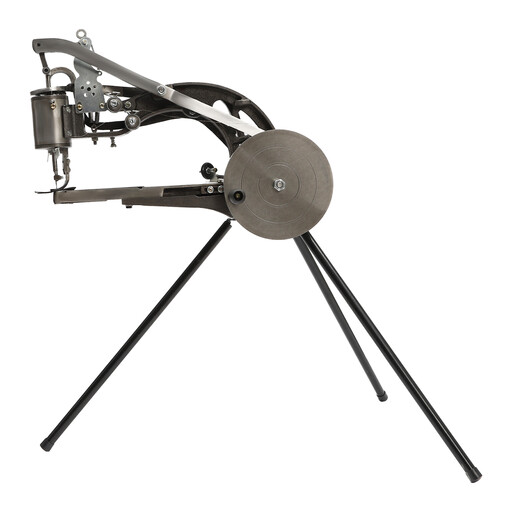
This manual model may suit you if you’re specifically looking for a hand-operated machine. Test it on a sample to check whether it suits the way your bag is made.
The product specifications state a material thickness of 3–5 mm and a stitch length of up to 6 mm.
It’s operated by hand crank and doesn’t need a power connection.
 No image available
The listed controls may be useful for simple sewing jobs. Before choosing it for multi-layer bag seams, check the stated material thickness.
Features include forward and reverse sewing and two speeds. The stated maximum material thickness is 2,5 mm.
The product specifications list a foot pedal, hand switch and LED light.
 No image available
The product description presents this model as suitable for simple repairs and everyday sewing. For long bag seams, check whether the work area and fabric feed are sufficient.
Features include two speed settings, forward and reverse sewing and an LED-lit work area.
The product specifications list dual-power operation and accessories.
 No image available
The product specifications describe a compact machine for basic household sewing. It has a fixed stitch and no reverse sewing, which is worth bearing in mind when choosing a machine for bag openings and reinforcement.
Features include two speed settings and operation by foot pedal or button.
The product title lists a foot pedal, accessories and the option to run it on four AA batteries.
 No image available
This entry-level model may suit basic household sewing. Test your planned fabric layers and seam intersections before sewing the finished bag.
The title lists 12 built-in stitches. Reverse sewing is mentioned in the product description.
The product specifications list speed selection, a foot pedal, LED light and threading aids.
No, not simply because the seams are long. First check whether the project can be supported and guided evenly on the machine you’re considering. A specialist machine may be more suitable if bulky designs or heavy materials push a domestic machine to its limits when you test a sample.
An overlocker isn’t automatically a substitute for a regular sewing machine when it comes to joining the pieces of a bag. TÜV SÜD describes overlockers primarily as machines that cut, sew and finish edges at the same time. Choose according to the seams and finishes you need. An overlocker can be a useful addition for suitable edge-finishing jobs.
Start by reading the manual for the specific model and setting up the machine as instructed. Brother recommends reading the manual before sewing for the first time. Use a sample made from the same layers of fabric you plan to use for the bag. The manual for your model takes precedence over general advice.
If goods are faulty, consumers may be able to assert their statutory rights against the seller. The Verbraucherzentrale states that for newly purchased goods, the time limit is two years from delivery or receipt. Any additional manufacturer’s or retailer’s warranty is voluntary and subject to its own terms.
Electrical equipment covered by the EU Low Voltage Directive must carry CE marking. The Directive applies to equipment with a rated voltage of 50 to 1.000 V AC or 75 to 1.500 V DC. Check the rated voltage and markings on the specific machine. CE is the manufacturer’s declaration of conformity, not an independent quality mark for sewing results.
An electric sewing machine must not be put in household waste; it needs to be collected separately. The Umweltbundesamt lists recycling centres and suitable retail take-back points among the options. Check which disposal or return facilities are available locally.