
Lieferung heute & morgen

Qualitätsgarantie

Willkommens-Angebote freischalten: KOSTENLOSE Lieferung | Bis zu 80 % RABATT | Kostenlose 30-Tage-JoyPlus-Testphase
App herunterladen
Finding the perfect board game can quickly become overwhelming. The packaging promises endless fun, but all too often, an expensive game ends up in the cupboard after just one play. As your Joybuy Product Recommendation Officer, I'm here to help you navigate the common pitfalls and make an informed decision that leads to unforgettable game nights with family and friends.
Before we dive into recommendations, it's crucial to understand the most common marketing traps that often lead to disappointment.
To avoid these pitfalls, you should check three key aspects before buying. These will help you separate the wheat from the chaff.
The mechanics are the heart of any game. Ask yourself what kind of experience you're looking for. Strategy games with resource management and planning (like Catan) offer a different kind of challenge than luck-based family games or communicative party games. High replayability often comes from variable game setups (modular boards), different victory conditions, or a large number of cards and events that make each session unique.
Don't just look at the stated player count; search for information on the optimal number of players. A dedicated two-player game is often more intense and strategic than a multiplayer variant. For a casual game night with a rotating cast of guests, games with a flexible player count and a moderate playtime of 30 to 60 minutes are ideal. In contrast, complex games for adults can take several hours to complete.
A good indicator of complexity is the length and structure of the rulebook. Games that have won the prestigious "Spiel des Jahres" (Game of the Year) award are typically characterised by an easy entry point and high accessibility for families. The "Kennerspiel des Jahres" (Connoisseur's Game of the Year), on the other hand, is aimed at more experienced players. Check how long the setup takes and how quickly the rules can be explained—a quick start is crucial, especially for children's games.
Based on the criteria above, we've identified a few games that are particularly well-suited for specific profiles.
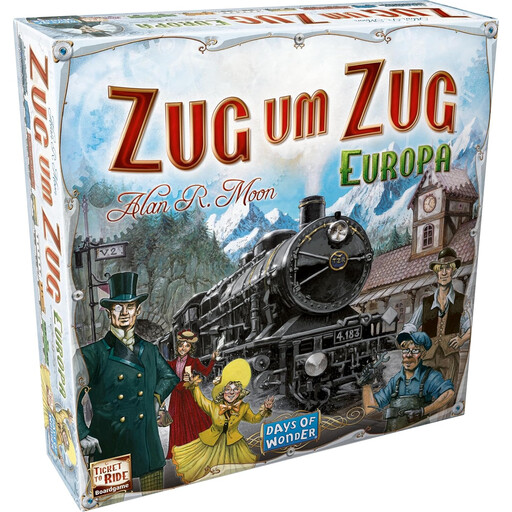
Why it's a great fit: This game is an ideal gateway into the world of board games. According to the publisher, the rules can be explained in about 5 minutes, and the goal—building train routes across Europe—is both understandable and motivating for children and adults alike. It combines simple turn mechanics with strategic planning.
The replay value is very high thanks to the many different destination tickets. It also works consistently well at its stated player count of 2 to 5 and provides a complete experience without needing any expansions.
Simple rules meet strategic depth. It's accessible enough for a spontaneous family game night but also offers enough substance to engage experienced players.

Why it's a great fit: Catan is a modern classic that offers a brilliant mix of strategy, trading, and a touch of luck. Players who enjoy planning, negotiating, and adapting their tactics will find a sophisticated and interactive challenge here.
Thanks to the modular board, no two games are ever the same, which ensures enormous replay value. The base game is a complete experience, and the age rating of 10+ is appropriate for its strategic depth.
The combination of resource management and direct player interaction through trading makes every round dynamic. It's a cornerstone for any strategy game collection.
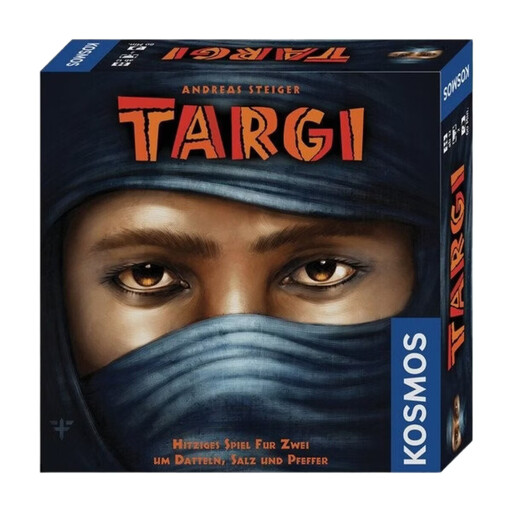
Why it's a great fit: Targi was designed exclusively as a two-player game. It offers a deep, strategic duel where every decision counts. The clever mechanic, where placing your own pieces restricts your opponent's options, ensures constant interaction.
It solves the problem of games that aren't well-balanced for two players. Since it was designed from the ground up for this player count, a fair and exciting head-to-head contest is guaranteed. The replay value is high due to the variable setup.
A sophisticated worker-placement mechanic with high but indirect player interaction. Ideal for couples or friends looking for a strategic duel without direct conflict.
We've compiled a full, up-to-date list of products that fully meet these strict selection criteria and German safety regulations.
The "Spiel des Jahres" (Game of the Year) award is given by an independent jury to a family game that stands out for its original idea, understandable rules, and appealing design. It's a seal of quality for high accessibility and fun for a broad audience, not necessarily for the most complex or strategic game of the year. For more demanding players, the "Kennerspiel des Jahres" (Connoisseur's Game of the Year) award is often a better indicator.
To ensure the longevity of your board games, you should follow a few simple rules. Ideally, store the game boxes horizontally to prevent the board or cards from warping. Avoid direct sunlight and high humidity, as these can fade the material and cause it to swell. Small components like dice or meeples are best kept in small resealable bags or sorting boxes to prevent them from getting lost.
Expansions can be a worthwhile investment if you've already played the base game extensively and are looking for new challenges. A good expansion adds new mechanics, more variety, or additional players without disrupting the game's balance. It should be seen as a way to refresh a beloved game, not as a necessary purchase to fix an incomplete one. Therefore, always check if you enjoy the base game on its own first.