
Lieferung heute & morgen

Qualitätsgarantie

Willkommens-Angebote freischalten: KOSTENLOSE Lieferung | Bis zu 80 % RABATT | Kostenlose 30-Tage-JoyPlus-Testphase
App herunterladen
The world of board games can be overwhelming. Whether for a cozy family evening, a lively party with friends, or as a gift—finding the right game isn't always easy. Many boxes promise instant fun, but reality often looks different. As your Joybuy Product Recommendation Officer, I'll help you navigate the common pitfalls and make an informed decision.
Before we get to the recommendations, it's important to know the most common issues that can lead to frustration after your purchase.
To avoid the pitfalls mentioned above, you should check three key aspects. These will help you filter out the noise and find a game that truly fits your needs.
Pay attention not only to the stated game duration but also to the recommended age and the description of the gameplay. A game for a game night with casual players should have a moderate length (approx. 30–60 minutes) and accessible rules. Classic board games are often a safe bet here. The age rating is a good indicator of complexity: a game for ages 10 and up typically requires more strategic thinking than one for ages 7 and up.
Consider the group size you play with most often. Are you looking for family games for four people or party games for groups of eight or more? Check how the game scales with different player counts. Cooperative games, where everyone works together towards a common goal, are often a great fit for groups with varying skill levels. Competitive games can lead to long waiting times with an odd number of players or in large groups.
The longevity of a game heavily depends on the quality of its components. Sturdy cards, robust game pieces, and a solid box are hallmarks of a product with high replay value. If you're looking for travel games, a compact package and magnetic or easily storable parts are crucial to ensure nothing gets lost on the go. This is particularly relevant for card games for adults and children, which are often taken along on trips.
Based on the criteria above, we have selected a few games from our collection that are well-suited for different profiles and occasions.
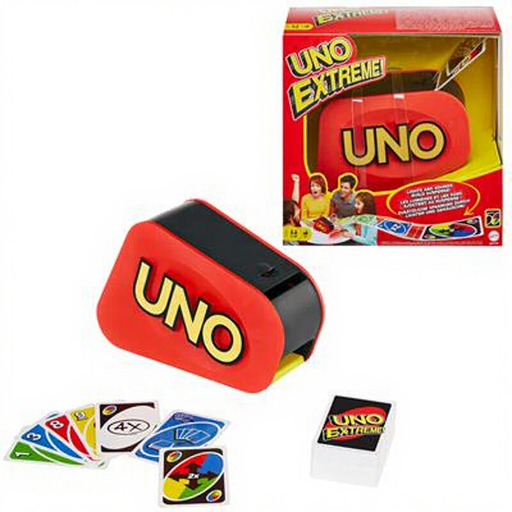
Why it's a great fit: Ideal for families looking for a familiar game with an exciting new twist. The electronic card launcher creates unpredictable moments and keeps the excitement high for both kids and adults.
Bypasses the "5-Minute Rule" trap, as the basic rules of UNO are widely known. The "Extreme" variant adds excitement without making the game overly complicated.
The card launcher with light and sound effects provides a high fun factor and makes every round unpredictable. Suitable for a large group of 2-10 players.
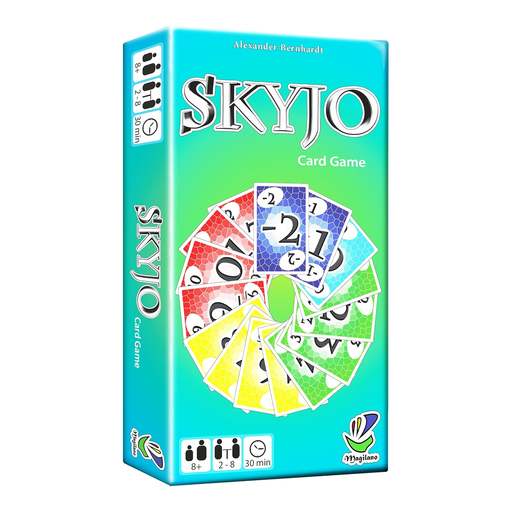
Why it's a great fit: Perfect for groups that appreciate a mix of luck and tactics. The goal of scoring as few points as possible requires forward-thinking and careful observation of your opponents.
Offers high replay value. Since the card distribution and opponents' actions are different in every round, the game remains engaging and demands new tactical considerations even after many plays.
Simple rules combined with strategic depth. The game is quick to explain but offers enough substance to challenge even experienced players. It also subtly promotes mental math and probability assessment.

Why it's a great fit: An interactive music game that livens up any party. Players must arrange music hits in chronological order. Integration with an app that plays the songs ensures a modern and straightforward gaming experience.
Avoids the mismatched player count trap. The gameplay works just as well with 2 players as it does with 10, since everyone guesses and listens to the music simultaneously. It is explicitly designed for larger, social gatherings.
No lengthy rule-reading required. Just scan a card and start playing. The music sparks memories and conversations, making it an ideal icebreaker for parties.
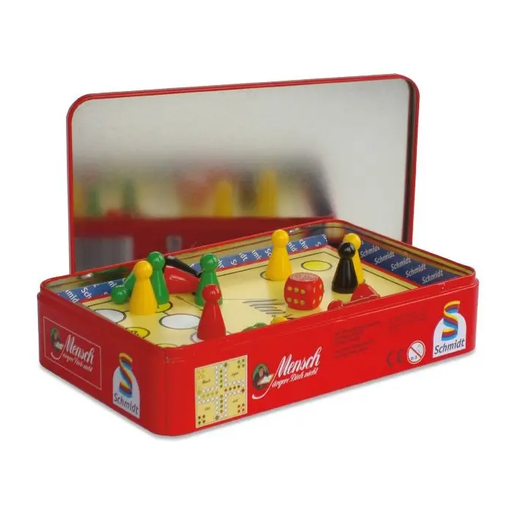
Why it's a great fit: The classic game in a robust and compact metal tin. Perfect for holidays, long train rides, or an afternoon in the park, without parts getting lost or the box getting damaged.
Directly addresses the problem of poor portability. While many games come in bulky cardboard boxes, the metal tin offers optimal protection and a compact form factor for transport.
The combination of a timeless, well-known gameplay and extremely durable packaging makes it a reliable companion for many years and countless journeys.
We have compiled a complete, up-to-date list of products that fully meet these strict selection criteria and UK/EU safety regulations.
A good family game is defined by several factors: The rules should be simple enough for younger players to grasp quickly. A balanced mix of luck and strategy is ideal, so all age groups have a fair chance. Additionally, the game duration should be reasonable, typically between 30 and 45 minutes, to keep everyone engaged. Always check the manufacturer's age recommendation.
This largely depends on the specific game. Some games are optimized for smaller groups of 4 to 6 people, while others only come into their own in rounds of 8 or more. A look at the box will tell you the recommended player count. For larger groups, games that allow for team play or have very short downtime between turns are most suitable.
To maximize the lifespan of your games, you should store them flat to prevent the game board from warping. A dry, cool place away from direct sunlight is optimal. Small components like dice or pawns are best kept in resealable bags. For frequently used card games, using card sleeves can significantly reduce wear and tear.