
Lieferung heute & morgen

Qualitätsgarantie

Willkommens-Angebote freischalten: KOSTENLOSE Lieferung | Bis zu 80 % RABATT | Kostenlose 30-Tage-JoyPlus-Testphase
App herunterladen
Searching for board games for children and adults often starts with a wide choice and ends with an unsuitable box on the shelf. A game may look family-friendly on the packaging, but be too complicated for younger children, too short-lived for adults or impractical for the planned number of players. That is why it is worth taking a closer look at the specific product details when choosing family games, party games and educational games for children.
“From 4 years” initially describes the manufacturer’s recommendation, but says little about whether a child can understand the rules independently. For a children’s game from the age of 4, parents should also check:
For example, the Ravensburger game Lotti Karotti features simple card actions, a manageable playing track and a playing time of approximately 20 minutes. These are clear, practical criteria for a family game with younger children.
A game for two people does not automatically solve the problem of a games night with four or more participants. Conversely, a large family game may be unnecessarily extensive for a couple. Before buying, you should therefore consider the details for number of players, minimum age and playing time together.
For couples, cooperative board games such as Sky Team, which is designed for two players, may be suitable. For larger groups, party games or card games such as UNO or Top Ten may be a better choice.
Educational games for children can develop a range of skills, including matching, spatial thinking, understanding numbers, memory and strategic planning. Not every game is suitable for every stage of development. A 24-piece puzzle needs to be assessed differently from a strategy game with several stages of play.
If you are specifically looking for educational games, you should first identify the desired learning objective, then compare the materials, piece size and recommended age.
The recommended age is a minimum criterion, not a guarantee of a suitable playing experience. For families with children, shorter rounds are often easier to fit into everyday life. With children’s games from the age of 4, clear sequences and just a few steps are helpful. From around 6 to 8 years old, depending on the child, initial strategy games or more complex travel games may also be suitable.
The rules can be more detailed for adults and older children. According to the product description, Ticket to Ride: Europe is designed for 2 to 5 players aged 8 and over, and takes approximately 45 minutes or longer. This should be taken into account when planning a family games night.
Game materials made from cardboard, paper, wood or plastic have different properties. Cardboard pieces should be stored somewhere dry, while wooden or plastic pieces can usually be cleaned with a dry cloth. It is also important to check whether all the pieces can be stored safely again once the game is over.
For travel games, compact dimensions and a low weight are key. The MIMI Wooden Tabletop Balance Ball Game measures 28,2 × 10 × 4,5 cm and weighs 0,2 kg according to the product details. It consists of a wooden board, a metal ball and a game holder. Due to its small parts and the ball, it is not suitable for children under 3 years of age and should be used under supervision.
Small game pieces may present a choking hazard. For this reason, the recommended age shown on the product page and packaging should be followed. Magnetic games require additional precautions: strong magnets must not be swallowed and should be checked regularly for damage.
For German households, the language of the game instructions and cards is also important. Getting started is easier with a family game in German. With international products, buyers should check in advance whether the desired German edition is available.
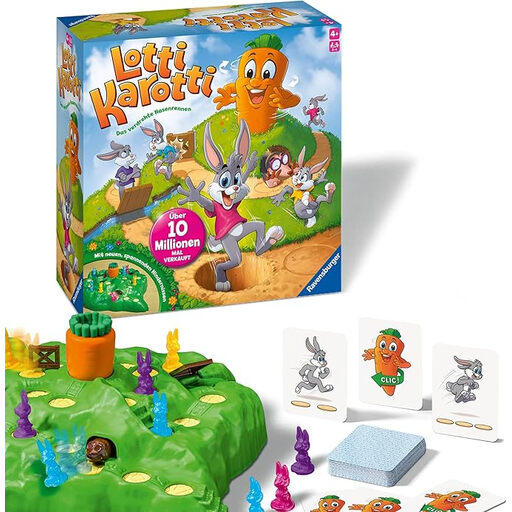
Why this product suits this profile: The game is designed for 2 to 4 players aged 4 and over, with a stated playing time of approximately 20 minutes.
The manageable round length and clearly explained card sequence reduce the risk of an overwhelming introduction.
Recommended age from 4 years, 2 to 4 players, and game materials made from cardboard and plastic.

Why this product suits this profile: This cooperative board game is designed for exactly 2 players aged 10 and over, and includes 21 different airport scenarios.
The fixed number of players prevents false expectations of a large family game, while the scenarios provide clearly defined tasks.
Cooperative gameplay, a dice-placement mechanic and several missions with different challenges.
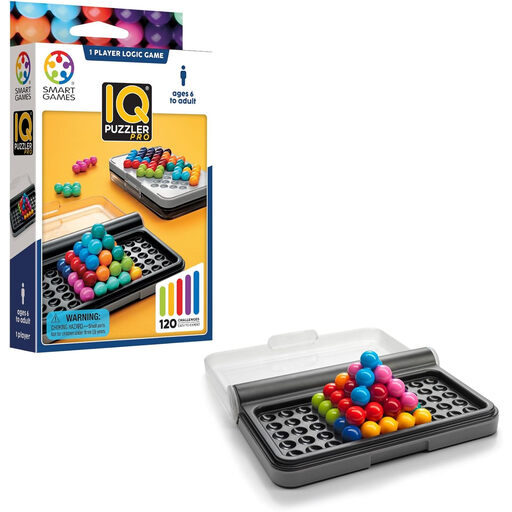
Why this product suits this profile: This compact solo game is designed for children aged 6 and over and includes 120 challenges in two- and three-dimensional game modes.
The number of challenges and portable format make its intended use clear, rather than promising a group game for many players.
120 challenges, solo-play mode and compact dimensions for taking on the go.
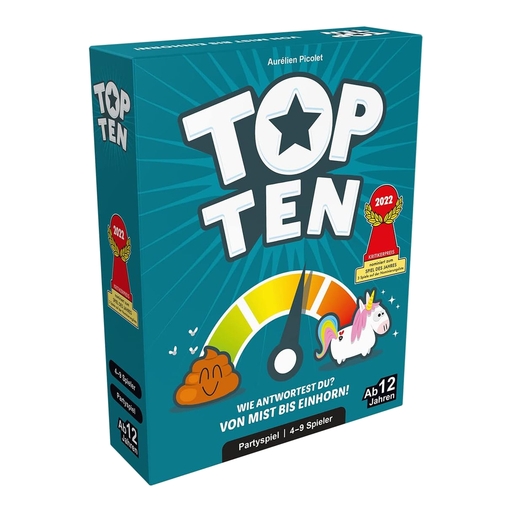
Why this product suits this profile: This cooperative card game is designed for 4 to 9 players aged 12 and over, with a stated playing time of around 30 minutes.
The recommended group size and short round length are clearly stated, making it easier to plan a larger gathering.
4 to 9 players, cooperative rules and a compact format made from cardboard, plastic and paper.
We have put together a complete, regularly updated list of products that fully meet these strict selection criteria and the safety regulations applicable in the EU.
For families with different age groups, simple rules, a manageable playing time and a flexible number of players are useful. According to the product details, Lotti Karotti is suitable for 2 to 4 players aged 4 and over. For older children and adults, strategy games such as Ticket to Ride: Europe or cooperative board games such as Sky Team may be a good choice.
Their lifespan depends mainly on the quality of the materials, how often they are used and how they are stored. Cardboard and paper should be kept dry, plastic pieces should all be collected and damaged parts should be removed. Games with magnets require regular checks. It is not possible to give a standard lifespan for the category as a whole.
Before buying, you should compare the age, number of players, playing time, language and occasion. For younger children, children’s puzzles or simple educational games may be suitable. Depending on the group, adults and larger gatherings may enjoy party games, escape-room games, card games or more challenging strategy games. Checking the specific product details helps prevent the gift from going unused because there are not enough players or the game is too complex.