
Lieferung heute & morgen

Qualitätsgarantie

Willkommens-Angebote freischalten: KOSTENLOSE Lieferung | Bis zu 80 % RABATT | Kostenlose 30-Tage-JoyPlus-Testphase
App herunterladen
Board games are among the most versatile ways to spend your free time. A quick dice game can add a little fun to a family evening, while a strategy game or escape-room game can set the pace for a longer games night. But there’s plenty of choice. If you focus only on product images, familiar themes or bold marketing claims, you could end up with a game that doesn’t suit your group in everyday life.
“Suitable for the whole family” doesn’t automatically mean a game works just as well with two players as it does with six. Some games need at least three players, while others only come into their own with a larger group. So check the stated player count and think about how often you’ll actually have two, four or six people around the table.
The age recommendation on the box is a useful guide, but it doesn’t tell you everything about the length of the rules, reading skills or how long players need to concentrate. Games for children aged 6 and over can vary considerably: a simple building game is very different from a strategy game with several phases. If a game contains small parts, be sure to check the manufacturer’s warning. Many products are not suitable for children under 3, as they may contain parts that could be swallowed.
A game may come in a small box but still contain loose cards, delicate cardboard pieces or game pieces that aren’t secured in place. For train journeys, camping and family days out, magnetic games, folding boxes or bags with separate compartments are often more practical. Check the dimensions, weight and storage solution rather than relying on the word “travel”.
For spontaneous games, choose board games with straightforward rules and a short playing time. For a longer games night, family board games that take 45 minutes or more may be a better fit. According to the product information, Ticket to Ride: Europe is designed for 2 to 5 players aged 8 and over, and takes around 45 minutes or longer. If you’re looking for games for 2 to 6 players, check the maximum group size carefully.
Store cardboard and paper components in a dry place and clean them carefully to stop cards and game boards from warping. Keep magnetic games out of reach of young children. If a game contains small parts, follow the manufacturer’s guidance. Electronic products such as chess robots also involve extra considerations, including the battery, app compatibility and charging requirements.
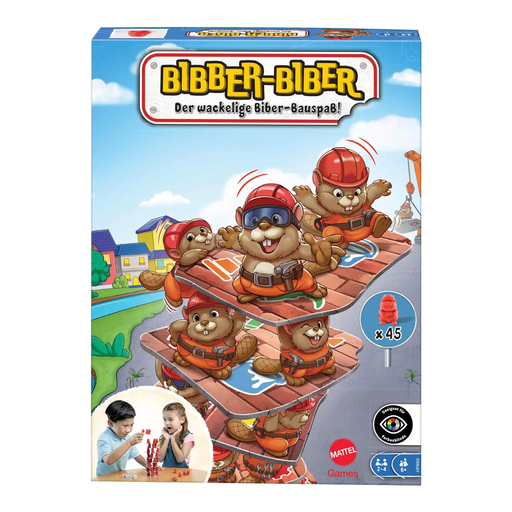
Why this product suits this profile: According to the product information, the game is designed for 4 players aged 6 and over, and requires neither batteries nor assembly. It’s a straightforward option for families looking for an easy introduction to game nights.
The set player count and age recommendation make it clear how many people can play and who it’s suitable for. The compact contents also mean there’s less to set up.
Suitable for ages 6 and over, for 4 players, no batteries required, and described as suitable for family and travel.
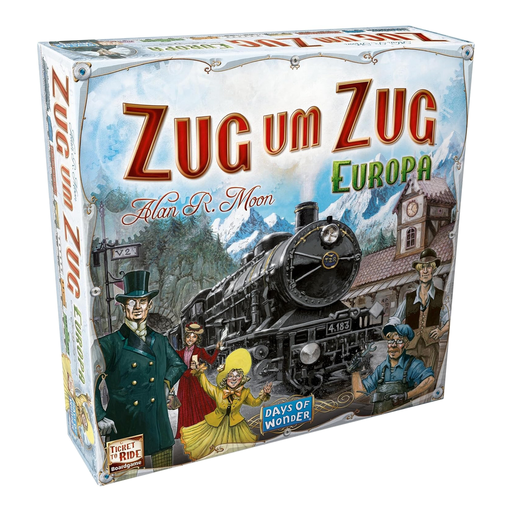
Why this product suits this profile: This game combines route planning with a clearly defined objective. It’s designed for 2 to 5 players aged 8 and over, and according to the product information, includes paper, cardboard and plastic components.
The player count, minimum age and approximate playing time are all clearly stated, making it easier to plan a games night.
For 2–5 players, ages 8 and over, around 45 minutes or longer, with a documented mix of materials.
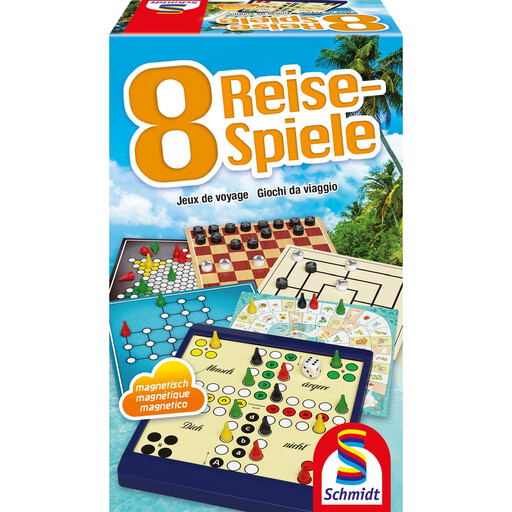
Why this product suits this profile: According to the product description, this magnetic collection includes eight classic games and is designed for players aged 6 and over. Its folding format makes it handy for trips, holidays and playing with different groups.
The magnetic pieces help prevent game pieces from sliding around. According to the description, everything can be stored inside the folding game board.
Eight games, magnetic pieces, a folding design and dimensions of 18,5 × 11,5 × 7 cm.
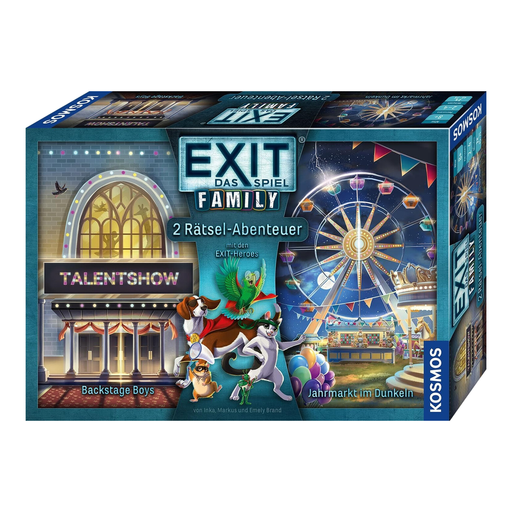
Why this product suits this profile: With two puzzle adventures, co-operative play and a recommended age of 8 and over, this set is an appealing choice for families and small groups.
The product description clearly specifies the two adventures and the recommended age group. Buyers can also bear in mind that the puzzle materials may be altered during play.
Two adventures, for 2–4 players aged 8 and over, with the option to use the KOSMOS app for instructions and a timer.
We’ve put together a complete, regularly updated list of products that meet these strict selection criteria and comply fully with the safety regulations in force across the EU.
Look for an age recommendation that suits your children, straightforward rules and a player count that works for your family. Younger children may enjoy simple dice games and building games. From around age 8, strategy games, co-operative board games and escape-room games can also be suitable, provided the group enjoys reading and making decisions together.
A travel game should be compact, easy to pack away and ideally resistant to pieces sliding around. Magnetic games or sets with a folding box and built-in compartments are handy for train journeys, camping and holidays. Also check whether you’ll need a flat surface to play on and how many people can join in.
A game’s lifespan depends on its materials, how it’s stored and how often it’s played. Keep cardboard and paper components in a dry place, away from direct sunlight. Put loose pieces back in the original packaging after every game. Games with materials that need to be written on, folded or cut may have a limited number of uses by design.