
Lieferung heute & morgen

Qualitätsgarantie

Willkommens-Angebote freischalten: KOSTENLOSE Lieferung | Bis zu 80 % RABATT | Kostenlose 30-Tage-JoyPlus-Testphase
App herunterladen
Board games are suitable for all kinds of occasions: a quick card game can add something extra to a family evening, while a strategy or cooperative game can provide structure for a longer game night. However, the choice is vast, and product descriptions do not always highlight the information that matters most when buying.
Three common pitfalls occur particularly often:
The stated number of players is a key comparison point. For families, games for 2 to 4 people are a flexible choice for everyday use. For friends and parties, party games or card games for 4 to 9 or 2 to 10 people are generally more suitable.
Also check whether the stated maximum number of players is only theoretical. In a game with many participants, waiting times can occur if each person takes their turn individually. Cooperative games with clearly defined shared tasks are often easier to manage in groups, while strategy games may require more time for decision-making.
The age recommendation describes the intended target group, but it does not replace checking the game mechanics. A game for ages 6 and over should have short rules, easy-to-recognise components and a playing time suitable for children. For children under 3, small parts are always an important warning, as they may present a choking hazard.
For teenagers and adults, you should also check the content. For example, the card game “Verdammt Nochmal” is expressly intended for people aged 18 and over and contains macabre or provocative scenarios. This type of content will not be suitable for every group.
Board games made from cardboard, paper and plastic can generally be stored in a dry place away from direct light. Games with playing pieces or cards benefit from suitable storage to prevent anything from getting lost. Compact card games are a good choice for small flats or travelling.
Technical requirements can affect how a game is used. Hitster Bingo uses music cards and a connection to Spotify; according to the product details, the scanning function requires 3 AAA batteries, which are not included. Purely analogue card games such as UNO, on the other hand, have no battery costs. It is therefore worth briefly checking the app, device and battery requirements before buying.
The following board games are assigned to different situations and target groups. The stated age limits, player numbers, materials and game mechanics are the key considerations.
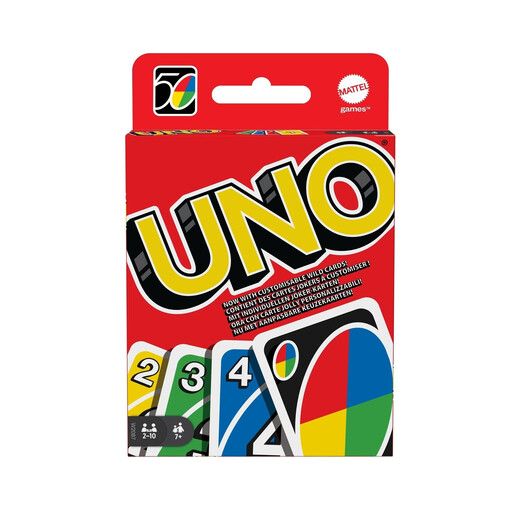
Why this product suits this profile: UNO is designed for 2 to 10 people aged 7 and over and can be played without batteries or set-up. It is ideal for families, spontaneous games and as an easy gift idea.
The number of players and recommended age are clearly stated. There are also no ongoing costs for batteries or an app.
112 cards, colour and number combinations plus action cards; compact storage and no assembly required.
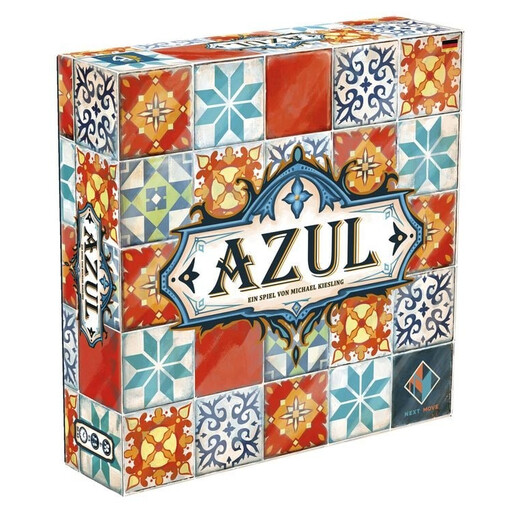
Why this product suits this profile: Azul is designed for 2 to 4 people aged 8 and over and takes around 30 to 45 minutes according to the product details. Choosing and placing colourful tiles will appeal to players looking for predictable gameplay and tactical decisions.
The target group, number of players and approximate playing time are clearly stated. The small playing pieces make the age and safety information particularly important.
German edition, 2 to 4 players and a clearly described tile-laying game mechanic with no batteries.
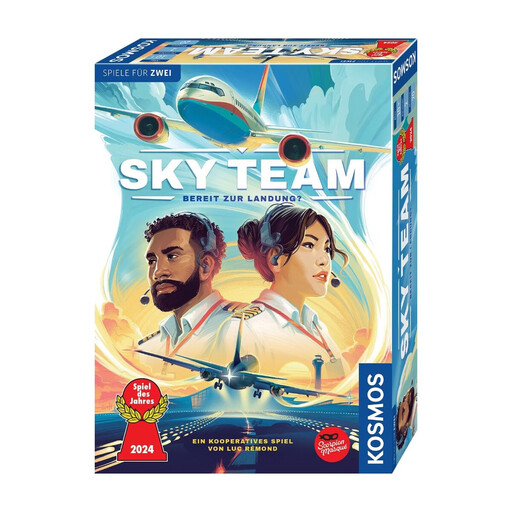
Why this product suits this profile: This cooperative strategy game is designed for exactly 2 people aged 10 and over. With 21 airport scenarios, it offers varied challenges for couples or regular game nights.
The fixed two-player format prevents false expectations about playing in a large group. The scenarios and variable challenges are clearly specified in the product details.
Cooperative dice-placement system, 21 missions and no batteries required.
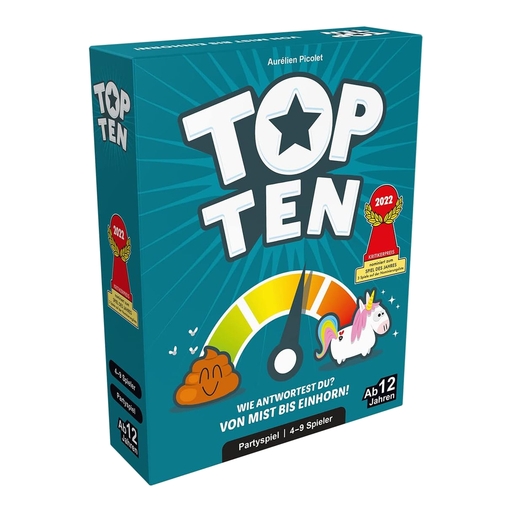
Why this product suits this profile: Top Ten is designed for 4 to 9 people aged 12 and over. Players arrange their answers according to a secret number level, making the game ideal for parties and sociable game nights.
The suitable group size and playing time of around 30 minutes are stated. No assembly or batteries are required.
Cooperative gameplay, compact packaging and themed cards for different groups.
We have put together a complete, regularly updated list of products that fully meet these strict selection criteria and the safety regulations applicable in the EU.
Look for a clear age recommendation, manageable rules and warnings about small parts. According to the product details, “Hands Up” by Schmidt Spiele is suitable for ages 6 and over. Cooperative family games can also be a good choice if adults help younger children understand the rules.
There is no set number. A small selection from different categories is practical: a quick card game, a board game for two to four people and a party game for larger groups. This allows you to adapt the game to the available time, ages and group size.
Many board and card games are completely analogue and need neither batteries nor digital extras. Music- or app-based games, however, may require a smartphone, an account, batteries or an internet connection. Check these details before buying, particularly if the game is intended as a gift.