
Lieferung heute & morgen

Qualitätsgarantie

Willkommens-Angebote freischalten: KOSTENLOSE Lieferung | Bis zu 80 % RABATT | Kostenlose 30-Tage-JoyPlus-Testphase
App herunterladen
A new game should suit your household, the time you have available and the number of people who want to play. In practice, unclear age recommendations, missing pieces or a difficulty level that’s not quite right can quickly lead to disappointing purchases. So if you’re looking to buy board games online, don’t judge them by the cover art and marketing claims alone.
A game for two to four players is no use if six people regularly join your games night. Conversely, games designed for large groups can feel unbalanced or less varied with just two players. Check the minimum and maximum number of players, and consider whether you can split into teams.
“Age 8+” doesn’t automatically mean that every child will understand the rules without help. The amount of text, reading ability, attention span and handling of small game pieces all make a difference. More complex strategy games or escape-room games may also require a longer playing time and abstract thinking, despite the age recommendation.
A stated playing time of 45 minutes can vary depending on the number of players, how long it takes to explain the rules and how experienced everyone is. Compact card games or simple dice games are a good choice for a short family games night. For a longer evening, consider party games, tactical games or co-operative scenarios.
Check the exact player count, for example “2–5 players” or “1–4 players”. A co-operative game lets everyone make decisions together to take on the game system, while a competitive game puts players directly up against one another. Clear rules and flexible team arrangements are often useful for families with children of different ages.
The manufacturer’s age recommendation should match the developmental stage of the intended players. Many board games contain small cards, figures, counters or tiles. The warning “not suitable for children under 3 years” refers to the potential risk of choking or suffocation, and is no substitute for choosing a game that’s appropriate for the child’s age.
For a game aimed at children aged 6 and over, short rules, easy-to-recognise symbols and manageable rounds are also helpful. Games for adults can be a good fit if they involve longer texts, more complex decisions or a greater amount of information.
Check whether the game is made from cardboard, paper, plastic, wood or a combination of materials. Games with lots of small pieces need to be stored in an organised way. Missing cards or counters, or an unclear instruction booklet, can make a game less practical to use. If a game is supported by an app, think of the app as an extra rather than a requirement.
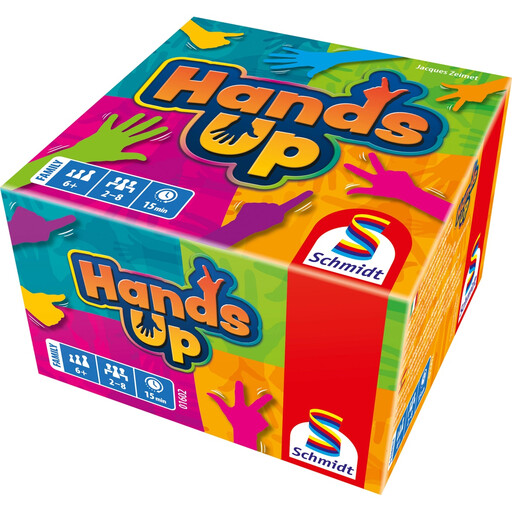
Why this product suits this profile: This compact card game is designed for children aged 6 and over and doesn’t need batteries. It’s ideal for short games with family and friends.
The age recommendation and handy format make it easier to narrow down your options. Still, check the stated player count on the box before buying.
Cardboard cards, no batteries required and a compact box measuring 10 × 10 × 6,8 cm.
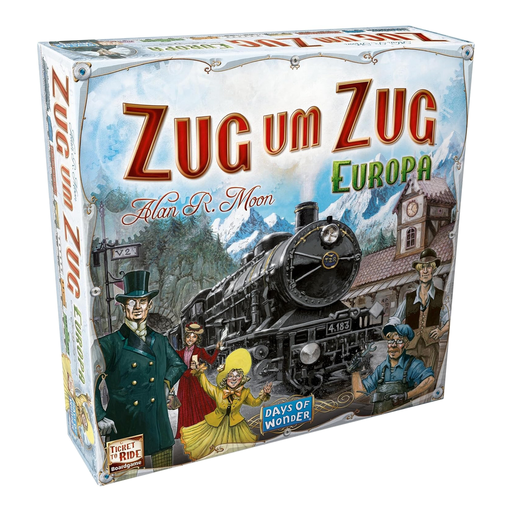
Why this product suits this profile: This German-language family game combines a clearly defined objective with route-building and tactical decisions for 2–5 players aged 8 and over.
The player count, age recommendation and approximate playing time of 45 minutes or more are clearly stated, making it easier to plan.
German-language edition, for 2–5 players, with materials including cardboard, paper and plastic.

Why this product suits this profile: This co-operative board game is designed specifically for 2 players aged 10 and over, with 21 airport scenarios featuring different challenges.
It’s clearly designed for two players, so you won’t expect it to work for a large family group.
Co-operative game mode, 21 scenarios, no batteries required and compact packaging.
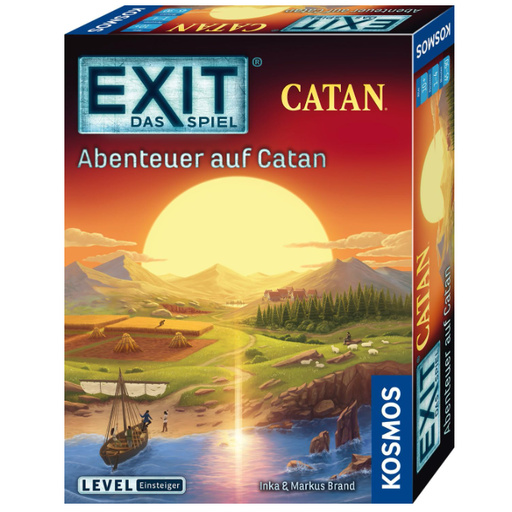
Why this product suits this profile: 1–4 players aged 10 and over solve puzzles together. Its “Beginner” difficulty rating makes it a good choice for groups looking for an escape-room game that’s easy to get into.
The target audience, difficulty level and player count are all clearly stated. You can play with or without the app.
Co-operative gameplay, a tutorial and an atmospheric timer in the optional KOSMOS app, with no batteries required.
We’ve put together a complete, regularly updated list of products that meet these strict selection criteria and fully comply with the safety regulations in force in the EU.
For groups whose size varies, look for games with a flexible player count. According to its product description, DOG is designed for 2–6 players aged 8 and over. If you’re playing as a pair, specially designed co-operative games such as Sky Team are another option.
How long a game lasts depends on its materials, storage and how it’s used. Keep cards and cardboard pieces somewhere dry and out of direct sunlight. Plastic parts and wooden components are best cleaned with a dry cloth. Checking all the pieces after each game makes it easier to spot anything missing straight away.
An optional app doesn’t usually mean the game itself uses batteries, unless the box contains electronic components. Before buying, check whether the app simply adds to the rules or is essential to playing the game. The KOSMOS games mentioned above can also be played without the app.