
Lieferung heute & morgen

Qualitätsgarantie

Willkommens-Angebote freischalten: KOSTENLOSE Lieferung | Bis zu 80 % RABATT | Kostenlose 30-Tage-JoyPlus-Testphase
App herunterladen
Board games are an easy way to spend time together without screens. Even so, choosing the right one is not always straightforward: a game may appear suitable for the whole family on the packaging, but in practice only work well for a particular age group or number of players.
Three common buying mistakes are particularly likely to lead to the wrong choice:
If you want to buy board games, you should therefore look beyond the theme and design. Above all, compare the recommended age, group size, playing time and game mechanics.
The “aged 8+” recommendation is a useful guide to the rules and content. However, it does not replace checking the safety information. Small parts may present a choking hazard. Particular care is needed with games for children under three; some products are expressly unsuitable for this age group.
If you are choosing games for a family with children, you should also check:
For children’s games and board games aged 8+, the actual complexity often has a greater impact on enjoyment than the design on the packaging.
Family games for two to four people usually work well around the kitchen table. Party games, on the other hand, often need at least four players so that teams can be formed. For example, Piatnik Activity Original is listed for 3 to 16 people aged 12+. This makes it better suited to larger groups than a classic two-player game.
Also check whether everyone plays at the same time or takes turns. In Ligretto and certain dice games, several people remain active, while tactical board games can involve longer waiting times.
Card games, board games and dice games suit different playing preferences:
You should also check what is included. Hitster games need a smartphone, the relevant app and a connection to Spotify to play the music. Looping Louie requires batteries, which are not included according to the product information. Details like these matter when you are planning an impromptu games night.
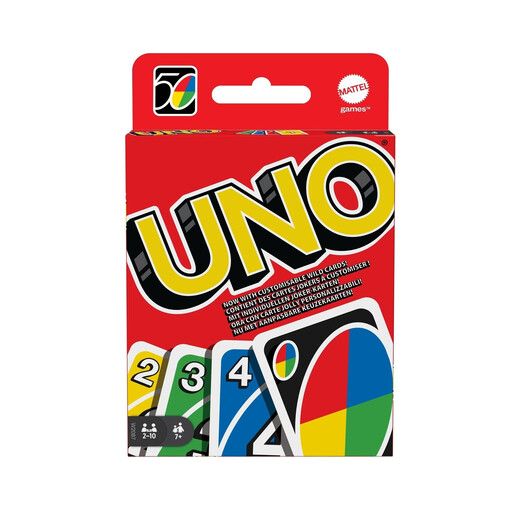
Why this product suits this profile: This card game is designed for 2 to 10 people aged 7+ and is ideal for families, teenagers and quick games between other activities.
The number of players, age recommendation and contents, including 112 cards, are clearly stated. No batteries or app are required.
A compact format, simple colour and number-based rules, plus action cards such as Skip, Reverse and Draw Two.
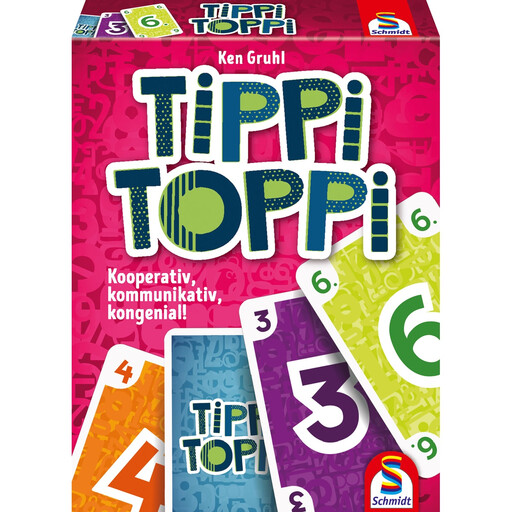
Why this product suits this profile: This cooperative card game for ages 8+ is all about making decisions together and requires no electronic accessories.
Tasks are solved together, so no one has to wait a long time for their turn. The compact box measures 12,1 × 9,4 × 2,5 cm.
Four colours and values from 1 to 7 form the basis of the game. It encourages communication within the group without requiring access to an app.
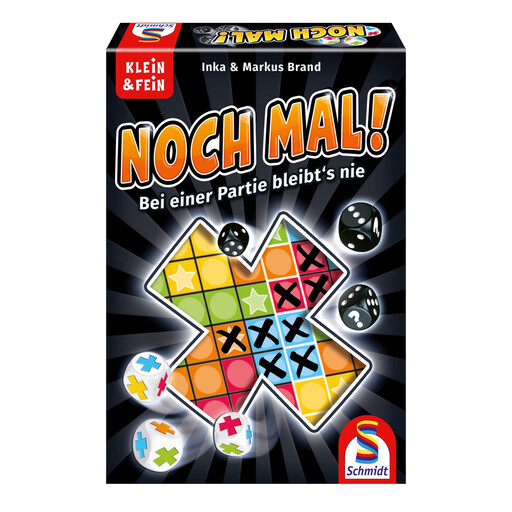
Why this product suits this profile: This dice game is suitable for ages 8+, can be played by at least two people and also offers a solo variant.
Everyone chooses from the same dice roll, keeping the whole group active at the same time. No batteries are required.
Six dice, simultaneous play and a stated player count of two or more make for quick rounds with minimal set-up.
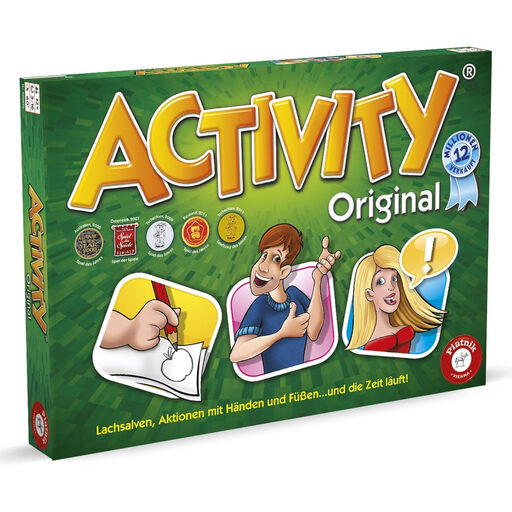
Why this product suits this profile: For family celebrations, birthdays and party games with larger groups, the stated player count of 3 to 16 people is particularly relevant.
The three types of play – drawing, acting and explaining – are clearly distinguished. The age recommendation of 12+ should be checked before buying.
According to the product information, the set contains 2.640 terms and enough content for large groups. The rules encourage communication and creative clues.
We have put together a complete, regularly updated list of products that fully meet these strict selection criteria and the safety regulations applicable in the EU.
Before ordering board games, these questions can help:
For families, games with a flexible player count can be a sensible choice. Adults and teenagers, on the other hand, may prefer party games, music games or more challenging board games. If you regularly host a games night, combine different mechanics: a short card game to get started, a dice game for two people and a party game for larger groups.
Games with easy-to-understand rules, a moderate playing time and an age recommendation suited to the youngest player are good choices. UNO for ages 7+ and Tippi Toppi for ages 8+ are examples of compact family games. With younger children, parents should also check for small parts and consider the reading ability required.
That depends on the group size and how long you plan to play. Two or three different games are often enough: a quick card game, a game for the whole group and an alternative with different mechanics. This makes it easy to adapt the evening to the players’ energy levels, ages and available time.
Their lifespan depends mainly on the materials, storage and frequency of use. Cards should be kept dry and protected from direct sunlight. Boxes containing small parts should be closed securely after every game. For electronic games, removing the batteries during extended periods of non-use helps preserve the components for longer.