
Lieferung heute & morgen

Qualitätsgarantie

Willkommens-Angebote freischalten: KOSTENLOSE Lieferung | Bis zu 80 % RABATT | Kostenlose 30-Tage-JoyPlus-Testphase
App herunterladen
Board games for children and families should bring people together, offer easy-to-understand rules and suit the age of everyone playing. In practice, however, unclear age recommendations, missing parts or a difficulty level that is too high can quickly result in a game being left in the cupboard after just a few rounds. This applies equally to board games for children and creative construction toys.
The age recommendation on the packaging is an important starting point, but it does not replace considering the children’s actual abilities. A game for ages 6 and over, for example, may require strategic planning, reading or sustained concentration. For younger children, simple procedures, large game pieces and short rounds are usually more suitable.
You should therefore check:
Terms such as children’s educational game, strategy game or ‘encourages creativity’ do not automatically describe a suitable gaming experience. Verifiable details are more informative: are there number cards, dice, sorting tasks or building instructions? Are the rules followed together, or does each child play alone?
When choosing educational games for children, you should therefore consider not only the advertised learning benefit, but also whether the game fits everyday situations. A role-play game with a till, for example, can incorporate arithmetic, sorting and communication into a play scenario, while a board game sets out fixed procedures.
Many classic board games do not require batteries. Electronic elements, scanners or sound functions, on the other hand, may need batteries that are not always included. With some escape-room games, cards are folded, written on or cut up. As a result, they can generally only be played through once in full.
Before buying, it is worth checking:
The label ‘not suitable for children under 36 months’ indicates the possible presence of small parts that could be swallowed. It is particularly relevant for board games, LEGO sets for children, construction kits and toy figures. The age recommendation should match the information on the packaging. When games contain small parts, supervised use is advisable if younger siblings live in the household.
For a family games evening, 2 to 4 players is often practical. Larger groups can benefit from party games with short turns or games that allow players to form teams. Cooperative games are suitable when everyone is working towards a shared goal. With strategy games, you should check whether the children are already able to manage planning, resources or several possible courses of action.
Playing-card materials made from printed paper or card are compact, while plastic figures and building bricks are often more durable for frequent use. For wooden or decorative games, the dimensions and weight should suit the intended storage space. A sorting box or resealable carton can help prevent important parts from getting lost.
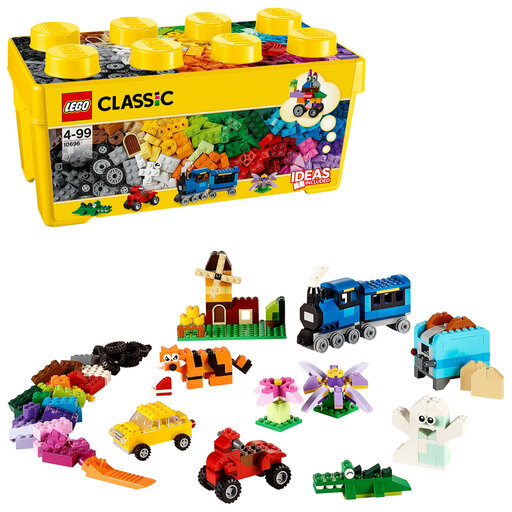
Why this product fits the profile: This box is ideal for families looking for versatile creative construction toys without batteries. The recommended age starts at 4 years.
The 484 elements allow for free-form building and multiple play ideas, rather than offering just one short, pre-defined sequence. The storage box makes sorting easier.
484 building pieces, 35 colours, wheels, windows and a green baseplate; no batteries required.
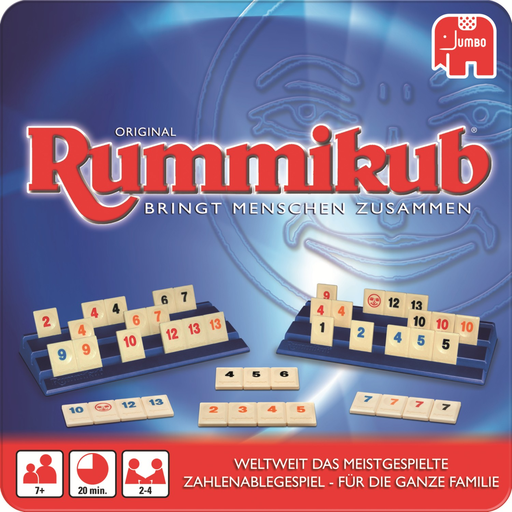
Why this product fits the profile: Rummikub is designed for families with children aged 8 and over, as well as adults looking for a clearly structured number and strategy game for 2 to 4 players.
The rules are based on number sequences and groups of numbers. This makes the main objectives clear and easy to follow, without relying on app access or batteries.
106 plastic tiles, 4 tile racks, approximately 20 minutes of playing time and compact storage in a metal box.

Why this product fits the profile: The Junior edition is designed for 2 to 4 players aged 6 and over, combining collecting, trading and building in a child-friendly game structure.
The simplified trading rules and child-friendly tiles make it easier to get started than with more complex strategy games. An adult can explain the initial set-up to younger children.
For 2 to 4 players, aged 6 and over, with no batteries; the aim is to build seven pirate hideouts.
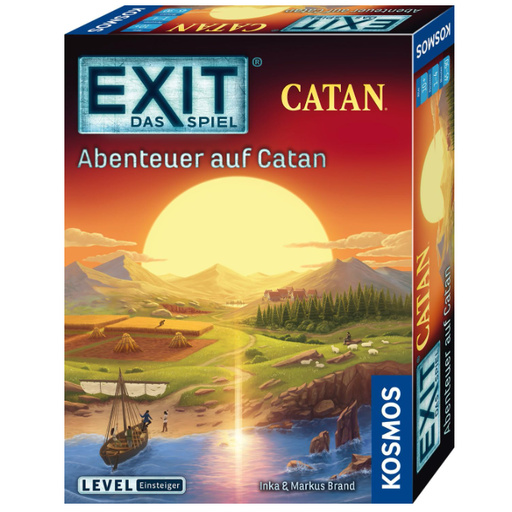
Why this product fits the profile: This escape-room game is designed for 1 to 4 players aged 10 and over, making it suitable for families or friends who want to solve puzzles together.
The beginner level clearly indicates the difficulty. However, buyers should bear in mind that the material may be altered during play and that this edition is intended for a single game.
Cooperative game for 1 to 4 players, recommended for ages 10 and over; optional KOSMOS app with tutorial and timer.
We have put together a complete, regularly updated list of products that fully meet these strict selection criteria and the safety regulations applicable in the EU.
For children aged 6 and over, Junior editions with simplified rules may be suitable, such as Catan Junior. Short card and reaction games or simple building tasks can also be a good choice. The manufacturer’s information, the number of players and the level of reading or arithmetic skills required are all important factors.
Their lifespan depends on the materials, storage conditions and how often they are played. Plastic parts and building bricks can usually be reused many times, provided they remain complete. Cardboard can be damaged by moisture or frequent folding. Storing the game in its original packaging in a dry place and regularly checking that all the parts are present can help extend its lifespan.
Many classic family games work without batteries or an app. Electronic toys, music games or products with scanners may require batteries or a compatible smartphone. Escape-room games with materials that are altered during play are often designed as a one-time experience. These differences should be checked in the product details before buying.