
Lieferung heute & morgen

Qualitätsgarantie

Willkommens-Angebote freischalten: KOSTENLOSE Lieferung | Bis zu 80 % RABATT | Kostenlose 30-Tage-JoyPlus-Testphase
App herunterladen
A family game night should suit the players’ ages, group size and the time available. However, when choosing board games for children and families, unclear age recommendations, missing pieces or an unsuitable level of difficulty can quickly lead to disappointing purchases. A game may look family-friendly on the packaging, yet in practice be suitable for only two people or no longer fit into the family’s routine after just a few rounds.
“6 years and up” describes the recommended starting age, but it does not automatically mean that younger and older players will be equally engaged. With a strategy game, the rules, amount of reading and playing time may be considerably more demanding for children than with a simple card game.
So check the following:
Some family games only work with three or four people, while others are designed exclusively for two players. Anyone looking for a game for family night should compare the stated number of players with the actual household size. For travelling, on the other hand, a solo game or a compact card game for children may be more suitable.
Board games can involve concentration, understanding rules, planning or linguistic creativity. However, this does not constitute a blanket educational or medical promise. What matters is the specific game mechanic being used, such as matching colours, planning routes or solving spatial challenges.
Pay attention to the manufacturer’s age recommendation and any warnings about small parts. Many board games for ages 6 and up contain playing pieces, cards, balls or tokens that are not suitable for children under 3 years of age. Products with small components should be stored in an age-appropriate way.
The material also affects where the game can be used:
Flexible player numbers are useful for a family game night. Cooperative games reduce direct competitive pressure because the group works towards a shared goal. Traditional family games, children’s card games and party games, by contrast, often focus on changing winners and short rounds.
Also check whether a game:
A game with a large playing area will not automatically fit on every kitchen table. For holidays or visits to grandparents, small travel games with just a few components are easier to transport. With larger board games, you should check the package dimensions and weight. This reduces the likelihood of the game going unused after purchase because it is difficult to store.
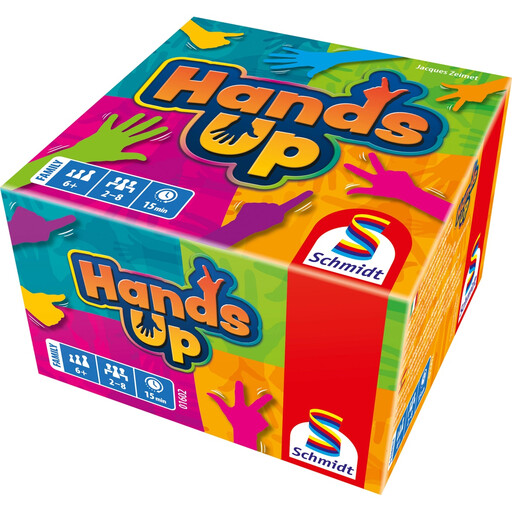
Why this product suits the profile: This card game is designed for children aged 6 and over, requires no batteries and comes in a compact box measuring 10 × 10 × 6,8 cm.
The stated age limit, battery-free format and sturdy cardboard packaging make it an easy choice for short playing sessions.
Fast-paced card game for family rounds; no batteries required.
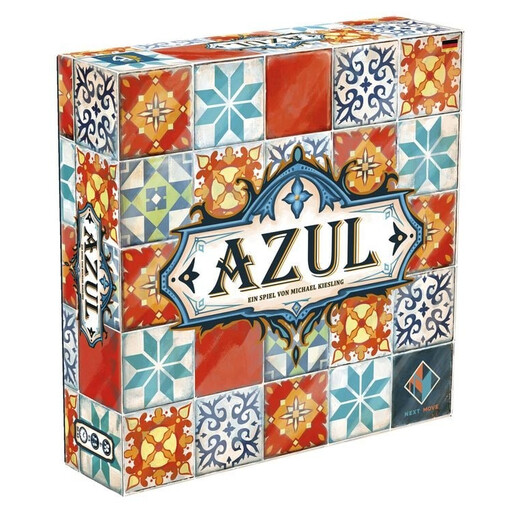
Why this product suits the profile: Azul is designed for 2 to 4 players aged 8 and over, offering a clearly structured combination of tile selection, pattern building and scoring.
The number of players and approximate playing time of 30 to 45 minutes are clearly stated. This makes it easier to fit the game into a planned family evening.
German edition; suitable for 2 to 4 players; strategic decisions without batteries.
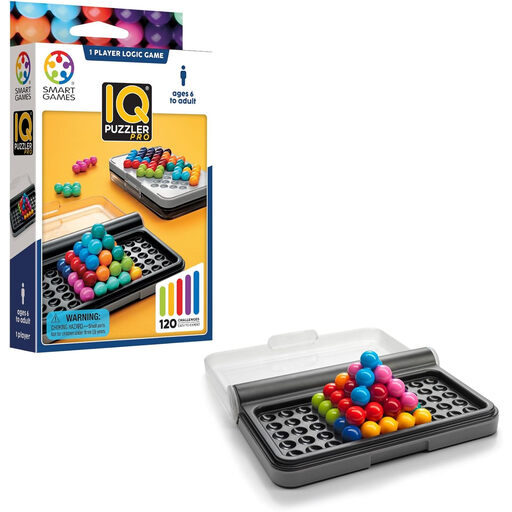
Why this product suits the profile: This compact solo game for ages 6 and up contains 120 challenges in three game modes, making it ideal for waiting times, train journeys or focused play at home.
The fixed player count of 1 and compact design prevent false expectations of a group game or a large playing table.
120 challenges; 2D and 3D modes; compact battery-free format.

Why this product suits the profile: This cooperative board game is designed for 1 to 4 players aged 6 and over. A rotating game board and shared decisions are at the heart of the game.
The group size and age recommendation are clearly stated. The shared objective suits families looking for a game that is not solely about winning and losing.
Cooperative game mode; 1 to 4 players; no batteries required.
We have put together a complete, regularly updated list of products that fully meet these strict selection criteria and the safety regulations applicable in the EU.
Games with manageable rules, minimal preparation and a clear age recommendation of 6 years and up are suitable. Card games, simple cooperative games and compact strategy games can be good options. You should also check the number of players and any small parts included.
For younger children, short rounds of around 15 to 30 minutes are often easier to fit into family life. Older children and adults can also enjoy longer games lasting 45 minutes or more. The right duration depends on concentration levels, the time of day and the group size.
Versatile products make good board game gifts when the recipient’s age, interests and preferred number of players are known. Compact travel games are ideal for journeys, while robust outdoor games for children are well suited to the garden or a children’s birthday party. For larger groups, party games with flexible player numbers may be the more practical choice.