
Lieferung heute & morgen

Qualitätsgarantie

Willkommens-Angebote freischalten: KOSTENLOSE Lieferung | Bis zu 80 % RABATT | Kostenlose 30-Tage-JoyPlus-Testphase
App herunterladen
The choice of board games for children and families ranges from simple games for children aged 3 and over to complex strategy games for children and adults. But an eye-catching cover or a promise of ‘learning through play’ tells you little about whether a game will actually suit your family’s day-to-day life.
Three common buying mistakes often lead to the wrong choice:
The manufacturer’s age recommendation is a useful guide, but it’s no substitute for judging what your child is ready for. Pre-schoolers tend to do best with short rules, just a few steps and pieces that are easy to handle. For games for children aged around 6 and over, simple trading, dice-rolling or collecting mechanics can make it easier to get started.
Also consider whether the game involves competition or cooperation. Cooperative board games can be a good fit for families who want to work towards a shared goal. Traditional strategy games for children, on the other hand, often require planning and concentration, as well as the ability to cope with the outcome of a game.
The number of players shown on the box should suit how you plan to use the game. For a quick family game night, games lasting around 15 to 30 minutes are often easier to fit into everyday life than longer sessions. With card games for families, it’s also worth checking whether the cards are easy for little hands to shuffle and hold.
For travel, look for compact dimensions, a secure closure and tidy storage. A travel game shouldn’t leave you with lots of small, easily lost pieces once you’ve finished playing.
Games with small parts are generally not suitable for children under 3 if the manufacturer warns of a potential choking hazard. This applies even if a product is promoted as an educational game or creative toy. Take particular care with magnetic toys: swallowing strong magnets can cause serious injuries. Check these products regularly for cracks and exposed magnets.
Sturdy plastic pieces, strong cardboard, metal tins and built-in storage can all be practical features. Before buying, also check whether the manufacturer recommends cleaning the game with only a dry or slightly damp cloth.
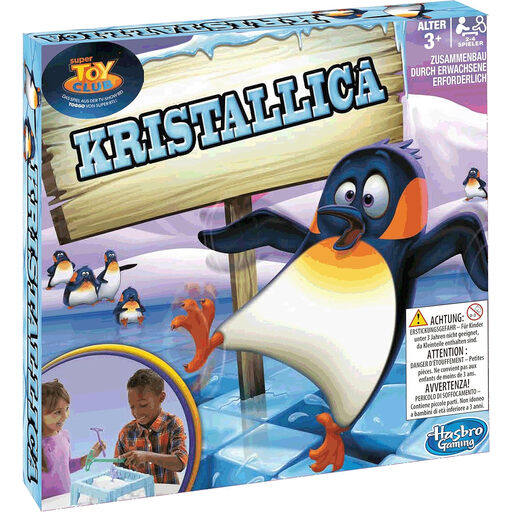
Why this product suits this profile: According to the product information, this game is for 2 to 4 players aged 3 and over, making it an easy choice for short family games.
The rules involve just a few steps, so parents don’t need to prepare by working through a lengthy instruction booklet.
For 2 to 4 players, with simple rules and a gameplay style designed to develop fine motor skills, according to the product description.

Why this product suits this profile: The Junior edition is for 2 to 4 players aged 6 and over, combining collecting, building and simplified trading.
Its age recommendation and simplified rules set clear expectations, rather than offering younger children an adult game with no changes.
A game for 2 to 4 players, made from cardboard and plastic, with a clearly explained building and trading system.
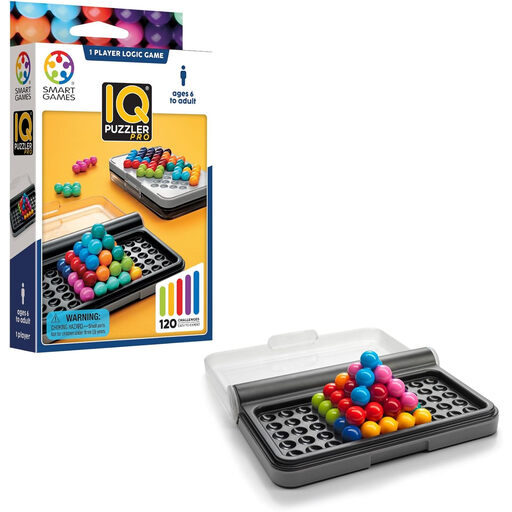
Why this product suits this profile: This solo game is suitable for children aged 6 and over. Its compact size makes it handy for journeys, waiting times and quiet moments.
It’s chosen as a solo game, rather than being mistaken for a game for several family members. The box contains 120 challenges in 2D and 3D.
13 plastic pieces, no batteries and dimensions of approximately 3.82 × 1.1 × 5.67 cm, according to the product information.
We’ve put together a complete, regularly updated list of products that meet these strict selection criteria and fully comply with the safety regulations in force in the EU.
Look for games with just a few rules, short rounds and pieces that are easy to handle. Check the age recommendation, warnings and recommended number of players. An adult should always supervise play when small parts are involved.
Short games of around 10 to 20 minutes are often easier to fit into a pre-schooler’s day. Older children may enjoy games lasting 30 minutes or more, as long as the rules are easy to understand and they can play independently.
A travel game or compact puzzle usually takes up less space than a traditional board game. Check that it has secure storage, consider how many pieces it contains and make sure it can be played on a small surface, such as a folding table.