
Lieferung heute & morgen

Qualitätsgarantie

Willkommens-Angebote freischalten: KOSTENLOSE Lieferung | Bis zu 80 % RABATT | Kostenlose 30-Tage-JoyPlus-Testphase
App herunterladen
There is a huge choice of board games for children: children’s games, card games, educational games and family games differ not only in their themes and designs, but also in their recommended age, playing time and attention required. Even an attractively designed game can prove unsuitable in everyday life if important details are overlooked before purchase.
“From 6 years” usually describes more than just the target age group. It also indicates the assumed ability to understand rules, handle small parts safely and stay focused for a certain length of time. A game for older children can be frustrating for a younger child, even if they find the theme interesting.
With games for ages 3 and over, parents should pay particular attention to small parts. At higher age levels, too, the warning notice is decisive if the game contains, for example, playing pieces, counters or dice.
A game for two people is not automatically suitable for a family evening with four players. Conversely, a game designed for many participants may not be suitable for one child playing alone. Before ordering, you should therefore check the minimum and maximum number of players, as well as whether the game can be played solo.
Many children’s board games playfully develop attention, matching skills or strategic thinking. This does not, however, guarantee a particular educational or medical benefit. What matters is whether the game mechanics suit the child’s stage of development and interests.
With younger children, an easy-to-understand introduction is helpful. UNO Junior Move!, for example, offers three difficulty levels. This means the game can be adapted to the youngest child’s ability. With more complex strategy games for children, such as Catan Junior or chess, an adult can help with the initial set-up and explain the rules.
Game materials made from cardboard, wood or plastic may be manufactured differently depending on the product. Look out for:
Games with small parts should generally not be used by children under three. Even with games for ages 3 and over, age-appropriate supervision is advisable if the child still frequently puts objects in their mouth.
Compact formats with built-in storage are practical for travelling. With travel games for children, parents should also check whether the game works on small surfaces and whether loose parts could easily be lost. For a family evening, the playing area can be larger, while a short card game can be brought out spontaneously for a quick game.
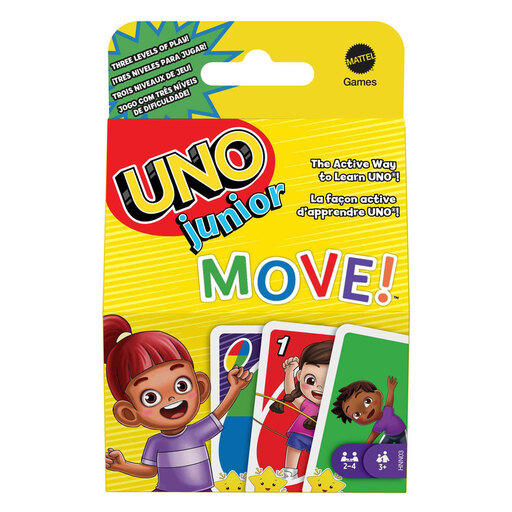
Why this product suits this profile: This card game is designed for 2 to 4 players aged 3 and over. Three difficulty levels make it easier to get started with shared games.
The adjustable rules reduce the risk of choosing a card game that is too difficult for younger children. The warning about small parts must still be observed.
Matching colours and numbers, three levels of rules and additional Move cards with movement-based challenges.

Why this product suits this profile: The Junior version is designed for 2 to 4 players aged 6 and over. It combines simplified trading with building pirate hideouts.
The age and player information is clearly stated. The simplified rules distinguish this game from an adult version with a more extensive set of rules.
2 to 4 players, cardboard and plastic components, plus a child-friendly building and trading mechanic.
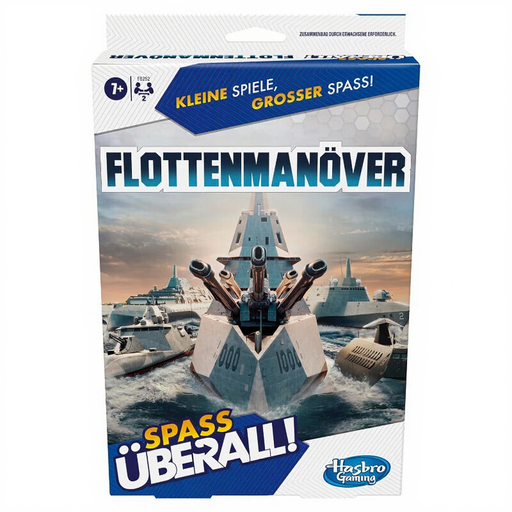
Why this product suits this profile: This compact edition is designed for two players aged 7 and over and can be packed away for car, train or plane journeys.
The game pieces can be stored in the foldable command centres. This reduces the risk of components being left loose in your luggage while travelling.
Compact design, built-in storage and a two-player game based on coordinates and tactical planning.
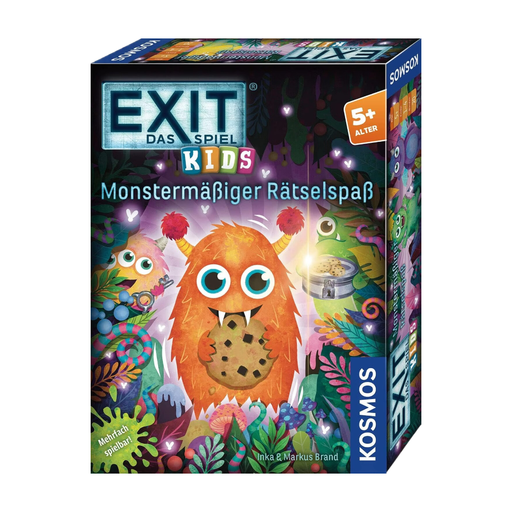
Why this product suits this profile: This cooperative puzzle game is designed for 1 to 4 players aged 5 and over. An adult can help children get started with the challenges.
The rules are tailored to children, while an optional app provides a timer and hints. The app is not essential.
Cooperative play, monster-themed puzzle cards and a format suitable for up to four players.
We have put together a complete, regularly updated list of products that fully meet these strict selection criteria and the safety regulations applicable in the EU.
As gift ideas for children, games that fit the recipient family’s everyday life are a good choice. Card games for children and compact classics are practical for shorter rounds. Families with children of different ages can choose games with variable rules. For younger children aged 4 and over, simple dice, matching or dexterity games are suitable, for example. If you are looking for a quieter game, you could choose a children’s puzzle with a manageable number of pieces.
Before buying, also check whether the language of the instructions suits your household and whether batteries are required. Many of the games mentioned above work without batteries. Electronic products such as a memory game with light and sound signals, on the other hand, require the specified batteries and should be stored accordingly.
Games with short rules, straightforward turns and an age rating of 3 and over are suitable. The manufacturer’s safety information remains important, as does supervision if small parts are included. A game with several difficulty levels can make it easier to get started.
Its lifespan depends on the materials, storage and how often it is played. Cardboard should be stored in a dry place, plastic parts should be checked regularly for damage, and all components should be put away completely after playing. Built-in storage can help reduce the risk of individual pieces being lost.
Compact formats with only a few individual parts are particularly practical for travelling. Travel games for children, such as a portable Battleship or Connect Four game, take up little space and can quickly be packed away after a round. Also check whether the playing surface can be used securely on the intended table or tray table.