
Lieferung heute & morgen

Qualitätsgarantie

Willkommens-Angebote freischalten: KOSTENLOSE Lieferung | Bis zu 80 % RABATT | Kostenlose 30-Tage-JoyPlus-Testphase
App herunterladen
Board games are a versatile way to spend time together – from quick family games to challenging strategy games for adults. However, there is a huge choice, and product descriptions often highlight individual benefits more strongly than is useful for actual play. So, if you want to buy a board game, you should look beyond the theme and packaging design.
Many games are marketed as group games but only really work well with four or more people. For a two-person household, these games may not be suitable. Conversely, a designated 2-player game may not work in a larger group.
Before buying, check:
Clear instructions make it easier to get started. However, they say little about whether the game will still offer variety after several plays. With strategy games, for example, variable tasks, several difficulty levels or different game developments can make a real difference.
You should also check whether party games require additional equipment. Music games may need a smartphone, an app, internet access or a Spotify account. Without this equipment, the gameplay may be limited.
A large game board requires enough clear table space. When choosing wooden board games, you should also consider their dimensions, weight and build quality. Games with marbles, playing pieces or small card components are not suitable for children under three because of the potential choking hazard.
The recommended age is therefore not a decorative detail, but an important safety and usability parameter. For children aged 6 and over, you should also check whether the rules, symbols and fine-motor requirements are suitable for the target age group.
For a regular family game night, games for 2 to 5 people with a manageable playing time are often a good choice. For larger groups, party games or music games with a flexible player count may be more suitable. If you are planning a quick game after work, pay attention to descriptions such as “45 minutes or longer”.
A game for children aged 6 and over should have clear rules and easy-to-recognise components. Co-operative board games can be a great choice for families when everyone is working towards a shared objective. For teenagers and adults, more complex puzzles, hidden information or tactical decisions may be suitable.
Pay attention to the manufacturer’s actual recommended age. A game with a well-known theme is not automatically suitable for younger children. This also applies to Harry Potter games, where the licence primarily determines the theme, not the difficulty level.
Before buying, it is worth checking:
The main components of KOSMOS Ubongo Classic are made from cardboard. It contains 54 puzzle boards with a total of 648 challenges and two difficulty levels. MIMI’s wooden Sudoku includes 4×4, 6×6 and 9×9 puzzles. Specific details like these make it easier to assess a product than general marketing claims.
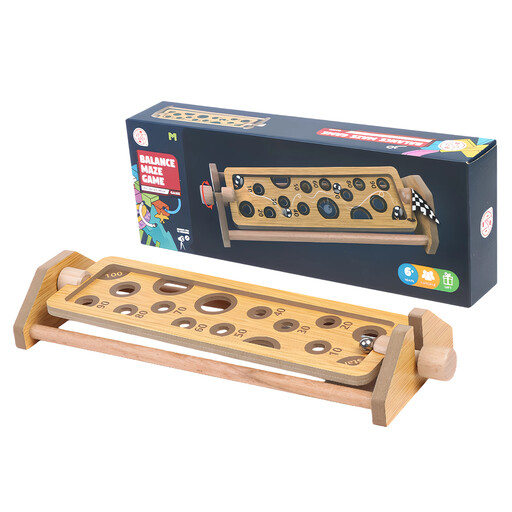
Why this product suits this profile: This compact wooden game measures 28,2 × 10 × 4,5 cm and requires no batteries. It is suitable for quick games at the table and for parent-and-child play.
The number of players does not depend on an app or a large group. The materials, dimensions and gameplay are clearly specified.
Wooden board with metal ball, target area worth up to 100 points and a variable number of rounds. Small parts mean that the safety instructions should be observed.
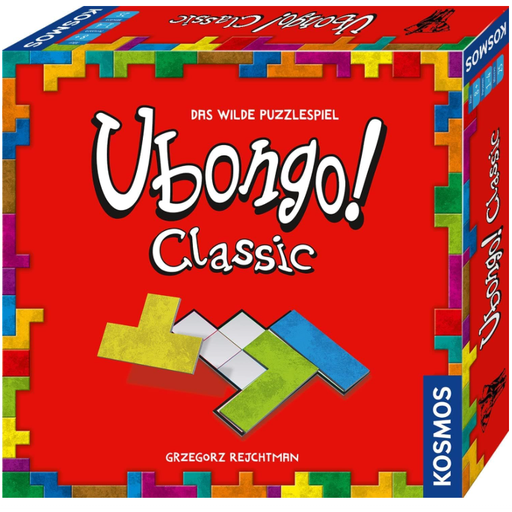
Why this product suits this profile: Ubongo combines puzzle and brain-teaser elements with simultaneous play for 1 to 4 people aged 8 and over.
Two difficulty levels allow the game to be adapted for different players. The app is optional, so the game can still be played without digital support.
648 challenges, an hourglass and simultaneous play create a variety of game experiences.
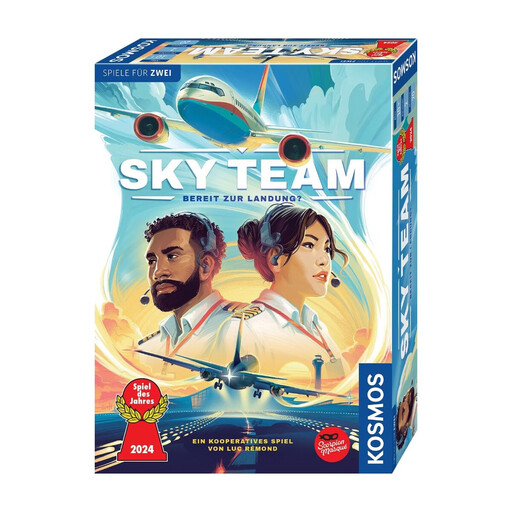
Why this product suits this profile: This co-operative board game is designed specifically for two people aged 10 and over, with players working together to land an aircraft.
The target audience is clearly defined: two players aged 10 and over. 21 airport scenarios provide different challenges rather than just one fixed sequence.
Dice placement, several missions and co-operative decisions without direct communication.

Why this product suits this profile: This music game is designed for 2 to 10 people aged 16 and over, making it ideal for sociable groups with different levels of musical knowledge.
The required technology is clearly stated: a smartphone, app, internet connection and Spotify for music playback.
Over 300 music cards and a chronological timeline combine musical knowledge, memories and discussion.
We have put together a complete, regularly updated list of products that fully meet these strict selection criteria and the safety regulations applicable in the EU.
Depending on your group, German board games, Rummikub variants, escape-room games or classic board games may also be worth considering. For puzzle fans, 1000-piece puzzles from Schmidt Spiele offer a clearly defined challenge for ages 12 and over. If you prefer a family game featuring familiar routes, Ticket to Ride: Europe is a version for 2 to 5 people aged 8 and over.
That depends on the players’ ages, the number of players and how often you play. A practical combination might include a quick family game, a more strategically demanding title and a game for larger groups. This gives you options to suit different evenings.
The recommended age, the size of the game pieces and how easy the rules are to understand are all important. Small parts can present a choking hazard. Children should be supervised when playing games with marbles, small stones or sharp-edged components.
Not every music game involves ongoing costs. Hitster Original is designed to use a smartphone, app, internet connection and Spotify for playback. According to the product description, a Premium account is recommended for smoother use; the specific conditions may depend on the account being used and regional availability.