
Lieferung heute & morgen

Qualitätsgarantie

Willkommens-Angebote freischalten: KOSTENLOSE Lieferung | Bis zu 80 % RABATT | Kostenlose 30-Tage-JoyPlus-Testphase
App herunterladen
A family games night rarely fails because there is not enough choice. More often, the game bought is not suitable for the age group, takes too long or leaves some players barely involved. If you are looking for board games for children and families, do not focus solely on familiar characters or eye-catching packaging. Clear information about age, number of players, playing time, game mechanics and materials is what really matters.
“From 4 years” describes a recommended minimum age, but it does not automatically tell you whether a child can understand the rules independently. With children's games from age 4, concentration span, fine motor skills and experience with rules can vary considerably. For younger children, a short set of instructions with only a few steps is often more suitable than an extensive strategy game.
A game for 2 to 4 people is not automatically suitable for a group of six or more. A game with a child-friendly theme can also quickly become too easy for adults. Therefore, check the stated number of players and consider whether everyone involved can take an active part in the game.
With some escape-room games, cards are folded, written on or otherwise altered. These games are therefore often designed for a single round. Other puzzle or riddle games can be used again. Checking the product description can help prevent disappointment after the first games night.
The recommended age should match the child's actual development. For pre-school children, simple learning games for children, memory games, matching games or skill-based games are usually easier to engage with. With strategy games for children from around 6 or 8 years, planning, forming sequences and making tactical decisions become part of the experience.
Also check whether the game:
A co-operative game can be suitable for families where younger and older children want to play together. With a competitive game, however, it should be clear whether the players’ abilities are broadly comparable.
The statement “Games for 2 to 6 players” is only useful if the game dynamics work well with every group size. Tactical card games often work well with smaller groups, while party games tend to show their strengths with more participants.
For an impromptu games night, around 10 to 30 minutes is often easier to plan. Longer board games may be suitable for weekends or regular family game sessions. For travelling, compact boxes, sturdy components and straightforward set-up are practical considerations.
Board games often contain small cards, figures, counters or accessories. The safety warnings must therefore be observed. Products with small parts are not suitable for children under 3 years of age, even if older siblings are playing too.
Before buying, check:
Games with large boards, such as detective games, also require enough table space.

Why this product suits this profile: According to the product information, this game is aimed at children aged 4 and over and offers simple rules for 2 to 4 players. This makes it suitable for short rounds with younger children and adults.
The age and player information is clearly stated. The game is based on carefully removing ingredients and does not require extensive knowledge of the rules.
From age 4, 2–4 players, no batteries required and a skill-based mechanism with an easy learning curve.
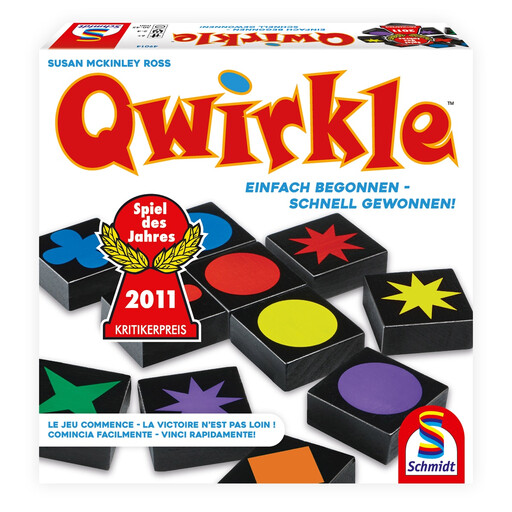
Why this product suits this profile: Qwirkle combines easy-to-understand basic rules with tactical decisions and, according to the product information, is aimed at players aged 8 and over.
The selection is not based on blanket family-focused advertising, but on specific details: 108 wooden tiles, no batteries and a clearly explained tile-laying pattern.
Tactical tile laying, 108 wooden tiles, from age 8 and designed for repeated rounds without consumable materials.
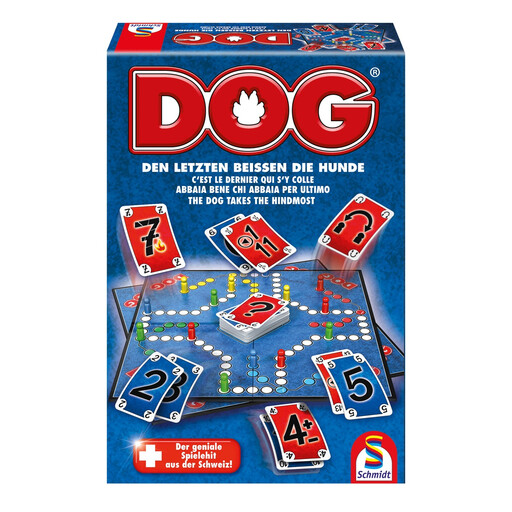
Why this product suits this profile: DOG is specified for 2 to 6 players aged 8 and over and combines cards with tactical movement. This makes it a good fit for larger family groups and planned games nights.
The capacity for up to six people is clearly stated. This makes it easier to assess whether the game is suitable for the planned group.
2–6 players, stated playing time of 30–45 minutes and cards instead of dice for tactical decisions.
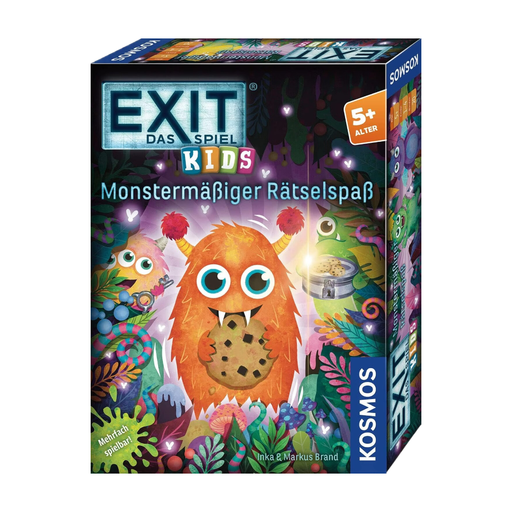
Why this product suits this profile: According to the product information, this child-friendly puzzle game is designed for 1–4 players aged 5 and over. The optional app provides a timer and tutorial; the game can also be played without the app.
The age group and the option to play without the app are explicitly stated. Adult support is recommended for children aged 5 to 7.
Co-operative puzzles, 1–4 players, optional timer and tutorial, plus a compact format for games nights and outings.
We have put together a complete, regularly updated list of products that fully meet these strict selection criteria and the safety regulations applicable in the EU.
For your first family games night, short rules and a moderate playing time are helpful. For birthday parties, games for 2 to 4 people are suitable if several children can take turns playing. For larger groups aged 8 or over, detective games and social party formats are worth considering. For travelling, compact versions such as “Guess Who Grab And Go” or “Cluedo Grab And Go DE” are interesting options, provided that the number of players and age range suit the group.
If you are looking for a co-operative experience, you could also consider more challenging titles such as “EXIT – The Game – The Enchanted Forest” for ages 10 and over or “Sky Team” for two players. When choosing gift ideas for children, always check the actual age recommendation as well as the theme.
Games with short rules, few steps and manageable components are suitable. According to the product information, Paletti Spaghetti is designed for children aged 4 and over and 2 to 4 players. Puzzle sets with 48 pieces may also be suitable for this age group. An adult should explain the instructions first.
For younger children, around 10 to 20 minutes is often practical. Older children and adults may also be happy with 30 to 45 minutes or longer rounds. Check the stated playing time and, for spontaneous games, choose one that can be stopped or started again at any time.
Co-operative board games involve working towards a shared goal. This means children do not have to compete directly against one another and can make decisions together. Examples include child-friendly EXIT games or “The School of Magical Animals – The Mysterious Spinner”. Even so, you should consider the recommended age, complexity of the rules and level of support required before buying.