
Lieferung heute & morgen

Qualitätsgarantie

Willkommens-Angebote freischalten: KOSTENLOSE Lieferung | Bis zu 80 % RABATT | Kostenlose 30-Tage-JoyPlus-Testphase
App herunterladen
A successful family games night depends on more than the theme shown on the box. The recommended age, number of players, playing time and length of the rules all affect whether a game becomes a regular favourite or is put away after one round. So if you are looking for board games for the whole family, do not choose based solely on familiar names, eye-catching images or advertising claims.
The label ‘from 8 years’ indicates a recommended minimum age, but says little about your particular family situation. A game with lots of text or complex decisions can be considerably more demanding for an eight-year-old than a fast-paced reaction or card game. Check whether younger players need to read, calculate or concentrate for longer periods.
Some family games work particularly well with two or four players, while larger groups can lead to long waiting times. For families with five or more people, variable team rules, simultaneous turns or party games are often more practical. The stated number of ‘2–5 players’ should therefore not be confused with an identical playing experience for every group size.
A game can be easy to explain and still take 45 minutes or longer. With strategy games in particular, you should distinguish between the rule explanation, set-up time and actual playing time. For an impromptu family games night, compact card games or games that are quick to get into are often more suitable than extensive board games.
Pay attention to the age range stated by the manufacturer and to warnings about small parts. Products containing playing pieces, dice or small card components are generally not suitable for children under 3 years of age. The age recommendation also does not replace an assessment of the child’s abilities. With board games for ages 8 and over, parents can explain the rules and demonstrate examples during the first game.
Think about what your group usually looks like:
With co-operative board games, everyone plays together against a challenge. This can be useful for families where competition quickly leads to frustration. Competitive strategy games, on the other hand, appeal to players who enjoy planning, comparing options and making their own decisions.
If a game is used frequently, the cards, board and playing pieces should be easy to store neatly in the box. Cardboard, plastic and wood differ in terms of feel and care requirements. For card games, it is worth checking the card thickness and storing them in a dry place. For German-speaking families, it is also important to check whether the instructions and cards are available in German. International editions may contain individual terms or question cards in another language.
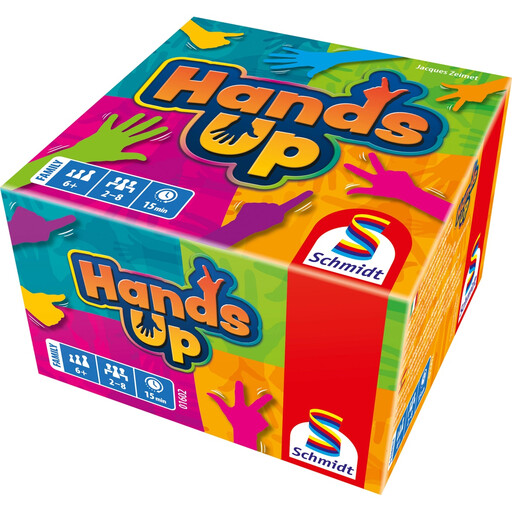
Why this product suits this profile: According to the product information, this card game is suitable for ages 6 and over and does not require batteries. The compact box is ideal for spontaneous games at home or on the go.
The low minimum age and straightforward gameplay reduce the risk of buying a game with too many rules for younger children.
Compact packaging, sturdy cardboard cards and no power supply required.
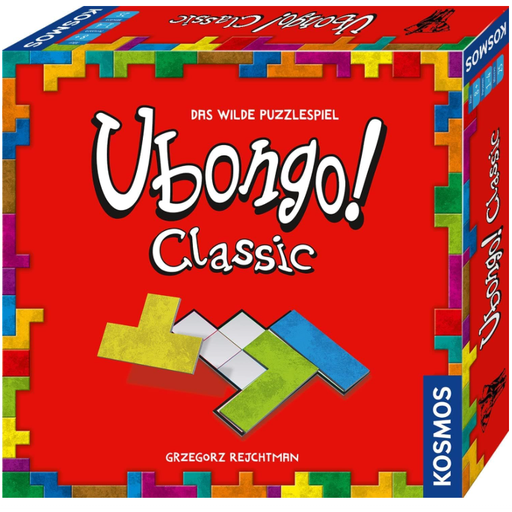
Why this product suits this profile: In this board and puzzle game, 1 to 4 players solve challenges simultaneously. Two difficulty levels and 648 challenges provide different starting points for children and adults.
The two difficulty levels make the challenge clear and prevent every player from having to start at the same level.
Simultaneous play reduces waiting times; the optional explanation app can help players get started.
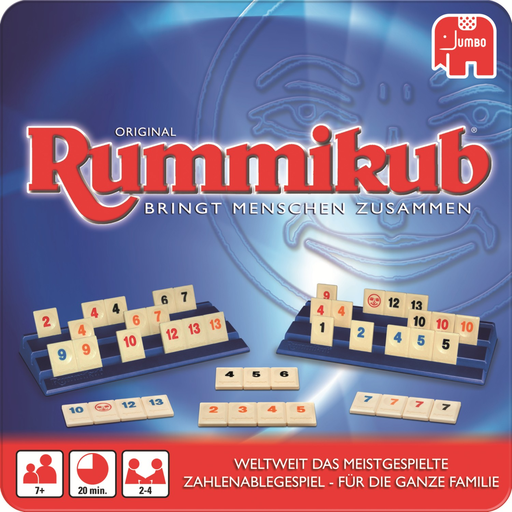
Why this product suits this profile: Rummikub is designed for 2 to 4 players aged 8 and over and, according to the product description, takes around 20 minutes per game. Number tiles and tile racks allow you to play round after round without batteries.
The specific number of players and stated short playing time make planning easier. The plastic tiles are also less delicate than paper-only components.
106 plastic tiles, four tile racks and a German-language version.
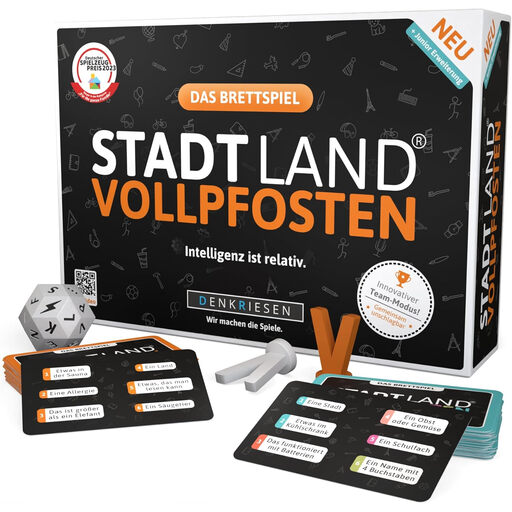
Why this product suits this profile: According to the product information, this game is designed for 4 to 12 players and combines classic categories with a junior expansion. This makes it suitable for family celebrations and larger groups.
The high player count is clearly stated. The junior expansion caters for different age groups rather than giving everyone identical challenges.
Over 700 categories, a speed die and game materials made with a stated 80% proportion of spruce sawdust.
We have put together a complete, regularly updated list of products that fully meet these strict selection criteria and the safety regulations applicable in the EU.
Games with clear basic rules, a short playing time and adjustable difficulty are usually a good choice. Rummikub, Ubongo and simple card games can appeal to different age groups. With quiz games, there should be question cards for both children and adults, so that the knowledge advantage of individual players does not become too great.
For younger children, around 15 to 30 minutes is often easier to plan. For board games for ages 8 and over, 30 to 60 minutes can also be suitable if turns remain manageable. Check the manufacturer’s stated playing time before buying and allow extra time for setting up and explaining the rules.
First choose the usual group size and the youngest child taking part. Then decide whether competition, co-operation, knowledge, reactions or creativity should be the main focus. Also check the language version, storage requirements, battery operation and safety information. This way, family games become suitable gift ideas for families rather than unused boxes on the shelf.