
Lieferung heute & morgen

Qualitätsgarantie

Willkommens-Angebote freischalten: KOSTENLOSE Lieferung | Bis zu 80 % RABATT | Kostenlose 30-Tage-JoyPlus-Testphase
App herunterladen
A games night can quickly go wrong if you choose the wrong game: it may be too complicated for younger children, too short-lived for adults or simply too large to take on holiday. When buying board games and family games, you should therefore look beyond familiar names, eye-catching packaging and general claims such as “for the whole family”.
“From 6 years” is a guideline from the manufacturer, but it does not automatically mean that every child can play independently straight away. The number of rules, reading ability, attention span and tolerance for frustration can vary considerably. For families with children aged 6 and over, clearly structured rules and short turns are often more practical than extensive strategy games.
A game for two to four people is not automatically suitable for a birthday party with eight children. Conversely, card games for children that allow up to ten players can lose some of their appeal in a small family. Before buying, check:
Electronic games often require batteries, while traditional board games generally do not need a power supply. Party games may also require additional smartphones or an internet connection. Small cards, playing pieces or balls are always a safety risk for children under three. The warnings on the packaging and the manufacturer’s information remain the key points to follow.
Games for ages 6 and over include simple matching, dexterity and cooperative board games. With games for ages 8 and over, longer chains of decisions, scoring systems and introductory strategy games can be added. For games played by teenagers and adults, it is also worth considering the playing time and the language skills required.
If you are looking for games for children and adults, look for adaptable rules. A junior version, team rules or adjustable difficulty can help bridge the age gap within the family.
Cards made from sturdy card are practical for regular play, while wooden or plastic pieces offer a different feel in dexterity games. It is not just the material that matters, but also how everything is stored: loose small parts are more easily lost in large boxes.
For electronic games, buyers should check the battery type and what is included. Listening to music through an app may also require a compatible smartphone and a corresponding account. Traditional board and card games, on the other hand, normally have no ongoing energy costs.
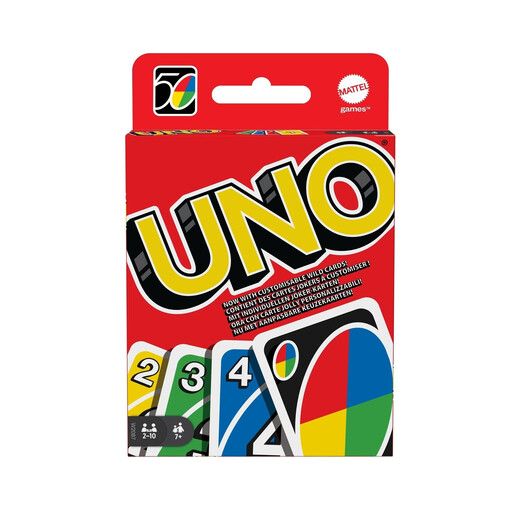
Why this product suits this profile: This card game is designed for 2 to 10 players, requires no batteries and can be set up in just a few steps.
The number of players is clearly stated, and there are no batteries or electronic accessories to worry about. The recommended age is 7 years and over.
112 cards, several action cards and customisable wild cards; suitable for family games and parties.
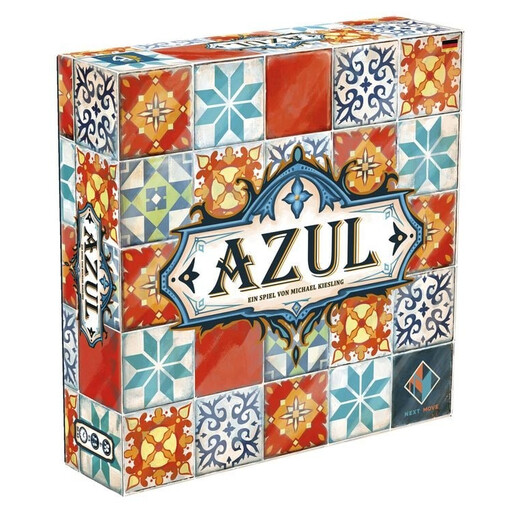
Why this product suits this profile: Azul is designed for 2 to 4 players aged 8 and over, combining straightforward rules with tactical decision-making.
The product details specify the number of players, recommended age and a playing time of around 30 to 45 minutes. This makes it easier to plan the game as part of a games night.
For 2 to 4 players, German edition, no batteries required; small parts mean that the safety instructions should be observed.
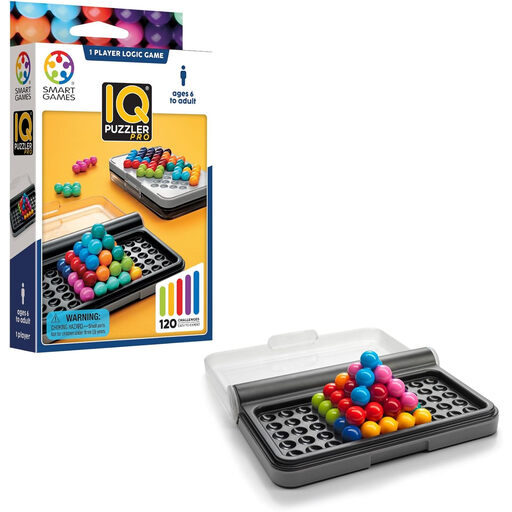
Why this product suits this profile: This compact solo game is suitable for children aged 6 and over, providing a quiet activity at home or on the go.
The approximately 3,82 × 1,1 × 5,67 cm format is designed for travel. It requires no batteries and offers 120 challenges in three game modes.
One player, 13 pieces, no set-up and a design described as travel-friendly in the product details; small parts must be stored safely.

Why this product suits this profile: This cooperative family game is designed for 1 to 4 players aged 6 and over, with a focus on making decisions together.
The product details specify the suitable age range and group size. As everyone plays together, the focus is not solely on comparing individual players.
Rotating game board, event cards and animal tokens; no batteries required. Small parts must be kept away from children under 3 years.
We have put together a complete, regularly updated list of products that fully meet these strict selection criteria and the safety regulations applicable in the EU.
Games with short rules, manageable turns and a clear age recommendation are suitable. Cooperative board games can be a good option when younger and older players are meant to work towards a shared goal. Simple card games for children are also often quick to explain.
Their lifespan depends on the materials, storage and how often they are used. Cards last longer when stored in a dry place and shuffled carefully. Playing pieces and game boards should be protected from moisture. If you regularly host games nights, a box that keeps all the pieces separate is recommended.
For larger groups, party games or card games with a high maximum player count are practical. According to the product details, UNO is suitable for up to 10 people. For music and quiz games, buyers should also check whether a smartphone, app or batteries are required. The key is to choose a game where players do not have to wait too long for individual turns.