
Lieferung heute & morgen

Qualitätsgarantie

Willkommens-Angebote freischalten: KOSTENLOSE Lieferung | Bis zu 80 % RABATT | Kostenlose 30-Tage-JoyPlus-Testphase
App herunterladen
Finding a game that suits multiple generations sounds simple – but it isn’t always. Many product pages focus on atmosphere, awards or a large number of cards. What really makes for a successful games night, however, are concrete factors: age recommendation, number of players, play duration, rule complexity and materials.
With board games for the whole family in particular, three reasons often lead to the wrong purchase:
First, check how many people will actually be playing. For a household with two adults and one child, games for three or more players are suitable. For larger games nights with friends, formats for six, ten or more players make sense.
With party games for large groups, the game mechanics often change too. Party games with teams, words or roles are usually easier to play with many people than detailed strategy games. A game for 2–4 players cannot simply be expanded to five or six players unless the manufacturer allows for it.
The age recommendation is a practical guide for language, reading ability, fine motor skills and understanding of the rules. For board games for children aged 8 and up, manageable rules and short rounds are often more suitable. Parents should also look out for small parts: many dice, playing pieces and cards are not suitable for children under three due to the risk of choking.
For teenagers and adults, strategy games with several decision-making levels can be interesting. With cooperative board games, everyone works together towards a common goal. This mechanic can be a good choice if competition within the family isn’t the main focus.
A stated play time of 15 to 30 minutes fits more easily into everyday life than a round of 60 minutes or more. The setup is also important: does the game only need a board and cards, or do many components need to be sorted?
Also pay attention to board games in German and a German instruction manual. For digital extras, such as an app or music streaming, a smartphone, internet connection or a specific user account may be required. These additional requirements should be known before purchase.
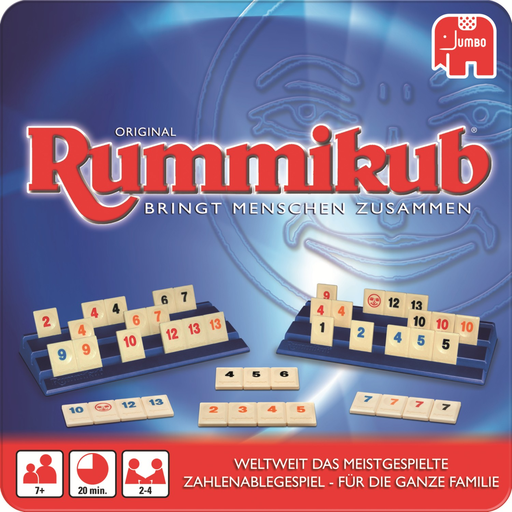
Why this product fits the profile: The rules are fundamentally easy to pick up, while laying runs and groups also allows for tactical decisions. The game is designed for 2–4 players aged 8 and up, and a round takes around 20 minutes according to the product information.
The number of players and approximate duration are clearly stated. Plastic tiles and racks are included in the delivery; no batteries are required.
2–4 players, age 8 and up, around 20 minutes of play time and compact storage in the metal box.
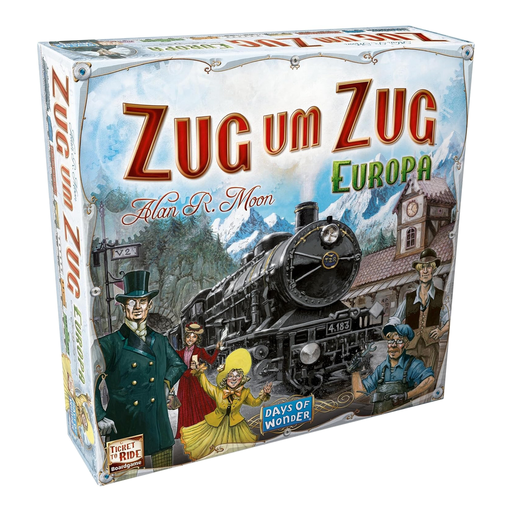
Why this product fits the profile: The game combines route planning with a clear goal: building railway lines between European cities. It is designed for 2–5 players aged 8 and up and offers a play time of around 45 minutes or more.
The details on age, number of players and materials are clear. According to the product description, the components are made of paper, cardboard and plastic; the setup requires no batteries.
German language version, 2–5 players, age rating from 8 years and a rule set that, according to the supplier, can be explained in a short time.

Why this product fits the profile: This cooperative board game is specifically designed for two people. The pilot and co-pilot place dice over nine rounds and complete 21 different airport scenarios. The age recommendation is 10 years and older.
The target audience is clearly defined: two players, aged 10 and up. This avoids giving the impression that it is a game for large family groups.
Cooperative gameplay, 21 scenarios, dice placement and no batteries required.
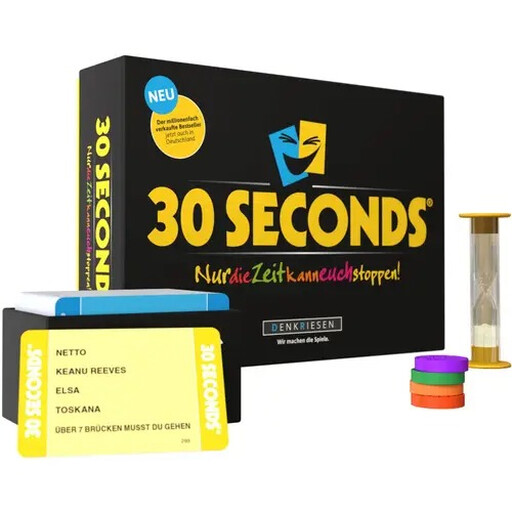
Why this product fits the profile: This team game is designed for a minimum of three and up to 16 players. In around 30 minutes, words are explained and guessed within a 30-second time window. The age recommendation starts at 12 years.
The minimum number of players, the maximum group size and the age recommendation are all clearly stated. This prevents the wrong choice for small groups or younger children.
Team mechanics, 2,400 words according to the product description, timer and a stated play time of around 30 minutes.
We have put together a complete, regularly updated list of products that fully meet these strict selection criteria and the safety regulations in force in the EU.
Games with clear rules, a limited play time and manageable decisions are suitable. According to the respective product information, Rummikub, Ubongo Classic, Azul, Qwixx XL or Ticket to Ride: Europe are designed for ages 8 and up. With more complex strategy games, parents should check whether the children can already follow longer rule chains and multiple game rounds.
The lifespan depends mainly on the quality of the materials, storage and frequency of use. Cards and cardboard pieces should be stored dry, clean and protected from direct sunlight. Plastic pieces and dice are generally more robust, but should be checked regularly for damage. Sorting everything completely after each round reduces the risk of losing components.
In addition to the purchase price, additional costs can arise if expansions, replacement parts or digital services are required. Many classic board and dice games require no batteries and no ongoing fees. For games with an app or music function, however, you should consider the need for a smartphone, internet access and possible account requirements in advance.