
Lieferung heute & morgen

Qualitätsgarantie

Willkommens-Angebote freischalten: KOSTENLOSE Lieferung | Bis zu 80 % RABATT | Kostenlose 30-Tage-JoyPlus-Testphase
App herunterladen
A family games night sounds straightforward, but it often ends in frustration: the game is too complex for younger children, takes longer than expected, or only works with a certain number of players. If you’re looking to buy board games for the whole family, you shouldn’t rely solely on well-known characters, flashy packaging, or bold advertising claims.
“Ages 8+” doesn’t automatically mean that every child of that age can understand the rules independently. What also matters is the amount of reading, playing time, level of arithmetic, and the ability to plan several steps ahead. For a family with children aged 6 and up, simple card or reaction games may be more suitable than complex strategy games.
A game designed for two people isn’t automatically right for a household of three or four players. Conversely, party games for four or more people can be impractical in a small group. Before buying, you should compare the recommended number of players with your actual group size.
Easy-to-understand rules don’t necessarily mean short rounds. Some board games can be explained in a few minutes but take much longer to play. For spontaneous games nights, travel, or playing after dinner, details like “approximately 15 minutes” are especially helpful.
For children’s games from age 6, clear sequences, few game pieces and short decision-making paths often work well. Games like “Hands Up” from Schmidt Spiele are, according to product details, designed for children aged 6 and over and don’t require batteries.
Board games from age 8 can include more tactical decisions, card functions or scoring. Still, check whether adults need to play along to explain the rules or support younger children.
Check whether the game is made from durable cards, cardboard or plastic components, and how the pieces are stored after playing. Small parts can pose a choking hazard. The respective age rating and safety instructions on the packaging must therefore be strictly followed. Many of the games featured don’t require batteries or assembly, which makes preparation easier.
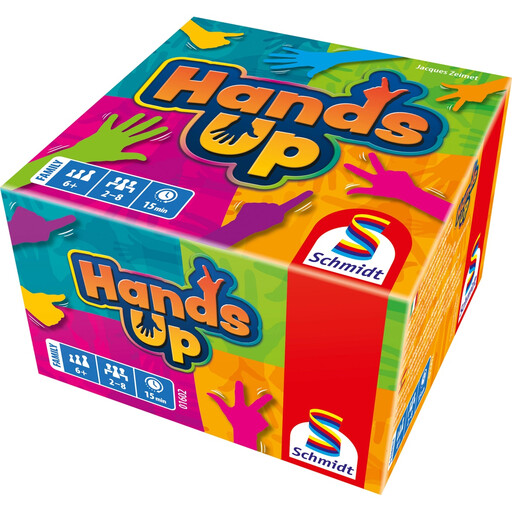
Why this product fits the profile: According to product details, this card game is suitable from age 6, is compact and can be played without batteries. This makes it ideal for short rounds at home or on the go.
The age recommendation of 6+ and the compact format make it easier to choose for families with younger children.
Card format, no batteries needed, product size of 10 × 10 × 6.8 cm and sturdy cardboard cards.
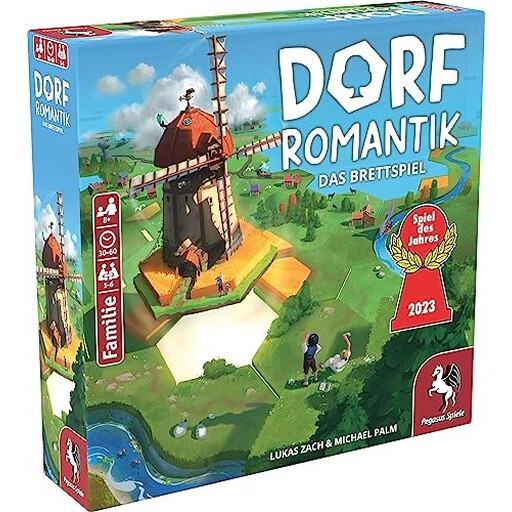
Why this product fits the profile: This cooperative tile game is designed for 1 to 6 players aged 8 and over, combining joint planning with unlockable materials.
The stated number of players covers solo games as well as larger family groups; the age limit clearly defines the target audience.
1 to 6 players, cardboard material, no batteries and no assembly required.

Why this product fits the profile: This cooperative strategy game is designed for exactly two players aged 10 and over and offers 21 different airport scenarios.
The clear restriction to two players prevents false expectations of a large family round.
21 scenarios, dice placement mechanic, no batteries and compact packaging dimensions of 25.7 × 18.6 × 5.3 cm.
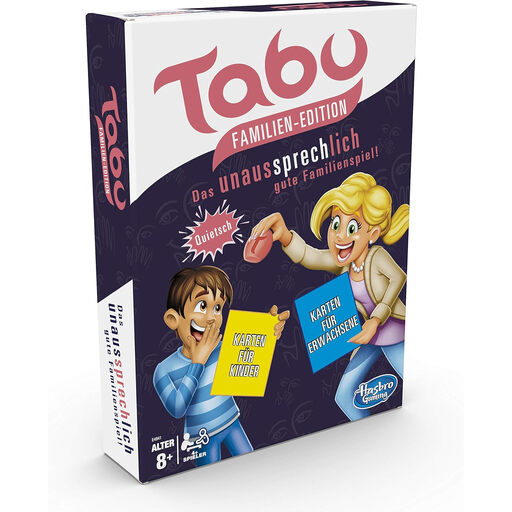
Why this product fits the profile: This edition is designed for at least four players aged 8 and over and contains separate card decks for children and adults.
The separate cards for children and adults take into account different vocabulary levels within a family.
260 cards, over 1,000 words, sand timer and group game for four or more players.
We’ve put together a complete, regularly updated list of products that fully meet these strict selection criteria and the safety regulations in force in the EU.
Look for an age recommendation of 6+, short rules and a manageable playing time. Reaction, card and simple cooperative games are often more accessible than extensive strategy games with lots of special rules. Small parts should be stored out of reach of younger siblings after playing.
For a varied evening, two to three different types of game are usually enough: a short card game, a dice game and a longer board game. This way you can adapt the choice to energy levels, time and number of players, without buying several similar games.
The lifespan depends mainly on the materials, storage and how they’re handled. Cards should be kept dry and, if possible, stored in the original box. Game boards and cardboard pieces shouldn’t be bent. For games with lots of small parts, it’s a good idea to do a full check after each round so nothing gets lost.