
Lieferung heute & morgen

Qualitätsgarantie

Willkommens-Angebote freischalten: KOSTENLOSE Lieferung | Bis zu 80 % RABATT | Kostenlose 30-Tage-JoyPlus-Testphase
App herunterladen
A family games night sounds simple enough – until the game takes too long, the rules are confusing, or younger children can’t join in because of small pieces. When it comes to board games for the whole family, it’s not just the theme and packaging that matter, but above all the age recommendation, number of players, playing time and storage.
The label “ages 3+” describes a recommended use, but it’s no guarantee that a three-year-old can take part without difficulty. Differences in reading, counting, concentration and understanding of rules can be significant within one family.
So make sure a game:
A collection with numerous games may look versatile at first glance. What really matters, though, is whether the variations included suit your own family. Classics like draughts, nine men’s morris, chess, halma or ludo are very different from fast dice games, cooperative games or strategy games.
A large game board isn’t always suitable for the kitchen table or for holidays. For train journeys and trips, compact sets or magnetic travel games are more practical. With longer games, parents should also check whether children are likely to manage the required playing time.
The manufacturer’s age rating should be matched to the child’s developmental stage and the intended gameplay. For products with small parts: For children under three, swallowable pieces can pose a choking hazard. Safety and warning notices on the packaging and product page must therefore be strictly observed.
A game “ages 3+” may still be unsuitable for a younger sibling in the household if game pieces, cards or chips are within reach. After playing, it’s advisable to store the game out of the reach of small children.
Many classic board games work well for two people, while larger families should opt for games for four to six players. In cooperative games, the group works towards a shared goal. This can be useful when competition quickly leads to frustration. Competitive strategy games, dice games and quiz games, on the other hand, suit families who enjoy comparing and making tactical decisions.
Check before you buy:
For younger children, clear materials and short sequences may be more suitable than extensive rulebooks. With children’s puzzles, the number of pieces should match the age. A set with 2 × 26 and 2 × 48 pieces makes different demands than a 1,000-piece puzzle for teenagers and adults.
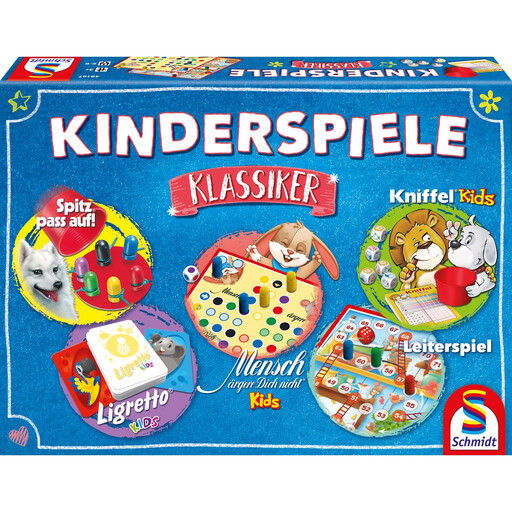
Why this product fits the profile: The collection combines five well-known children’s games and is aimed at children aged 3 and over according to the product information. This makes it a good introduction to classic family games with short, easy-to-understand rules.
Instead of containing just one game idea, the box offers five different variations. The warnings about small parts and long cords should still be observed.
Five games, no batteries required, dimensions 37.5 × 27.5 × 5.7 cm.
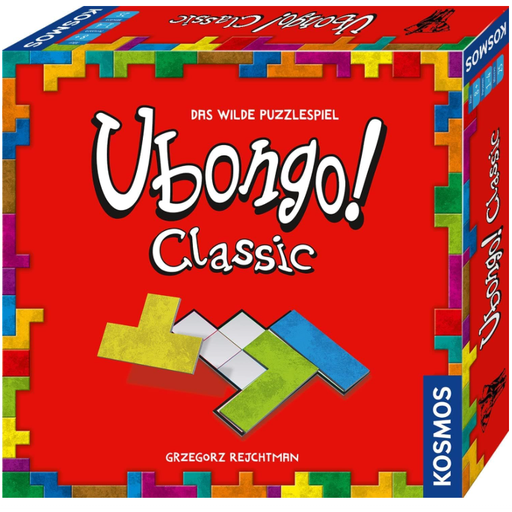
Why this product fits the profile: In Ubongo, one to four players simultaneously solve geometric jigsaw puzzles. Two difficulty levels and 648 tasks offer different gameplay challenges for families aged 8 and over.
The two difficulty levels reduce the risk that a single task level is unsuitable for all players. The app is optional.
For 1–4 players, 648 tasks, two difficulty levels, no batteries required.
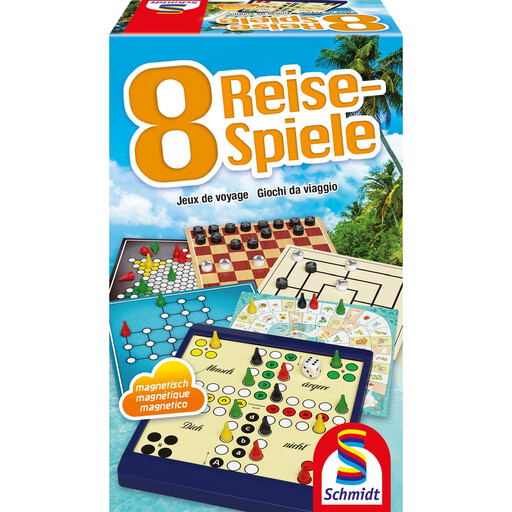
Why this product fits the profile: The compact box contains eight classic board games and is designed for travel, visits to grandparents or small play areas. The magnetic fastening keeps the pieces on the game board.
The dimensions of 18.5 × 11.5 × 7 cm make the space requirement clear. Magnetic game pieces are less likely to shift during transport; the age recommendation of 6+ remains key.
Eight game variations, foldable magnetic game board, no batteries required.
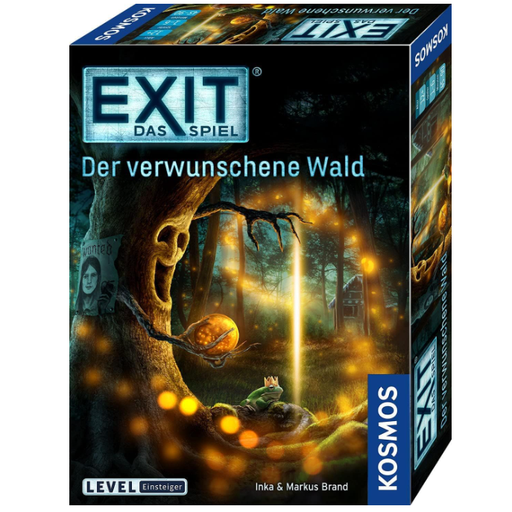
Why this product fits the profile: The escape room game is designed for one to four players aged 10 and over. The group solves puzzles together; the beginner level and a tutorial make this special games night easier to get into.
The one-time use is clearly stated. If you’re looking for a game that can be replayed indefinitely, you should choose a different category.
Cooperative game for 1–4 players, beginner level, tutorial and timer via an optional app.
We’ve put together a complete, regularly updated list of products that fully meet these strict selection criteria and the safety regulations in force in the EU.
Depending on age and interests, the following categories may also be worth considering:
Games with clear, short rules and an appropriate age rating are suitable. The product description for Schmidt Spiele 49189 gives a recommendation from age 3. Because of possible small parts, the warning notices must be observed and younger siblings kept away from the game materials.
For younger children, short rounds are often more practical. With games for ages 6 or 8, longer sessions can also work, as long as the family can adjust the game objective and breaks themselves. The actual duration depends on the number of players, knowledge of the rules and the game variation.
That depends on the preferences of the players. Competitive games like dice, card or quiz games rely on direct comparisons. Cooperative games pursue a shared goal and can be interesting for families who prefer to solve puzzles together or experience a story.