
Lieferung heute & morgen

Qualitätsgarantie

Willkommens-Angebote freischalten: KOSTENLOSE Lieferung | Bis zu 80 % RABATT | Kostenlose 30-Tage-JoyPlus-Testphase
App herunterladen
A family games night can fail because of the game chosen: the rules are too complicated, the age recommendation does not suit the actual group, or the game only works with a large number of players. Even supposedly versatile board games may only be played a few times if the rounds take too long or the tasks are too demanding for younger children.
If you are looking for board games for the whole family, you should not focus solely on well-known names, colourful packaging or advertising claims. The key factors are the recommended age, group size, playing time, complexity of the rules and the intended use.
“From 6 years” or “from 8 years” is a useful guide, but it does not always indicate how much reading ability, arithmetic or concentration is required. A strategy game may generally be suitable for a child of the recommended age, but they may need support with setting it up for the first time and explaining the rules.
For family games for ages 6 and up, parents should check:
A game for “2 to 8 players” is not automatically equally enjoyable with every group size. Some card games are quick and easy to follow with two players, but take considerably longer with eight. Other games require teams or a minimum number of players.
Before buying, it should be clear whether the game is intended for a regular family games night, travel or larger celebrations.
A stated playing time of 45 minutes or more may be enjoyable for adults, but can already be too long for younger children. With longer board games, it is worth looking for variants, options for taking breaks or shorter rounds. For spontaneous games, family card games are often more practical because they can be set up and packed away more quickly.
The recommended age should match the abilities of the youngest players. For quiz games, vocabulary and general knowledge are relevant, while strategy games tend to require an understanding of the rules and forward planning. Games with junior cards or age-appropriate card decks can help bring different generations together.
Pay attention to the officially stated player count. Games for 2 to 8 players are suitable for changing group sizes, while games for 3 to 6 people require a smaller group. For parties and family celebrations, family party games with teams, short turns and simple explanations are usually more suitable than complex board games.
Playing cards and game boards are often made from paper or card. They should be stored in a dry place and cleaned with a soft, dry cloth when needed. Built-in storage makes it easier to organise cards, chips and playing pieces. For games with small parts, checking everything before and after playing is recommended.
The language of the instructions is also relevant. Instructions in German make it easier to get started and prevent misunderstandings about special rules.
The following products cover different requirements – from a quick card game to a strategic board game for regular games nights.
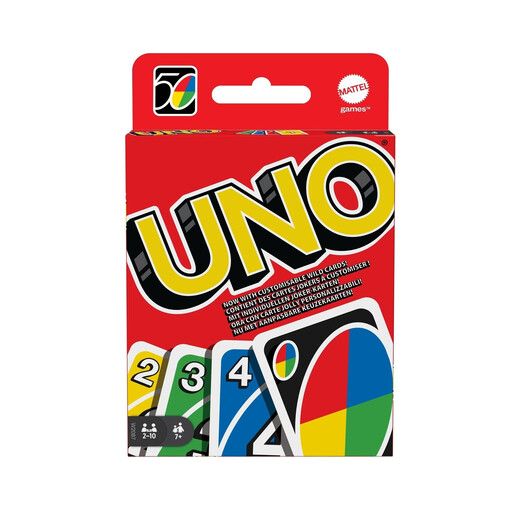
Why this product suits the profile: This card game can be played by 2 to 10 people and takes up very little space. The basic rule – match either the colour or the number – is quick to explain.
The player count is clearly stated, and the game does not require lengthy preparation or extensive instructions.
112 cards, action cards and the option to play with 2 to 10 players provide flexible, short rounds.
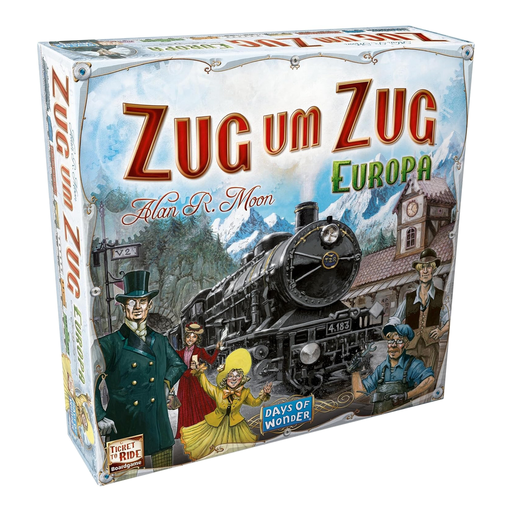
Why this product suits the profile: Anyone looking for a regular family board game with an easy-to-follow strategy gets a game for 2 to 5 players aged 8 and over.
The player count and recommended age are clearly stated. According to the product description, the instructions can be explained in around five minutes.
Route building, destination tickets and a stated playing time of around 45 minutes combine planning with an accessible introduction.
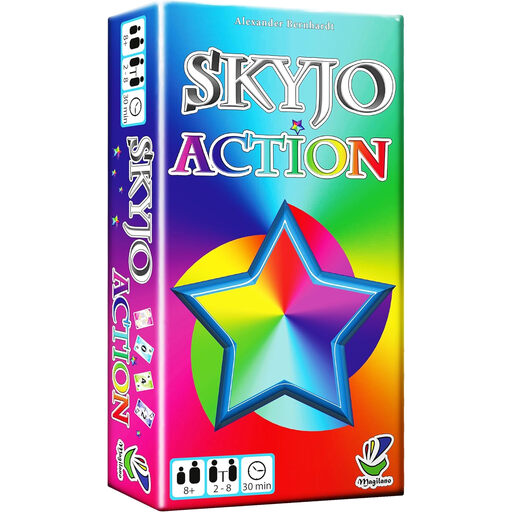
Why this product suits the profile: This compact card game is suitable for families, travel and changing groups of 2 to 8 players aged 8 and over.
Its compact format reduces the space required. The round-based structure allows flexible playing times instead of requiring one lengthy game.
The game combines card swapping, observation and scoring, and can be played several times in a row.

Why this product suits the profile: This cooperative board game is designed for 1 to 4 players aged 6 and over, making it ideal for making decisions together without direct competition.
The age recommendation of 6 and over and the cooperative format make it easier to get started when children have little gaming experience.
A rotating game board, event cards and working together create a variety of game situations.
We have put together a complete, regularly updated list of products that fully meet these strict selection criteria and the safety regulations applicable in the EU.
For board games for children and adults, a game with several difficulty levels is particularly practical. Junior cards, teams or a cooperative mode can help bridge age differences. If you are looking for a family game as a gift, you should also consider the typical group size in the household. A two-player game may be more suitable for an only child than a party game for twelve players.
For longer games, you should also check whether the game can be paused and saved or whether a round can be ended at any time. For holidays and travel, compact card games and games with sturdy boxes are often easier to transport than large boards with lots of individual pieces.
Games with short rules, manageable turns and little reading are suitable. Cooperative board games such as “The School of Magical Animals” or junior versions of well-known games can make it easier to get started. The manufacturer’s age recommendation and safety warnings should be observed.
This depends on the household and the occasion. For everyday use, 2 to 4 players are usually enough. For celebrations and larger groups, games for 6 or more people are suitable, often played in teams. The actual playing time may increase as the number of players rises.
Store cards, game boards and cardboard pieces in a dry place, preferably flat. Sorting compartments or resealable bags help prevent small parts from going missing. Electronic games also require batteries in accordance with the manufacturer’s instructions; for cardboard components, cleaning with a dry cloth is generally sufficient.