
Lieferung heute & morgen

Qualitätsgarantie

Willkommens-Angebote freischalten: KOSTENLOSE Lieferung | Bis zu 80 % RABATT | Kostenlose 30-Tage-JoyPlus-Testphase
App herunterladen
Board games for children and families should be entertaining, easy to understand and suited to the family’s everyday routine. In practice, however, people often buy games that soon sit unused on the shelf: the rules are too complicated, the playing time does not match the children’s attention span, or important safety information has been overlooked.
This buying guide explains what parents and grandparents should look for when choosing board games for children, family games, educational games and travel games. You will then find a targeted selection for different playing preferences.
The recommended age is not decorative information. It usually indicates the fine motor skills, understanding of rules and attention span required. A game for ages 10 and up can be frustrating for a younger child, while a very simple game can quickly become boring for older children.
It is also important to distinguish between the recommended age range and the safety warning. Small game pieces can pose a choking hazard regardless of the game’s level. Games containing small figures, balls, magnets or puzzle pieces should generally be kept out of reach of children under 3.
A game for two to five players is not necessarily suitable for a family with toddlers. Check the following:
Co-operative games can be particularly well suited to families because they involve making decisions together. Competitive games, on the other hand, produce clear winners and losers, which younger children may not always enjoy.
Terms such as “educational game”, “strategy game” or “skill game” say very little on their own. What matters are specific details about the materials, dimensions, number of pieces, number of players and how the game is played.
Claims about developing concentration, logic or fine motor skills should also be understood as possible benefits of playing, rather than medical claims or guaranteed developmental promises. With magnetic games, it is especially important to read the safety warnings carefully.
Check the age rating provided by the manufacturer, as well as any warnings under the EN 71 marking, where these are shown on the packaging or product page. The marking does not replace the duty to supervise children. Damaged pieces, loose magnets or broken plastic components should be removed immediately.
For children’s games aged 4 and up, sturdy materials and a manageable number of rules are particularly practical. For children aged 2 and up, large, easy-to-grip pieces are a good choice, such as first puzzles with just a few pieces.
Short rounds are ideal for an impromptu games evening. For teenagers and adults, however, strategy games with longer playing times may be appealing. The specification “2–5 players” should always be considered in relation to your intended family situation.
Compact formats are useful when travelling. A travel game should not only be small, but should also provide secure storage for all its pieces. A box, pouch or integrated playing board reduces the risk of losing important components.
Cardboard, paper and plastic are commonly used for board games. If a game will be used frequently, look for:
For games with small balls or magnets, it is particularly important to store them out of the reach of younger children.
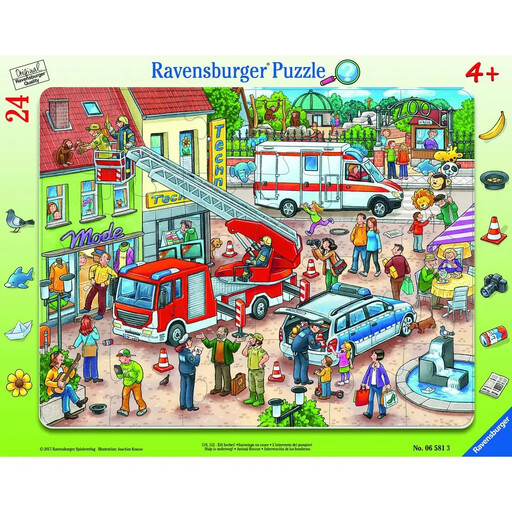
Why this product suits this profile: This puzzle is designed for children aged 4 and up and offers an accessible introduction with 24 pieces. The included mat helps with sorting and storage.
The number of pieces and the age recommendation are clearly stated. The limited format reduces the risk of choosing a puzzle that is too challenging for a first attempt.
24 pieces, a frame with a helpful guide and a practical mat; no batteries required.
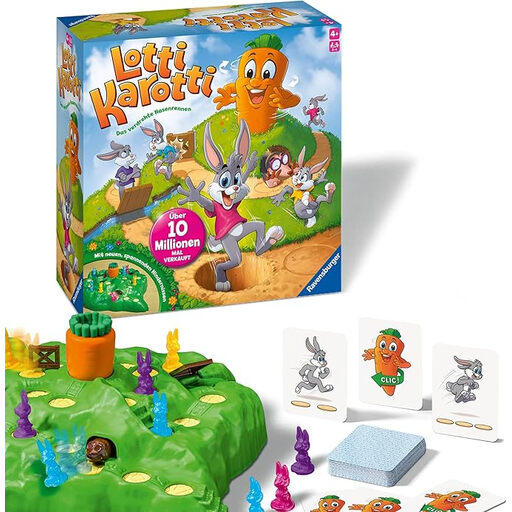
Why this product suits this profile: This family game is designed for children aged 4 and up, accommodates 2 to 4 players and takes approximately 20 minutes.
The short stated playing time prevents a family round from being planned too long from the outset. The rules are based on cards and simple movements.
2–4 players, approximately 20 minutes of playing time and a game board with moving obstacles.
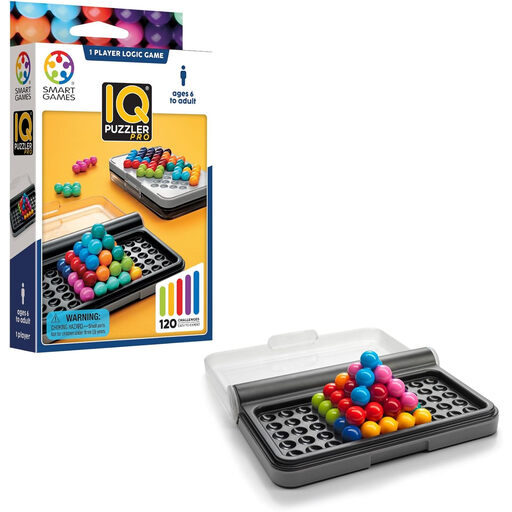
Why this product suits this profile: This compact travel game is designed for children aged 6 and up and offers 120 challenges in 2D and 3D formats for solo play.
The compact design and stated number of pieces make it easier to plan for use on the go. The challenges can be completed without another player.
120 challenges, three game modes and very compact dimensions; no batteries required.
We have put together a complete, regularly updated list of products that fully meet these strict selection criteria and the safety regulations applicable in the EU.
For younger children aged 2 and up, puzzles for children with large, sturdy pieces can provide a suitable activity. According to the product information, the Ravensburger “My First Puzzle” contains four pictures with increasing levels of difficulty and is designed for children aged 2 and up.
For families with children aged 8 and up, strategy games such as “Ticket to Ride: Europe” or “Azul” may be worth considering. Both are designed for 2 to 5 and 2 to 4 players respectively. Before buying, check the playing time and whether you want the German edition.
For children’s birthday parties or larger groups, party games such as “Top Ten” may be interesting. However, this game is designed for ages 12 and up and for 4 to 9 players. It is therefore better suited to teenagers and adults than to a group of pre-school children.
Games with short rounds, a few basic rules and easy-to-grip pieces are suitable. Examples from the selection include “Lotti Karotti” for 2 to 4 players, with approximately 20 minutes of playing time, and a 24-piece puzzle. The age recommendation and safety information should still be checked before every order.
The lifespan depends largely on the materials, storage and how the game is handled. Cards and cardboard pieces should be stored in a dry place. Plastic components should be checked regularly for cracks. For games with small elements, organised storage helps prevent pieces from being lost or damaged.
The key factors are the child’s age, the number of players, their interests and where the game will be used. Compact travel games are ideal for trips, while a family game for a games evening should accommodate several players. For children under 3, games with small parts, balls or magnets must be ruled out.