
Lieferung heute & morgen

Qualitätsgarantie

Willkommens-Angebote freischalten: KOSTENLOSE Lieferung | Bis zu 80 % RABATT | Kostenlose 30-Tage-JoyPlus-Testphase
App herunterladen
Finding a suitable game for the family may sound straightforward at first. In practice, however, board games for children and families can vary considerably in terms of recommended age, number of players, playing time, materials and complexity of the rules. A game advertised on the packaging as suitable for the whole family may still be too complicated for younger children, or end up unused on the shelf after just a few rounds.
This buying guide explains what parents and grandparents should look for when choosing board games for children, card games for children, puzzles and educational games for children.
The age recommendation is an important safety and usage indicator. A game marked as suitable from 6 years may contain small parts, abstract rules or require a high level of concentration. It is therefore not automatically suitable for a three-year-old, even if adults can play along.
This is particularly important with games for children aged 3 and over. Parents should check the warnings carefully. The label ‘not suitable for children under 3 years’ often indicates that the product contains small parts that could be swallowed. This applies even when the game has educational aims such as developing concentration or logical thinking.
Family games can appeal to several generations, but the demands they place on players may still vary. A game involving time pressure, tactical planning or numerous special rules can quickly overwhelm younger children. Conversely, a very simple game may offer little variety for older children and adults.
You should therefore check the number of players, playing time and difficulty levels. A cooperative mode can be useful when children are expected to play with adults, without every round depending solely on the adults’ knowledge and experience.
Descriptions such as ‘educationally valuable games’ or ‘supports development’ are not sufficient selection criteria on their own. Verifiable features are more meaningful: the number of tasks, puzzle size, materials, extent of the rules, game mode or available difficulty levels.
Claims about developmental benefits should be understood as describing the game’s playful objectives, not as medical claims or guaranteed effects.
Compare the recommended age with the child’s actual stage of development. For games containing cards, playing pieces, tiles or magnets, warnings about small parts are especially important. Strong magnets can be dangerous if swallowed. Products containing magnets should therefore be checked regularly for damage and used only with suitable supervision.
The CE marking is a mandatory conformity mark for many toys in the EU. However, it does not replace reading the specific warnings, manufacturer’s information and instructions for use.
For a regular family games night, short or adjustable rounds are often more practical. Check the following:
For travelling, compact travel games for children with a sturdy box, few separate pieces and a straightforward set-up are ideal.
Cards made from sturdy card, thick puzzle pieces and a well-organised box make repeated use easier. With board games, you should also consider the packaging dimensions and the amount of playing space required. A large game board may not fit on a small kitchen table or in your luggage.
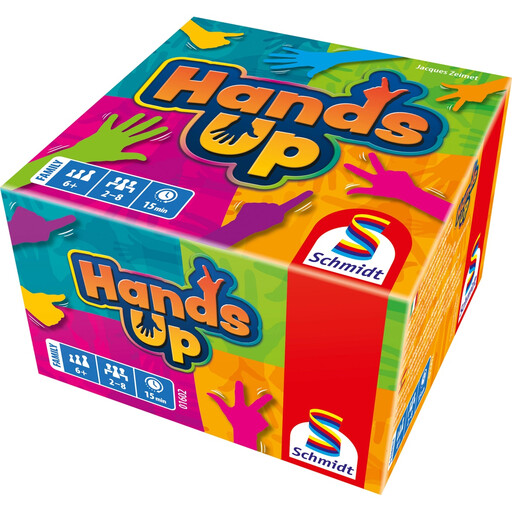
Why this product suits this profile: This card game is designed for children aged 6 and over, requires no batteries and comes in a compact box measuring 10 × 10 × 6,8 cm. This makes it ideal for quick games at home or when visiting friends and family.
The age recommendation, card format and battery-free use are clearly stated. The sturdy playing cards are designed for repeated rounds.
Suitable for children aged 6 and over; compact storage; according to the product description, supports strategic thinking, memory and social interaction.
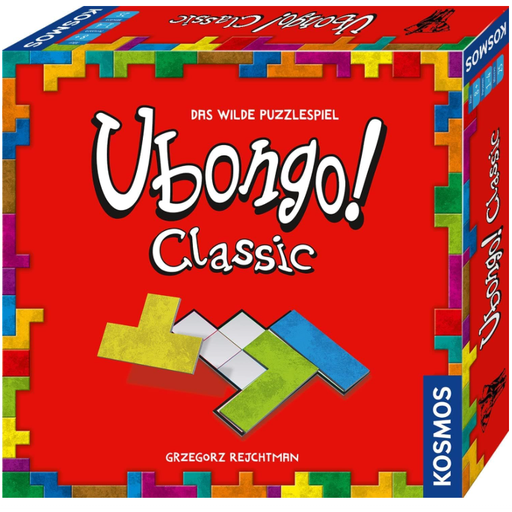
Why this product suits this profile: This board and strategy game is designed for 1 to 4 players aged 8 and over and contains 648 tasks with two difficulty levels. It is well suited to families who want to accommodate different playing abilities.
The number of tasks and the two difficulty levels are specific details rather than a vague educational claim. The age recommendation of 8 and over clearly defines the target audience.
1 to 4 players; 648 puzzles; optional explanatory app; according to the product description, playful tasks involving logical and spatial thinking.
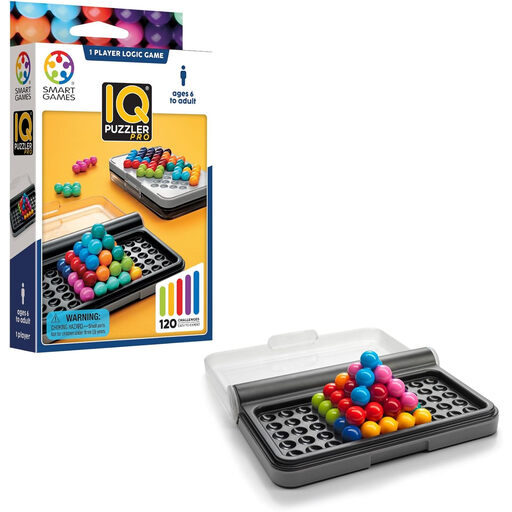
Why this product suits this profile: This solo game is suitable for children aged 6 and over. With 120 tasks, three game modes and 2D and 3D challenges, it is designed for independent play. Its compact format makes it convenient to take on trips.
The number of tasks and game modes gives you a clear idea of what to expect. As it is designed for one player, there are no unclear expectations associated with a family game involving several players.
120 tasks; solo play; 2D and 3D modes; compact format; according to the product description, focuses on concentration, logic and problem-solving.
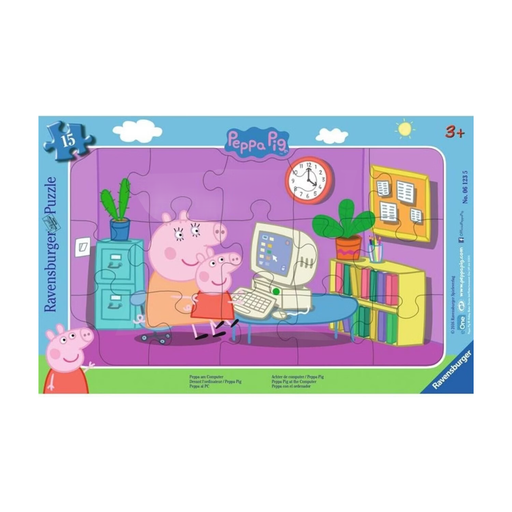
Why this product suits this profile: This 15-piece frame puzzle is suitable for children aged 3 and over and is aimed at beginners. The outline of the frame makes it easier to place the pieces correctly.
The small number of pieces and the frame format make it easy to get started. The product information explicitly states that it is suitable from 3 years and includes a warning about small parts for children below this age.
15 sturdy cardboard pieces; frame with outlined guides; no batteries; according to the product description, provides a playful way to practise concentration and fine motor skills.
We have put together a complete, regularly updated list of products that fully meet these strict selection criteria and the safety regulations applicable in the EU.
For family games for children aged 6 and over, simple strategy games such as KOSMOS Catan Junior are worth considering. It is designed for 2 to 4 players and uses simplified trading rules. For quick word and reaction-based rounds, the Kosmos card game ‘Das NEINhorn’ is suitable for 2 to 6 players aged 6 and over.
Children aged 4 and over can enjoy Halli Galli Junior, a short card game for 2 to 4 players. For older children aged 8 and over, more challenging strategy games for families such as Azul are suitable, provided the family is happy to set aside around 30 to 45 minutes.
Games with a small number of sufficiently large pieces, short sequences and simple rules are suitable. Frame puzzles with 12 to 15 pieces can be a good starting point. Always check the specific age recommendation and the warning about small parts.
For younger children, around 10 to 20 minutes is often easier to plan. Depending on their concentration levels, children aged 6 and over may also manage longer rounds. The key question is whether the game can be paused at any time or played in several short sessions.
Keep cards, playing pieces and tiles separate from one another in the original packaging or in labelled bags. For travelling, magnetic or compact solo games are practical, while large board games require a flat playing surface and dry storage.