
Lieferung heute & morgen

Qualitätsgarantie

Willkommens-Angebote freischalten: KOSTENLOSE Lieferung | Bis zu 80 % RABATT | Kostenlose 30-Tage-JoyPlus-Testphase
App herunterladen
Finding the right game for the family sounds simple at first. In practice, however, board games, card games and logic games can differ considerably in recommended age, playing time, number of players and materials. Buying the wrong game is particularly common when the packaging focuses on educational benefits, a large collection of games or a well-known brand, while the actual playing conditions do not suit the family.
This buying guide from the Joybuy Product Recommendation Officer explains what parents and grandparents should look for when choosing board games for children and families. The selection ranges from children’s games for ages 3 and over and family games for ages 6 and over to cooperative puzzle games for older children.
“From 6 years” does not automatically mean that every child will understand the game without support. Some games require reading skills, an understanding of numbers, sustained concentration or the ability to follow several rules at the same time. When choosing educational games for children and strategy games for children, you should also check which specific skills are required.
The lower age limit is important too: if a game contains small parts that could be swallowed, it must not be given to younger children. Always consider the manufacturer’s age recommendation together with the warnings on the packaging.
Game collections with lots of variations may seem versatile at first glance. What matters, however, is whether the included rules suit the intended age group and the time available. A large collection can be worthwhile if several generations with different preferences want to play together. For a short games evening, a simple card game or travel game may be more suitable.
A game for two people serves a different purpose from a board game for six players. Similarly, a puzzle game lasting an hour may not be suitable for a children’s birthday party, even though it could be ideal for a relaxed family evening. Before buying, you should therefore compare the number of players, approximate playing time, set-up required and space needed.
For children aged between 3 and 5, short sequences with just a few rules, large components and clear objectives are usually most suitable. For children’s games from age 3, colours, simple matching tasks and taking turns are often more accessible than complex scoring systems.
From around age 6, families can introduce classic board games, beginner logic games for children and simple strategy games. From age 8, games involving card values, tactical decisions or time pressure may be suitable. Escape-room games for children aged 8 or 10 and over should be chosen according to age and reading ability; younger players may benefit from adult supervision.
Look out for:
The material specification is relevant for plastic games. For card and paper games, check whether components need to be folded, written on or cut out. This is part of the concept for certain puzzle games and may limit their reusability.
Compact travel games for children with magnets, a lid or securely closing packaging are practical for train journeys, holidays or waiting times. A large game set with lots of individual pieces needs more space and is better suited to playing at home.
The number of players should also match the situation in which the game will usually be played: a solo logic game is suitable for quiet entertainment, while cooperative board games focus on making decisions together rather than competing directly.
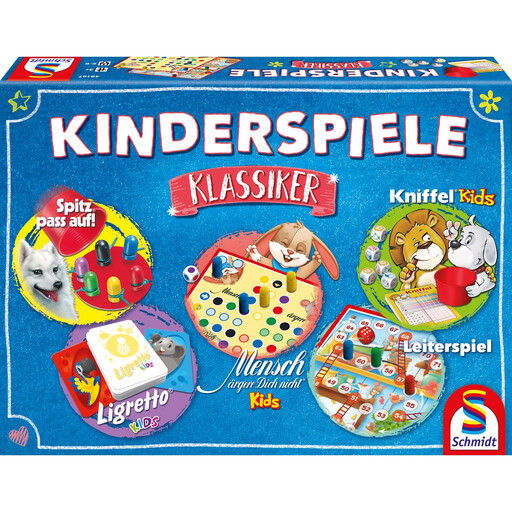
Why this product suits this profile: This collection is designed for players aged 3 and over and contains five familiar game ideas. It allows families to try out different ways of playing without having to buy several individual boxes.
The details state both the recommended age group and the games included. This makes it easier to assess the collection’s scope before buying.
Five game variations, recommended for ages 3 and over, no batteries required and dimensions of 37,5 × 27,5 × 5,7 cm.
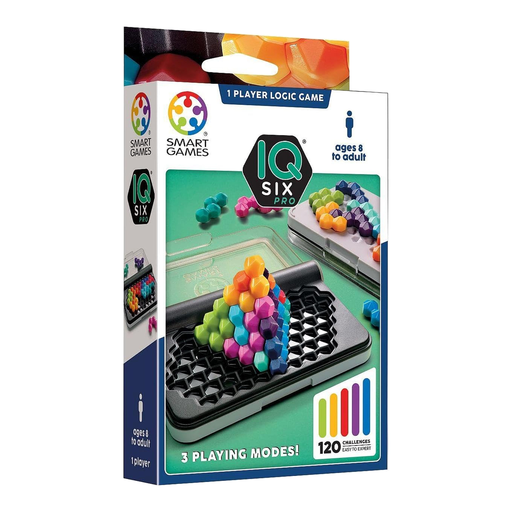
Why this product suits this profile: This compact solo game offers 120 challenges and three playing modes. It is ideal for children aged 8 and over who enjoy structured brainteasers.
The number of challenges, recommended age, number of players and dimensions are all clearly stated. This makes it easier to check whether the game is suitable for playing at home or on the go.
Three playing modes, 120 challenges, plastic components, compact dimensions of 9,6 × 3 × 14,4 cm and no batteries required.
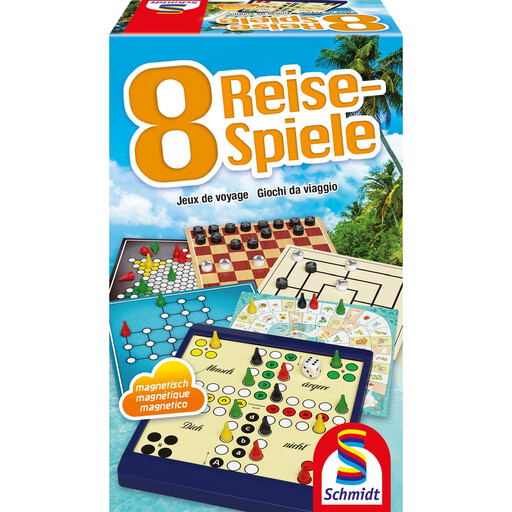
Why this product suits this profile: The magnetic box contains eight classic games and is designed for families with children aged 6 and over. It is suitable for holidays, holiday lets or smaller playing areas.
The magnetic attachment helps keep the playing pieces in place. The dimensions of 18,5 × 11,5 × 7 cm are also stated, making it easy to assess its suitability for use on the go.
Eight classic game options, magnetic components, folding game board, suitable for ages 6 and over, and no batteries required.
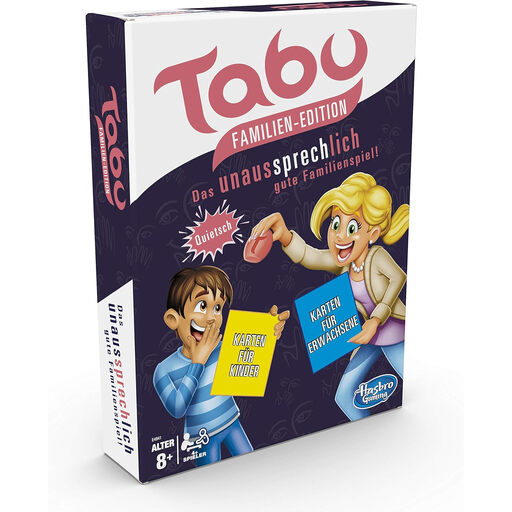
Why this product suits this profile: This edition is designed for at least four players aged 8 and over, with separate cards for children and adults. That makes it a good fit for larger groups with different age ranges.
The separate card sets take different vocabulary levels into account. Before buying, however, you should check whether at least four players will regularly be available to play together.
260 cards, including 130 for children and 130 for adults, a sand timer, plastic components and suitable for ages 8 and over.
We have put together a complete, regularly updated list of products that fully meet these strict selection criteria and the safety regulations applicable in the EU.
A few simple preparations can help make sure the game is played regularly:
When choosing a board game as a gift, age, interests and the usual group size are more important than eye-catching packaging. If you are looking for a game to take travelling, you should also check its dimensions, closure and magnetic function. For card games for families, the number of cards, language and reading ability are important criteria.
Games with simple rules, short rounds and easy-to-grip components are suitable. According to the product details, a collection such as Schmidt Spiele 49189 is suitable for children aged 3 and over. The warnings must still be observed, as small parts may present a choking hazard.
For younger children, around 10 to 20 minutes is often practical. Depending on their concentration levels, children aged 6 or 8 and over may also manage longer rounds. The manufacturer’s information and the experience of the individual family are the most important factors.
No. Terms such as “educational game” do not automatically describe the actual benefit for every child. Check specifically whether the game involves colours, numbers, language, spatial thinking, planning or teamwork. What matters most is whether the child understands the task and wants to play again of their own accord.