
Lieferung heute & morgen

Qualitätsgarantie

Willkommens-Angebote freischalten: KOSTENLOSE Lieferung | Bis zu 80 % RABATT | Kostenlose 30-Tage-JoyPlus-Testphase
App herunterladen
A good board game should suit your family, the ages of your children, and the time you have available. Yet product descriptions don’t always lead you straight to the right purchase. Terms like “for the whole family” can hide the fact that a game might only be suitable from age eight, only keeps two people entertained, or needs far more space than you’d expect.
These three buying pitfalls crop up most often with board games for the whole family:
The manufacturer’s recommendation of “from 4 years”, “board games from 6 years” or “board games from 8 years” gives you a first point of reference. It describes not only the difficulty level, but also suitability in terms of game materials and understanding of the rules.
If a game contains small figures, chips or dice, you must pay attention to the safety warnings. With the products featured here, it is repeatedly pointed out that they are not suitable for children under three years due to small parts that could be swallowed. For children aged four to six, having an adult on hand for the first play-through can be helpful.
For a short family games night, easy-to-understand games with parallel or quick turns are often more practical. If you regularly play with several generations, look for a flexible number of players.
A big game collection isn’t automatically the right choice for families who mostly prefer short rounds.
Classic board games often use cardboard, plastic, wooden figures, cards and dice. What matters is whether the material suits how you’ll use it. Wooden figures can be nice and easy for younger children to handle, while foldable plastic or cardboard solutions save space in travel games.
Also look out for:
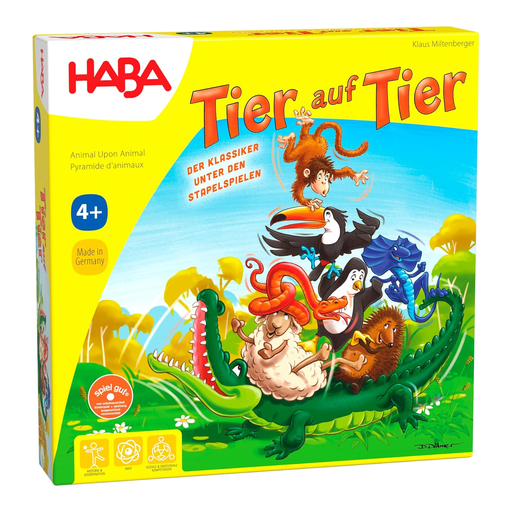
Why this product fits the profile: This stacking game is designed for 2 to 4 players from age 4 and can be started without a long setup. It suits families looking for a simple game for younger children.
The number of players and the age recommendation are clearly stated. The game concept focuses on short, manageable rounds with wooden figures.
Suitable from 4 years, 2 to 4 players, wooden material and dimensions of 22.2 × 22.3 × 4.9 cm.
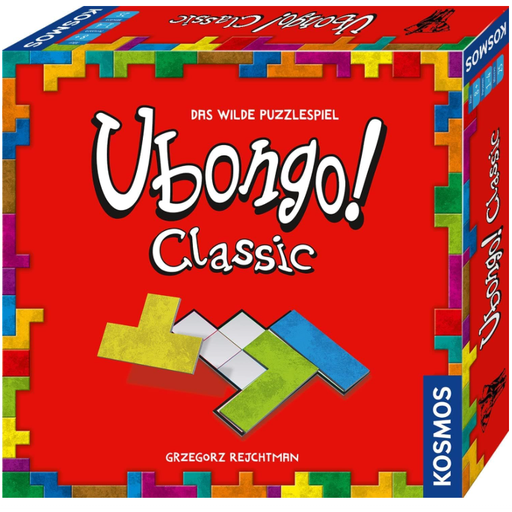
Why this product fits the profile: Ubongo combines simultaneous play with spatial puzzle challenges. Two difficulty levels allow for different requirements within one family.
The details clearly state the age, number of players and difficulty levels. A timer ensures each round has a clearly defined length.
648 puzzle challenges, 1 to 4 players, from 8 years, no batteries required; an explanatory app is optional.
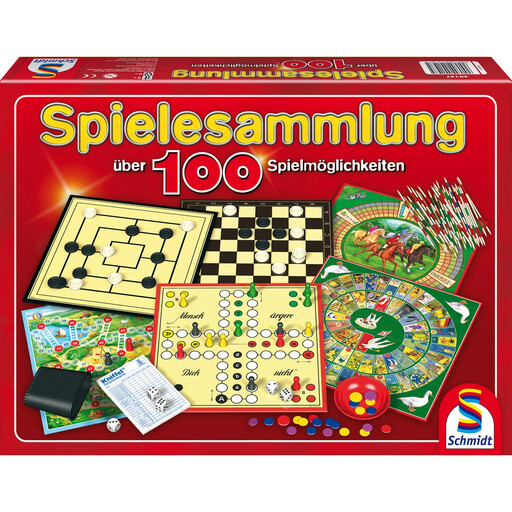
Why this product fits the profile: This collection is aimed at households with changing group sizes and different preferences for dice, card and classic board games.
The wide range of game options reduces the risk that a single game won’t suit the group after just a few rounds.
100 game options, age recommendation from 6 years, designed for 2 to 6 players and no batteries required.
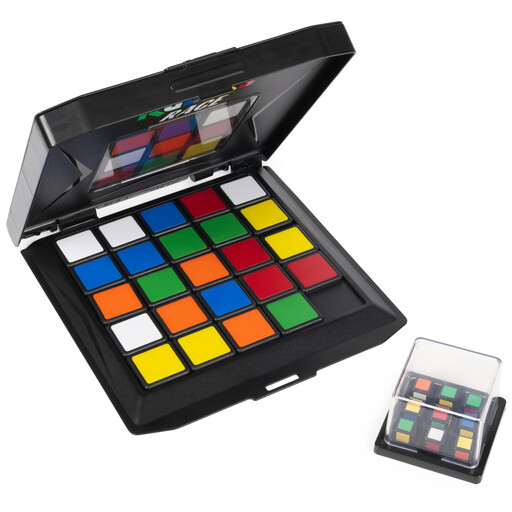
Why this product fits the profile: This two-player game has a foldable game board and is ideal for families looking for a compact game for holidays, train journeys or quick duels.
The number of players is clearly limited to two. The foldable format makes transport and storage easier compared to large game boards.
For 2 players from 7 years, dimensions of 17.5 × 19 × 2.1 cm and manual use without batteries.
We’ve put together a complete, regularly updated list of products that fully meet these strict selection criteria and the safety regulations in force in the EU.
Games with clear rules, a short introduction and several difficulty levels are suitable. For younger children from age 4, simple stacking or matching games work well. From age 6 or 8, memory, puzzle and strategy games with more extensive rules can be appropriate. You should always take the manufacturer’s specific age recommendation into account.
Durability depends on the materials, storage and how often they’re used. Cardboard should be stored in a dry place and protected from sharp creases. Plastic and wooden game pieces should be kept completely in the original packaging. For games with lots of cards or small parts, it’s a good idea to do a full inventory check after playing. It’s not possible to give a general rule for actual lifespan.
For larger groups, collections for 2 to 6 players are a good choice. If you’re short on time, choose a game with short rounds or simultaneous play. For travel, compact editions with a foldable board and built-in storage are more practical than bulky boxes. What matters most is that the age, number of players and skill level suit the group.