
Lieferung heute & morgen

Qualitätsgarantie

Willkommens-Angebote freischalten: KOSTENLOSE Lieferung | Bis zu 80 % RABATT | Kostenlose 30-Tage-JoyPlus-Testphase
App herunterladen
The selection of board games for kids is vast, and choosing the right one can be a challenge. Parents, grandparents, and relatives often look for an option that not only entertains but is also age-appropriate and meaningfully supports a child's development. This article serves as an objective guide to help you with your selection. We will introduce various criteria and present a selection of games tailored to different age groups and interests.
To find the perfect game, it's helpful to consider a few fundamental aspects. These criteria will help you filter the options and make an informed decision that brings joy to both the child and the entire family.
The manufacturer's age recommendation is a crucial guideline. It considers not only safety aspects, like the size of the game pieces, but also the cognitive and motor skills required to understand the rules and execute moves. A game that is too complex can lead to frustration, while one that is too simple quickly becomes boring. Especially for children's games from age 3 and up, simple rules and large, easy-to-grip game materials are important.
Many board games for kids are designed to develop skills through play. Educational games for toddlers often focus on recognising colours and shapes, counting, or training fine motor skills. Games for preschoolers can already train initial strategic thinking, memory, or reaction skills. Pay attention to the learning objectives mentioned in the product description to find a game that specifically supports your child's development.
Consider the context in which the game will be played. Are you looking for family games for shared afternoons? If so, the player count is crucial. Cooperative games, where everyone works together to beat the game, are particularly well-suited for younger children as they reduce competitive pressure and strengthen team spirit. Competitive games, on the other hand, teach children how to handle winning and losing.
Based on the criteria mentioned above, we have compiled a selection of games that cover different game mechanics and age groups.
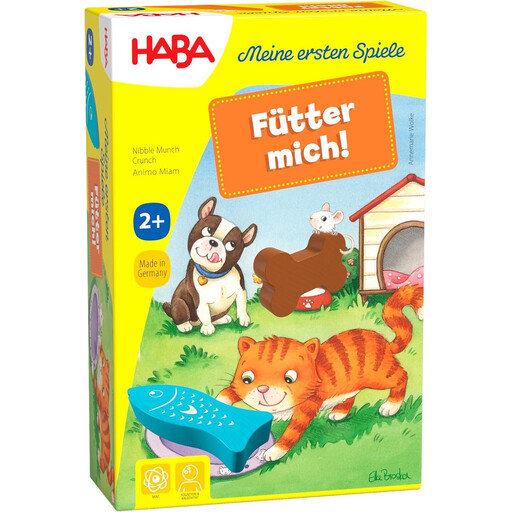
Why it stands out: This game from the HABA games series is specially designed for the youngest players. It combines a matching and memory game with a cooperative approach. The materials, made of beech wood and sturdy cardboard, are robust and easy for small hands to grip.
Advantages:
Who is it for? Ideal for parents and grandparents looking for a first board game for toddlers aged 24 months and up. It's excellent for introducing children to playing by the rules without the focus being on competition.
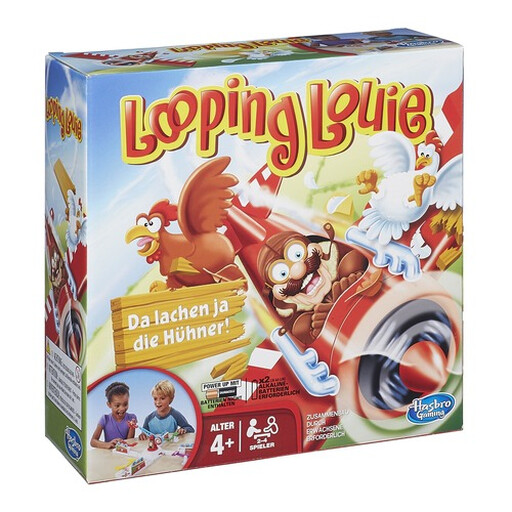
Why it stands out: Looping Louie is a classic among Hasbro children's games and a guarantee for action-packed fun. The battery-operated 3D game requires quick reactions to protect your own chickens from Louie's plane. Its interactive nature ensures high-energy gameplay.
Advantages:
Who is it for? For families with children aged 4 and up who are looking for a fast and fun game of skill. It's a popular gift for kids that livens up parties and game nights.
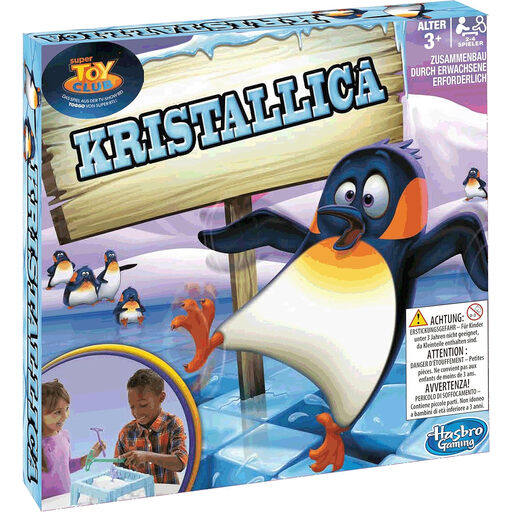
Why it stands out: Kristallica is a game of skill and strategy for preschoolers. Players take turns using a small hammer to knock ice blocks out of a frame without letting the figure standing on top fall. The game mechanic is simple but creates a tense and exciting atmosphere.
Advantages:
Who is it for? This game is aimed at children aged 3 and up who want to practise having a steady hand and using initial strategic thinking. It's a great choice for games for preschoolers who enjoy a mix of skill and suspense.
A great game night creates lasting memories. To make your time together even more comfortable, the right environment can play a big role. After the fun of the game, it's time to relax and cuddle.
Discover our selection of soft and colourful kids' blankets, which are perfect for a cosy reading or cuddle time after playing.
For children aged 3 and up, games with simple, clear rules, short rounds, and large, sturdy game pieces are ideal. Cooperative games are often a great starting point. Themes like colours, animals, or simple matching are very popular at this age. The game 'Kristallica' featured here is an example of a game that combines skill and simple strategy for this age group.
Family games support development in many ways. Socially, children learn to follow rules, wait their turn, and handle winning or losing. Cognitively, depending on the game, concentration, memory, logical thinking, and strategic planning are trained. In terms of motor skills, fine motor skills or hand-eye coordination are often practised.
When choosing a game as a gift for kids, you should consider the child's age, interests, and personality. An active child might enjoy a fast-paced reaction game like 'Looping Louie', while a child who enjoys puzzles might prefer a simple strategy game. A game that can be played with friends or family is often a great choice, as it creates shared experiences.