
Lieferung heute & morgen

Qualitätsgarantie

Willkommens-Angebote freischalten: KOSTENLOSE Lieferung | Bis zu 80 % RABATT | Kostenlose 30-Tage-JoyPlus-Testphase
App herunterladen
Finding the right board game may seem straightforward at first. Yet many disappointing purchases are not caused by a lack of choice, but by unclear product information. A game may be marketed as a family game even though it is only suitable for ages 12 or 14 and up. A short playtime does not always include the initial setup. And while a compact card or dice game fits on any shelf, it may not offer the level of depth you are looking for.
The following criteria make it easier to compare board games objectively by player count, age suitability, playtime and game type.
The term family game does not automatically mean that children of all ages can participate. The manufacturer’s information is what matters. If a game contains small parts, the choking hazard warning must be taken seriously. Many board games are generally unsuitable for children under 3. Even a game rated for ages 8 and up may be unsuitable for younger children because of its rules, reading requirements or strategic demands.
For board games, the listed playtime is generally based on experienced players. Setup, explaining the rules and playing a first round can take considerably longer. A strategy game such as The White Castle is designed for approximately 50 to 70 minutes. By contrast, a fast card game such as Monopoly Deal: Harry Potter is listed at around 15 minutes, making it a better choice for shorter sessions.
A familiar film or television universe can spark interest, but it reveals little about how the game actually plays. Before buying, check whether the game focuses primarily on collecting, bluffing, dice rolling, drawing, cooperation or long-term planning. This helps prevent disappointment when a group expects a relaxed party game but ends up with a tactical duel.
The player count shown on the packaging is a key consideration. For two people, duel games or cooperative games designed specifically for two players are a good fit. For larger groups, party games, communication games and fast-paced card games are often more practical.
The stated age range should be compared with the intended audience. Hands Up! is rated for ages 6 and up. Ticket to Ride: Europe and Azul are designed for players aged 8 and up. Escape-room games such as EXIT – The Game: The Last Performance are intended for ages 12 and up and identified as an advanced edition.
It is also worth checking the language and content. For English-speaking families, English-language cards and instructions are the practical choice. Games with app connectivity, such as HITSTER Schlager Party, also require a compatible smartphone or tablet and access to Spotify.
For a short game night or travel, compact card and dice games with a playtime of around 15 minutes are especially convenient. Larger board games, on the other hand, require a stable and sufficiently spacious playing surface. Paper, cardboard and plastic components should be stored in a dry place and returned to the original packaging in full after playing.
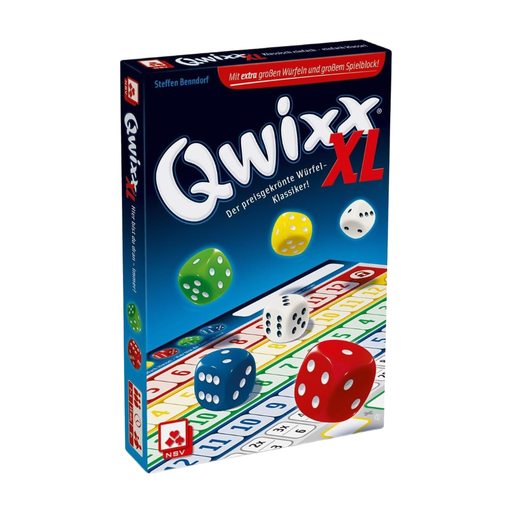
Why it fits this profile: This dice game is designed for 2–5 players aged 8 and up and takes approximately 15 minutes. The larger dice and XL score pad make it easier for everyone to play together at the table.
The short, clearly stated playtime prevents a quick round from being mistaken for a lengthy strategy game.
No batteries required; simple rules with tactical decisions and easy-to-see components.
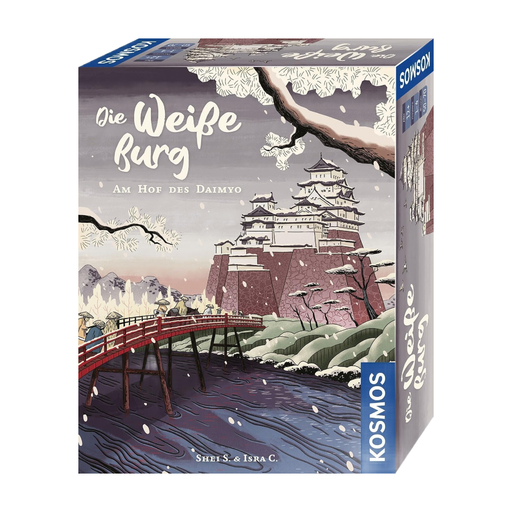
Why it fits this profile: This strategy game for 1–4 players aged 12 and up uses a dice-placement mechanism and consists of nine rounds, with a listed playtime of approximately 50–70 minutes.
The target audience and longer time commitment are clearly stated, making it unsuitable for occasional quick rounds rather than presenting it as one.
Solo mode as well as multiplayer games; boxed format weighing approximately 900 g.
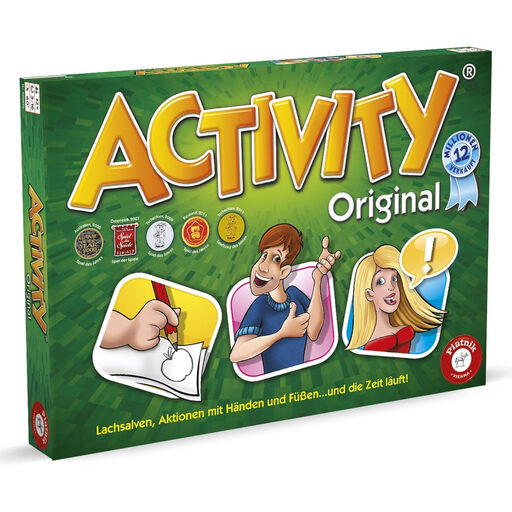
Why it fits this profile: Designed for 3–16 players aged 12 and up, this party game combines drawing, acting and explaining. That makes it a strong choice for larger game nights.
The stated maximum of 16 players clearly demonstrates its suitability for groups instead of making only a vague claim.
Includes 2,640 terms; three distinct game modes provide variety from round to round.

Why it fits this profile: This cooperative escape-room game is designed for 1–4 players aged 12 and up and is identified as an advanced edition. The focus is on puzzles, clues and solving challenges together.
The “Advanced” rating makes it clear that the game is not intended for beginners or younger children.
No batteries required; compact format measuring approximately 13.1 × 4.2 × 17.7 cm.
Our complete selection includes board games, social games, family games and further options for different age groups and playing preferences.
Card games and dice games with a listed playtime of around 15 minutes are generally a good fit. Examples include Monopoly Deal, QWIXX XL and Simon Classic. For electronic games, you should also check which batteries are required.
Lifespan depends primarily on the materials, storage conditions and handling. Cards and game boards made from paper or cardboard should be stored in a dry, light-protected place away from liquids. Keeping everything in the original packaging helps reduce the risk of losing small components.
Player count, age rating, language, playtime, space requirements and game type are among the most important details. App-based or music games may additionally require a smartphone, internet access or a specific account. Only once these factors suit your planned game night does it make sense to compare price and included features.