
Lieferung heute & morgen

Qualitätsgarantie

Willkommens-Angebote freischalten: KOSTENLOSE Lieferung | Bis zu 80 % RABATT | Kostenlose 30-Tage-JoyPlus-Testphase
App herunterladen
The selection of board games and party games is vast. Between family games, card games, strategy games and party games, the rules, age recommendations and playing time vary considerably. A well-designed game isn't automatically suitable for every group.
Before buying, families, couples and groups of friends should pay particular attention to three common pitfalls:
The age recommendation indicates the developmental stage for which the rules, pace and materials are designed. Games for ages 4+ typically focus on simple mechanics, short rounds and easy-to-understand tasks. Games for ages 8+ can already include multiple rules, tactical decisions or abstract challenges.
For games with small playing pieces, card markers or plastic components, always check the warning label on the packaging. Many products contain small parts that pose a choking hazard for children under 36 months. Adult supervision is recommended for younger children.
The number of players stated on the box should match how you plan to use the game. For families, games for 2 to 4 players offer flexibility, while party games often need at least four participants. Card games with a variable number of players are usually ideal for spontaneous rounds.
The game objective also influences your choice:
A stated playing time of around 20 minutes often fits better into family life than a session lasting 90 minutes. For an adults' games night, longer rounds can be more engaging, whereas for children's games, short, repeatable sessions are preferable.
Also check:
For electronic or app-supported games in particular, check the battery type and what's included in the box. Classic board and card games usually avoid this ongoing hassle.
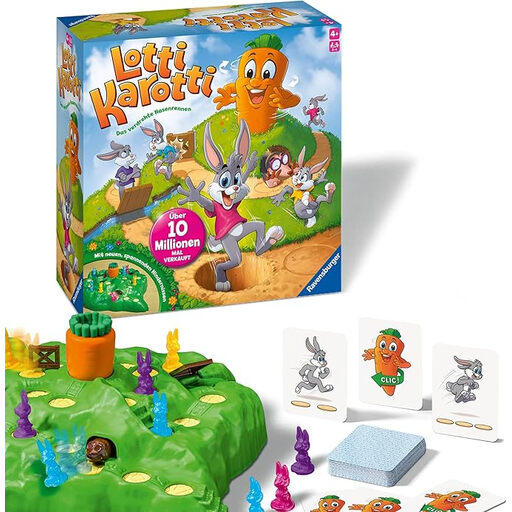
Why this product fits the profile: This race game is designed for children aged 4 and up and is suitable for 2 to 4 players. The stated playing time of around 20 minutes works well for short family sessions.
Simple draw rules and a straightforward process lower the barrier to entry. However, the warning about small parts should still be heeded.
For 2 to 4 players, ages 4+, no batteries required and a short playing time.

Why this product fits the profile: This cooperative strategy game is designed for exactly 2 players aged 10 and up. Different airport scenarios provide varied challenges within a clearly defined game system.
The fixed two-player format prevents false expectations for a large family gathering. The game objective and role distribution are clearly defined.
Cooperative gameplay, 21 different scenarios according to the product description and compact packaging dimensions of 25.7 × 18.6 × 5.3 cm.
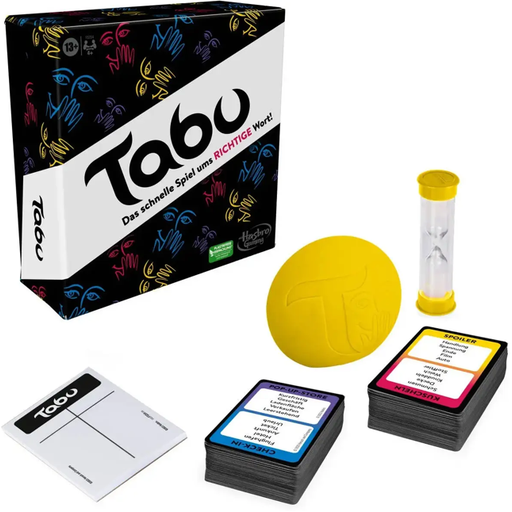
Why this product fits the profile: This party game is designed for at least four players aged 13 and up and includes 212 cards with 848 words, plus five game variants.
The number of players and age limit are clearly stated. If you're looking for a two-player game, don't plan on using this format as an all-purpose option.
German version, compact box plus sand timer, buzzer and score pad included according to product details.
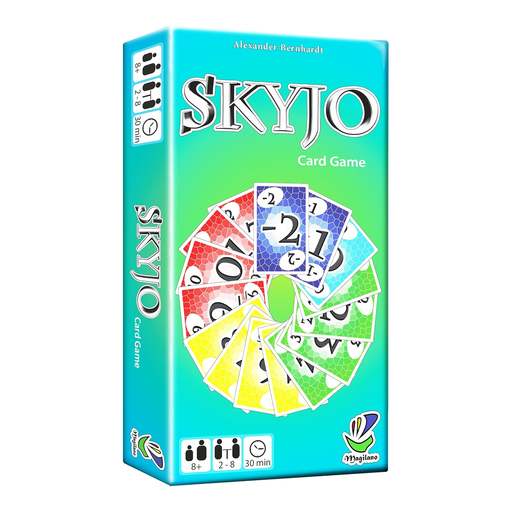
Why this product fits the profile: This card game can be played with 2 to 8 people aged 8 and up. This makes it suitable for couples, families and smaller groups of friends.
The variable number of players reduces the risk that the game will only work well with a specific group size.
150 cards, a score pad and compact packaging of 19.4 × 10.1 × 3.5 cm according to the product description.
We've put together a complete, regularly updated list of products that fully meet these strict selection criteria and the safety regulations in force in the EU.
For party games as gifts, age, group size and occasion are the most important factors to consider. For a child aged 4 and up, short family games with simple rules are ideal. For school-age children, card games, reaction games and introductory strategy games are good options. Adults often appreciate cooperative two-player games, party games or themed board games.
Before buying, it's worth a quick check:
Games with easy-to-understand rules, a moderate playing time and a flexible number of players are ideal. For younger children, games for ages 4+ are a good choice. For mixed groups of school-age children and adults, card games or simple strategy games for ages 8+ can work well.
The lifespan depends mainly on the materials, storage and how they're handled. Cards and game boards should be stored in a dry, clean place away from direct sunlight. A sorting solution helps prevent small pieces from getting lost. For frequently used games, sturdy cardboard components and well-made playing pieces are practical selection criteria.
For two players, cooperative games or tactical card games are a great choice. For four or more participants, party games, word games and fast reaction games work well. If you're expecting a changing group, look for a flexible number of players and a short explanation time.