
Lieferung heute & morgen

Qualitätsgarantie

Willkommens-Angebote freischalten: KOSTENLOSE Lieferung | Bis zu 80 % RABATT | Kostenlose 30-Tage-JoyPlus-Testphase
App herunterladen
Board games and social games suit a wide range of occasions: family evenings, gift ideas for children and adults, parties or entertainment while travelling. However, there is a huge choice available. Eye-catching packaging or a well-known brand name says little about whether a game is actually right for your group.
Poor purchases are usually caused by three main factors:
For children's games, family games and educational games, the recommended age should match the child's stage of development. For example, a game for ages 6 and up may require concentration, logical thinking or fine motor skills. Games containing small parts, balls or magnets are generally unsuitable for children under 3 if the manufacturer issues a warning.
Strong magnets require particular attention. With magnetic building sets or magnetic games, damaged parts must be removed immediately. Swallowed magnets can cause serious injuries. Even with classic board games such as chess, strategy games or card games, you should check the packaging for warnings and care instructions.
The number shown on the packaging is an important parameter, but it is not enough on its own. For games for 2 people, for example, cooperative games involving shared decision-making or tactical duels may be suitable. With party games, on the other hand, it is important to consider whether everyone is genuinely involved at the same time.
You should also pay attention to the mechanics:
A game may be a great fit in terms of content but still be impractical if your table is too small or you do not have suitable storage space. You should therefore check the product dimensions, weight and included components. Games made from paper and card should be stored in a dry place. Wooden games should not be treated with harsh cleaning products.
The language version is also relevant. For German-language family or party games, the cards, game board and instructions should be in German. For products with app or streaming connectivity, you should also check whether a compatible device and, if applicable, batteries are required.
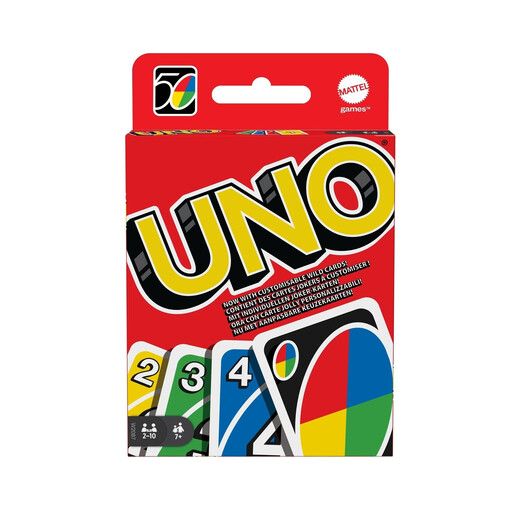
Why this product suits this profile: UNO offers an easy introduction for families, teenagers and occasional game nights. The stated player count ranges from 2 to 10 people, and the card game requires neither a game board nor batteries.
The rules are based on matching colours or numbers, making them easy to follow. The product details specify 112 cards and a minimum age of 7.
Compact format, 2–10 players and customisable wild cards.
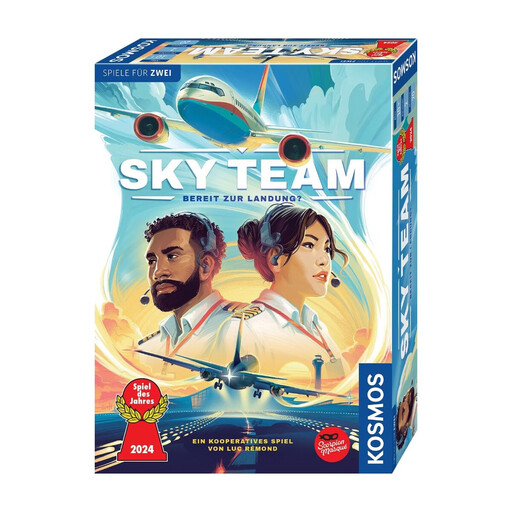
Why this product suits this profile: This cooperative game is designed for 2 people and combines secret dice placement with shared planning. It is suitable for couples or two teenagers aged 10 and over who are looking for a structured strategy game.
The target audience is clearly defined: 2 players aged 10 and over. 21 scenarios offer different challenges rather than just a single game.
Cooperative mechanics, 21 missions and a clear focus on two players.
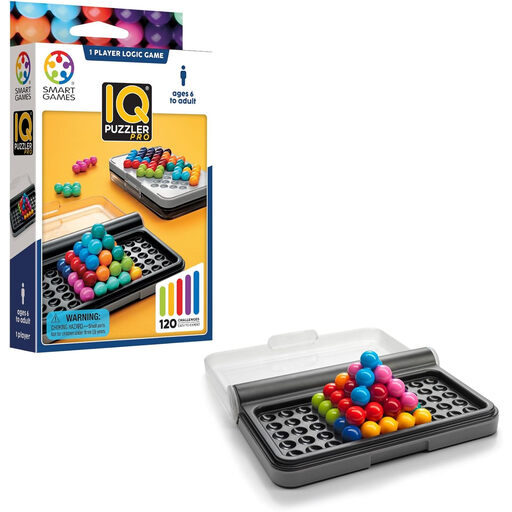
Why this product suits this profile: This solo game for ages 6 and over is designed for short periods of entertainment at home or on the go. Its compact format is ideal for travel, waiting times and children who enjoy playing independently.
The product description specifies 120 challenges in three game modes, including 2D and 3D challenges. This gives a more concrete indication of the scope than games making only general educational claims.
One player, 13 pieces, no batteries and a format of approximately 3,82 × 1,1 × 5,67 cm according to the product details.
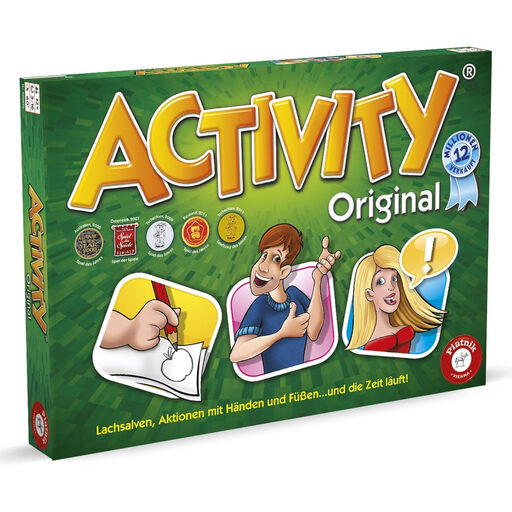
Why this product suits this profile: This game gives larger groups of friends the chance to draw, act and explain, for 3 to 16 people. The age recommendation of 12 and over clearly defines the target audience.
The maximum group size of 16 people and 2,640 terms provide clear points of reference. This makes it easier to plan a party game.
Large player group, three different types of challenge and German product version.
We have put together a complete, regularly updated list of products that fully meet these strict selection criteria and the safety regulations applicable in the EU.
Family games for ages 6 or 8 and over, with clear rules and a limited playing time, are often suitable. For younger children, parents should also look for large, easy-to-grip pieces and clear safety information. Cooperative games can be a good choice when the focus is on making decisions together.
For two people, suitable options include cooperative games such as Sky Team, tactical thinking games, chess or compact strategy games. It is important that the game mechanics are specifically designed for two people, rather than simply accommodating a larger group.
Lifespan depends mainly on the materials, how often the game is used and how it is stored. Card and paper components should be kept dry, while plastic or wooden pieces should be checked regularly for cracks and damage. Keeping all the components together and storing the game appropriately will help keep it usable for years to come.