
Lieferung heute & morgen

Qualitätsgarantie

Willkommens-Angebote freischalten: KOSTENLOSE Lieferung | Bis zu 80 % RABATT | Kostenlose 30-Tage-JoyPlus-Testphase
App herunterladen
Board games bring families, groups of friends and children together around one table. However, the choice is vast: board games, card games, dice games, strategy games and party games differ considerably in terms of age range, number of players, playing time and space required. If you buy based only on the cover or a discount, you will often discover at your first game night that the game is not right for your group.
A game for two to four people is not automatically suitable for a family celebration. Conversely, a large party game for eight or more players can lose its appeal in a small group. Before buying, check the recommended number of players and consider how many people will regularly take part.
‘Ages 8 and up’ describes the manufacturer’s recommendation, but it does not say whether younger children will understand the rules without help. With games featuring lots of cards, text or tactical decisions, the actual accessibility can vary considerably. For games for children, you should also consider small parts, reading ability and attention span.
A game with a stated duration of 30 minutes can take longer once you factor in explaining the rules, setting up and discussing moves. With escape-room games, it is also important to know whether the materials are altered or used up after one round. A one-off game may be perfect for a special evening, but it is less suitable if you want to play the same title regularly.
Pay attention to the manufacturer’s age recommendation. Small cards, dice, playing pieces or plastic parts may pose a choking hazard. Many board games are unsuitable for children under three because of these small parts. For children aged four to five, an adult can help explain the game and ensure that the rules are followed.
For example, Ravensburger 23160 is recommended for 2 to 6 players aged 4 and over. The product information also refers to small components and recommends direct adult supervision for younger children. The components should be stored in a dry place and cleaned only with a soft, dry cloth.
Match the game to the occasion:
Do not just measure the box; also take into account the playing area required. A game board with cards, dice and trays needs more room on a small kitchen table than a compact card game.
Complete information about materials, dimensions, battery requirements and storage is particularly useful. Paper and cardboard components should be stored in a dry place. Damaged small parts should no longer be given to young children.
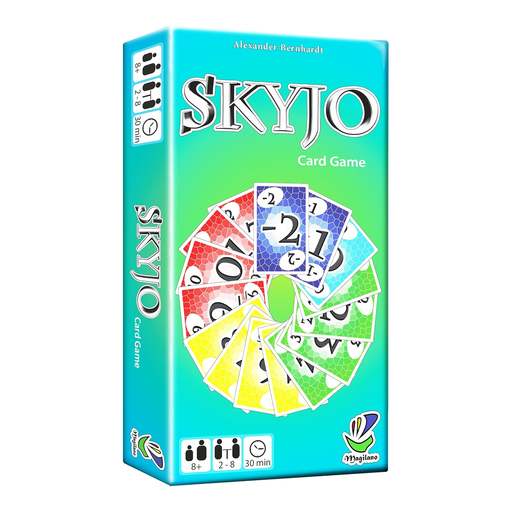
Why this product suits this profile: This card game is designed for 2 to 8 players aged 8 and over and requires no set-up. The compact box, measuring 19.4 × 10.1 × 3.5 cm, is ideal for spontaneous game nights and travel.
The clearly stated number of players and age recommendation help you avoid a group that is too small or a game that is too demanding. No batteries are required.
2–8 players, ages 8 and over, 150 cards, minimal preparation and multilingual instructions including German.
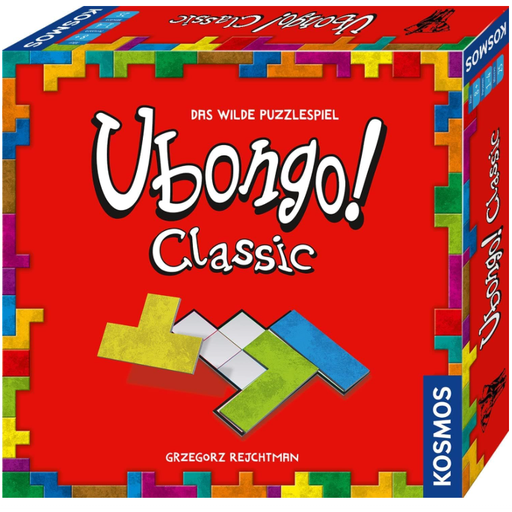
Why this product suits this profile: Ubongo combines a board game with simultaneous tile-placement challenges. It is designed for 1 to 4 players aged 8 and over and, according to the product information, offers 648 challenges across 54 boards and two difficulty levels.
The two difficulty levels make it easier to choose a suitable challenge for a mixed group. The game details clearly state the number of players, age range and number of challenges.
Solo and multiplayer modes, two difficulty levels and an optional companion app for explanations.
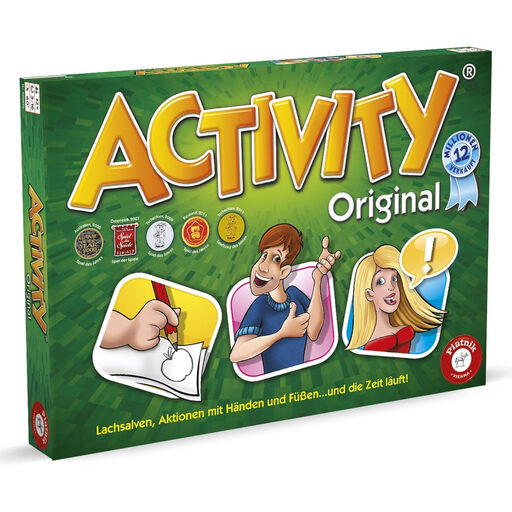
Why this product suits this profile: This party game offers larger groups challenges involving drawing, acting and explaining. According to the product information, 3 to 16 players aged 12 and over can take part, with 2,640 terms included.
The high player count is clearly stated, so you will not plan a small-group game for a party. The minimum age of 12 should still be observed.
Three different types of challenge, up to 16 players and a wide choice of terms.
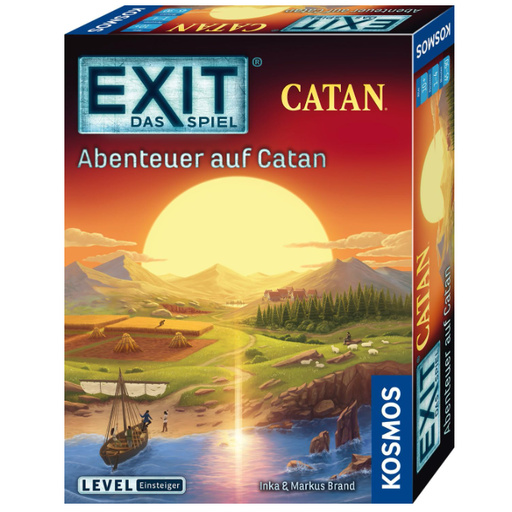
Why this product suits this profile: This escape-room game is designed for 1 to 4 players aged 10 and over and is rated as suitable for beginners. The group solves the challenges together, while the optional KOSMOS app provides a tutorial and timer.
The difficulty level is clear before purchase. If you want to play repeatedly, bear in mind that EXIT games are not designed for unlimited replayability, depending on the materials included.
Co-operative game for 1–4 players, beginner level and use with or without the app.
We have put together a complete, regularly updated list of products that fully meet these strict selection criteria and the safety regulations applicable in the EU.
For mixed groups, games with a short explanation, manageable rules and a clear age recommendation are a practical choice. For children aged 4 and over, simple dice or matching games may be suitable. From age 8, the choice expands to include card games, logic games and simple strategy games. Always check for small parts and supervise younger children as they get started.
There is no fixed number. It is useful to have one main game suited to the group size and a shorter card game as a back-up option. For six or more players, search specifically for games for multiple players or party games. For two players, duel, dice and card games are often more space-efficient.
Their lifespan depends on the materials, storage and how often they are used. Cards and game boards will stay in good condition for longer if they are kept dry, clean and complete in the original box. Check small parts before every game and replace damaged components. With escape-room games, you should also consider whether the concept is intended for one-time or repeated use when making your purchase.