
Lieferung heute & morgen

Qualitätsgarantie

Willkommens-Angebote freischalten: KOSTENLOSE Lieferung | Bis zu 80 % RABATT | Kostenlose 30-Tage-JoyPlus-Testphase
App herunterladen
Board games for children and families should enrich time spent together, but they are often bought based on eye-catching packaging or sweeping advertising claims. It is only at home that you find out whether a game really suits your family. Common poor purchases usually result from three typical pitfalls:
A considered choice based on age, game type, playing time and situation helps parents and grandparents find suitable family games, board games for children or card games.
The age recommendation on the packaging is a useful guide, but it does not replace looking at how the game is actually played. For children’s games for ages 3 and up, the rules, components and movements should be easy to understand. Small parts that could be swallowed are always a safety risk for children under three.
For children’s games for ages 6 and up, tasks can already involve several steps. Puzzles and logic games, simple strategy games or cooperative board games are often suitable for this age group, provided the rules can be explained clearly. For children aged 8 or 10 and over, more complex board games involving planning, competition or longer playing times may be suitable.
Also pay attention to:
A game for a family games night should suit the group size you normally have. A one-person puzzle is a good activity for travelling or quiet periods, but it does not replace a multiplayer game. For families whose line-up changes, games with a flexible number of players are often more practical.
Playing time is equally important. A round lasting 15 to 30 minutes is easier to fit into everyday life than a game that regularly takes more than an hour. When choosing board games as gifts, it is therefore worth considering whether the game is intended for short sessions, regular games nights or special occasions.
For board and card games, sturdy card, well-made plastic components and clear storage are practical considerations. Games with lots of small parts need a box that can be securely closed or sorting trays. Paper and cardboard components should be stored in a dry place.
Electronic indoor games for children may require additional batteries or a rechargeable battery. So check:
For products with a lithium battery, rotating parts or moving mechanisms, read the safety instructions before first use.
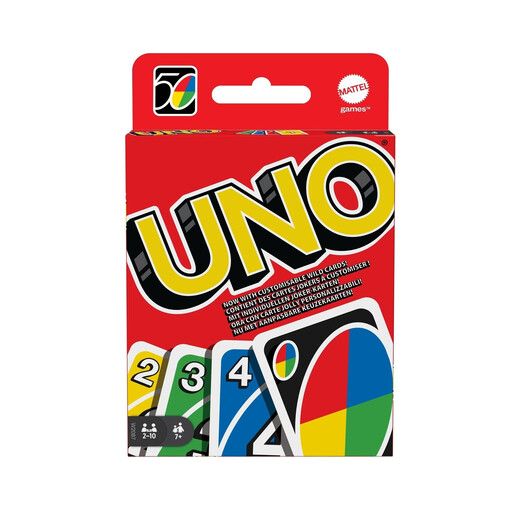
Why this product suits this profile: This card game is designed for 2 to 10 players and is recommended for ages 7 and up. The rules are based on matching colours and numbers, so they can be explained without lengthy set-up.
The flexible number of players means the game is not limited to a particular family size. No batteries are required.
112 cards, 2 to 10 players and customisable Wild Cards support a range of game sessions.
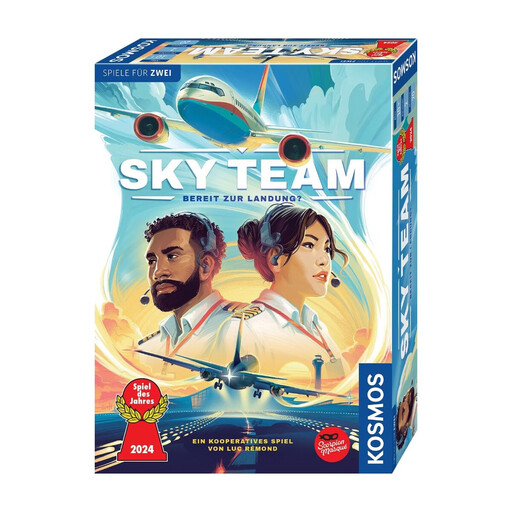
Why this product suits this profile: This cooperative board game is designed for exactly two players aged 10 and over. The pilot and co-pilot work together using dice placement across 21 airport scenarios.
The fixed number of players is clearly stated. If you are looking for a two-player game, you do not have to plan around an unsuitable group size.
21 scenarios, no batteries and a game mechanism focused on teamwork.
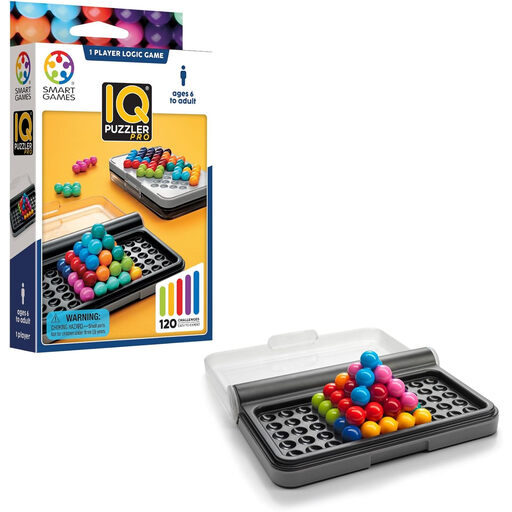
Why this product suits this profile: This compact solo game is designed for children aged 6 and over. It is ideal for travelling, waiting times or quiet play at home.
Its small format reduces the space required. The stated number of players—one—prevents false expectations of a family game.
120 challenges, three game modes with 2D and 3D puzzles, plus battery-free operation.
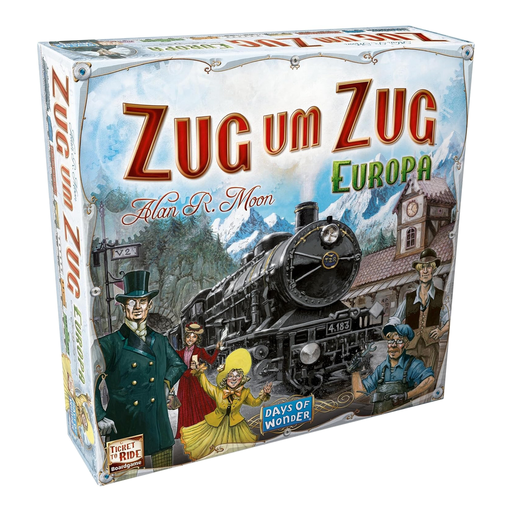
Why this product suits this profile: This German-language strategy game is designed for 2 to 5 players aged 8 and over. It combines simple basic rules with route planning.
The number of players, recommended age range and playing time of around 45 minutes are clearly stated, making planning easier.
2 to 5 players, 250 components and a game board featuring European railway routes.
We have put together a complete, regularly updated list of products that fully meet these strict selection criteria and the safety regulations applicable in the EU.
For children aged 3 and over, games with large, easy-to-grip components and short sequences are suitable. The Dreamora 32701 Tipper Toy is not a classic board game, for example, but it can appeal to younger children as an indoor or outdoor game. When products contain small parts and moving mechanisms, adult supervision is important.
For educational games for children, do not focus solely on terms such as “educational”. Specific tasks are more informative: recognising numbers, matching shapes, combining logically or controlling movement sequences. Before buying the Black and White Go Children's Educational Board Game, buyers should check the recommended age, contents and how it works in the product description.
Magic sets are also suitable gifts for children aged 6 and over. According to the product information, the MOFARI Pocket Magic Set includes twelve tricks, instructions and video tutorials. For older children aged 8 and over, dexterity games or remote-controlled vehicles are also worth considering. With products featuring a battery and moving wheels, charging instructions and supervision are particularly important.
Choose games with clear basic rules, a variable number of players and a short to medium playing time. Card games, simple cooperative board games and challenges with several difficulty levels can often be adapted to different age groups more easily than games with very complex rules.
Their lifespan depends mainly on the materials, storage and frequency of use. Cardboard and paper components should be stored in a dry place. Small parts should be returned to the box after every game. If there are visible cracks, sharp edges or damaged moving parts, the game should no longer be used.
A useful price comparison should consider more than just the purchase price. The number of players, replayability, number of components and any accessories required also matter. A game with several scenarios or challenges can be used more often, while a compact card game is usually easier to take along spontaneously. The key is to find a good match between age, gaming interests and the group size you normally have.