
Lieferung heute & morgen

Qualitätsgarantie

Willkommens-Angebote freischalten: KOSTENLOSE Lieferung | Bis zu 80 % RABATT | Kostenlose 30-Tage-JoyPlus-Testphase
App herunterladen
Board games for children and families should suit the child’s age, group size, and everyday routine. In practice, however, unclear age recommendations, limited storage options, or overly complex rules can quickly leave a game unused in the cupboard after just a few rounds. Parents, grandparents, and families should therefore look beyond familiar brands and eye-catching packaging and check the actual product specifications.
“Age 6+” usually describes more than a target age group. It also indicates the reading ability, attention span, and level of rule complexity required. A demanding strategy game may be unsuitable for a younger child, while a simple educational game can quickly lose its appeal for older children. Safety instructions and small-parts warnings must also be taken into account.
Many children’s games promote concentration, logic, or dexterity. More meaningful is the actual game mechanic involved: a puzzle, for example, trains shape matching; a card game supports number or colour recognition; and a strategy game involves planning several moves ahead. This makes it easier to set realistic expectations without relying on unsupported claims about educational impact.
A game designed for two players is not automatically suitable for a family evening with four or more participants. The stated playing time should also match the children’s attention span. Travel games and compact card games are practical for short breaks, while family games with a flexible player count are better suited to a shared evening.
For children’s games aged 3 and up, large, easy-to-grip pieces and simple gameplay are especially important. A 15- or 24-piece frame puzzle is one example. Small counters, marbles, or card holders, on the other hand, may pose a choking hazard. The manufacturer’s “age 6+” or “age 8+” recommendation should be considered alongside the child’s development and intended use.
Puzzles made from sturdy cardboard and games with a fully enclosed box are easier to store in a busy family home. For travel games, compact dimensions and pieces that can be secured in place are useful. Electronic games also require batteries and should be checked for battery type, volume, and cleaning requirements.
Younger children benefit from clear matching and placement activities. From age six, early strategy games, memory games, and simple deduction games become suitable options. German-speaking families should also check the language used in the instructions and on the cards. A game for 2 to 10 players offers greater flexibility for changing family groups than a dedicated solo game.
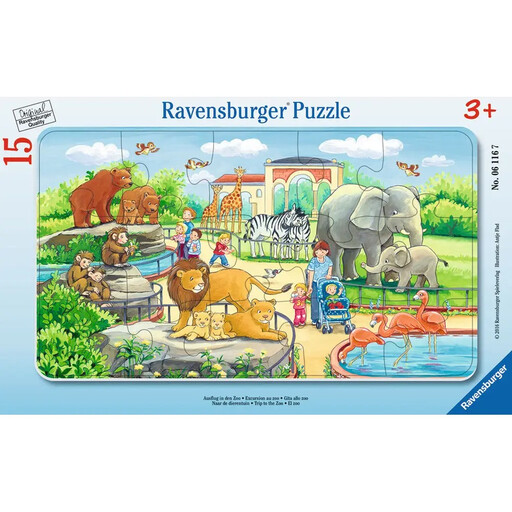
Why it suits this profile: This frame puzzle is designed for children aged 3 and up. With 15 pieces, it offers a manageable introduction to shared playtime at home.
The recommended age, piece count, and guided assembly with a base are clearly stated. The warning about small parts for children under 3 still needs to be observed.
15 pieces, a practical frame base, no batteries required, and a zoo-themed design.
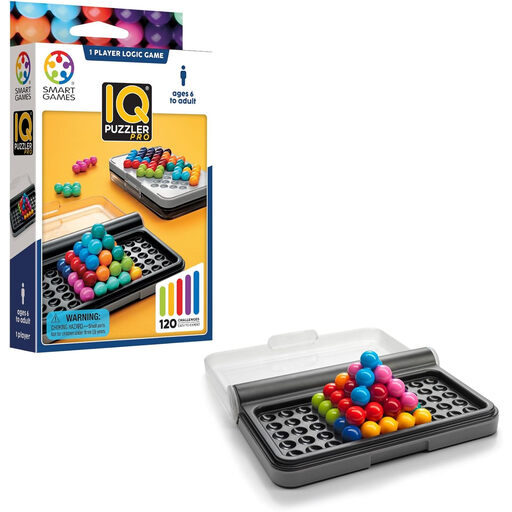
Why it suits this profile: Designed for children aged 6 and up who enjoy solving puzzles independently and want a compact travel game with multiple difficulty levels.
The product description specifies 120 challenges, three game modes, and single-player use. This makes the scope easier to assess before buying.
Compact dimensions, 120 challenges, 2D and 3D variations, and no batteries required.

Why it suits this profile: This cooperative strategy game is designed for exactly two players aged 10 and up, making it ideal for parent-child sessions or two siblings.
The target age, player count, and 21 airport scenarios are clearly specified. This makes it clear that it is not a spontaneous game for large groups.
Cooperative mode, 21 scenarios, dice placement, and an optional companion app.
We have put together an up-to-date selection of products that can be filtered by age group, game type, and practical safety information.
For children aged 3 and up, simple frame puzzles, matching games, and board games with only a few rules are suitable options. Large or easy-to-handle pieces, short playing times, and compliance with safety instructions are important. When games include small parts, adults should check the information on the packaging and supervise younger children.
An educational game may involve activities such as sorting, counting, memorising, or planning. That alone does not guarantee a particular learning outcome. What matters is whether the task suits the child’s age and whether they choose to play regularly and willingly. The product description should therefore identify specific game mechanics rather than make broad claims.
Travel games should have compact dimensions, few loose components, and a short setup time. Card games such as UNO or compact solo games such as IQ-Puzzler PRO are more likely to fit in a travel bag than large game boards. For car or train journeys, families should also check whether a stable playing surface is required.