
Lieferung heute & morgen

Qualitätsgarantie

Willkommens-Angebote freischalten: KOSTENLOSE Lieferung | Bis zu 80 % RABATT | Kostenlose 30-Tage-JoyPlus-Testphase
App herunterladen
The right board game can make family game night even more enjoyable. But there’s plenty of choice: family games, card games, dice games, cooperative games and strategic board games all differ in their recommended age, pace and level of challenge. If you buy based only on colourful pictures or well-known awards, you risk ending up with a game that sits unused on the shelf after just a few plays.
“Age 4+” doesn’t automatically mean that every child of that age will understand the rules on their own. Fine motor skills, language comprehension, attention span and the ability to wait their turn all matter too. For games with small parts, you should also follow the manufacturer’s safety advice. Products containing small parts that could be swallowed are not suitable for children under 3.
A game for 2 to 4 players won’t work for a group of six. Conversely, a game designed for larger groups may be less exciting with just two players. Before buying, consider whether you’ll usually play with two, three, four or more people.
Strategic board games can have short, easy-to-understand rules. Other titles need more time to set up, and it may take several games to get used to how they work. For younger children, clear choices, manageable rounds and visible goals are usually more accessible than lengthy rulebooks.
Use the recommended age range as your guide, rather than relying solely on the target audience in the advertising. For children’s games for ages 4 and up, simple racing, colour-matching or dexterity mechanics are often a better fit. Family games for ages 8 and up may introduce tactical decisions, hidden information or time pressure.
Also check:
According to the product information available, the products listed below don’t require batteries. You should still check the safety advice on the packaging and in the instructions.
For regular family game nights, games for 2 to 4 players are a flexible choice. For larger groups, look for titles that allow 5 or more players. Younger children often benefit from shorter games, while older children and adults may be happy to play for longer.
Don’t just check the maximum number of players; also see whether everyone takes their turn at the same time. Simultaneous play in dice or roll-and-write games can cut down on waiting.
Choose a game mechanic that suits the kind of experience you’re after:
Objective details such as box size, the number of cards or playing pieces, and the components included can help you compare materials and formats. If you’ll be playing often, make sure it’s easy to store the game so that small parts don’t get lost.
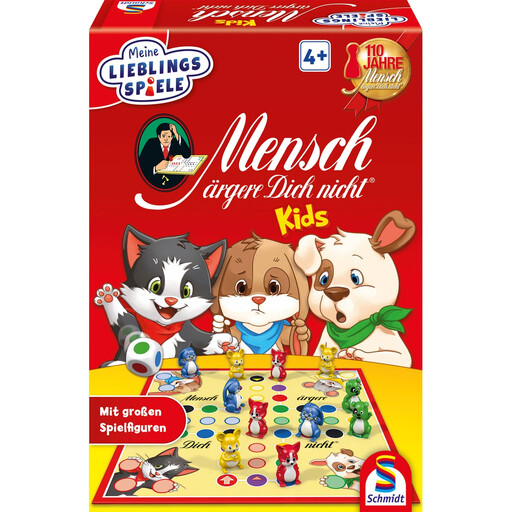
Why it suits this profile: Coloured dice take the place of counting spaces. This makes it easy for children aged 4 and over to get started, and it’s suitable for 2 to 4 players.
The simplified colour-based mechanics keep the rules manageable and avoid overwhelming players with too many special rules.
Coloured dice, animal figures, 2 to 4 players and a recommended age of 4+.
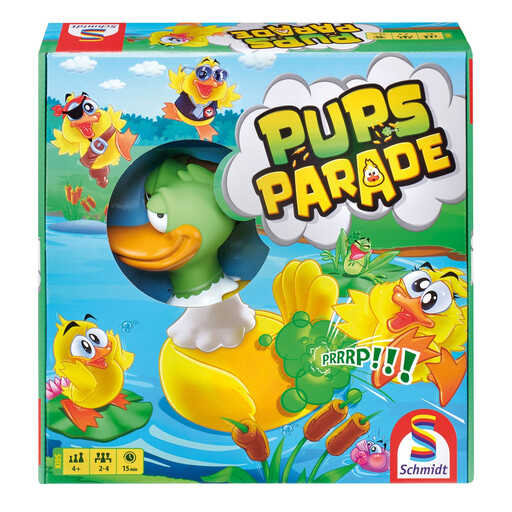
Why it suits this profile: This racing game is designed for children aged 4 and over, with a simple game for 2 to 4 players.
The clearly explained racing mechanics don’t need a lengthy introduction, making the game a good fit for short sessions.
Papa Duck mechanics, a sturdy game board, and space for 2 to 4 players.
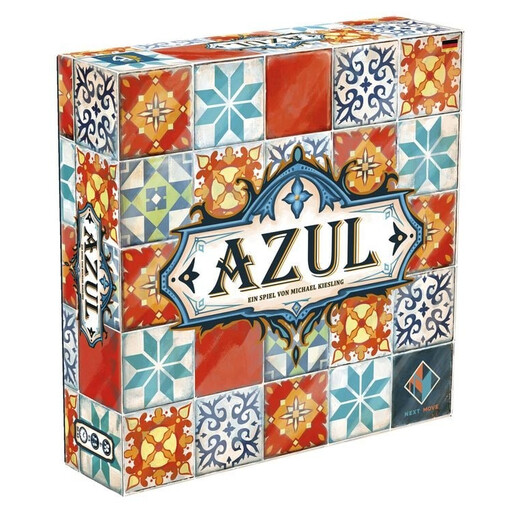
Why it suits this profile: Azul combines consistent core rules with tactical tile placement, and is suitable for 2 to 4 players aged 8 and over.
The product information clearly states the number of players, recommended age and playing time of around 30 to 45 minutes.
108 wooden tiles, the German edition and a clear focus on tactical placement.

Why it suits this profile: This cooperative game is specifically designed for 2 players aged 10 and over, combining dice placement with 21 airport scenarios.
Its clear focus on two players helps avoid the mistaken expectation that it will work for a large family group.
Cooperative gameplay, 21 scenarios and a recommended age of 10+.
We’ve put together a complete, regularly updated list of products that meet these strict selection criteria and fully comply with the safety regulations in force in the EU.
For children aged 4 and over, Paletti Spaghetti or Pupsparade may also be worth considering as simple dexterity or racing games. For ages 8 and up, Tippi Toppi, Qwirkle, HiLo and DOG offer different takes on card and family games. If you fancy a puzzle challenge too, Ubongo Classic is designed for 1 to 4 players aged 8 and over. According to the product information, DOG is designed for 2 to 6 players, making it a good choice for larger groups.
If you’re buying a gift, think about the child’s interests too. Themes such as animals, cooking, trains or spatial puzzles can help you narrow down the options. An award such as Spiel des Jahres can be a useful guide, but it’s no substitute for checking the age range, number of players, playing time and mechanics.
Look for games with short rules, a few simple choices and components that are easy to handle. Coloured dice, simple race tracks or dexterity challenges can make it easier to get started. If the game contains small parts, parents should follow the safety advice and make sure younger siblings don’t play unsupervised.
There’s no set number. A small selection with different mechanics is useful: a short children’s game, a quick card game, a strategic family game and, if you like, a cooperative game. That way, you can tailor game night to the ages of the players, the time available and the size of the group.
Price alone won’t tell you whether a game is right for your family. What matters is how often you expect to play it, the components, the number of players and how complex the rules are. A compact game with a short playing time may make it to the table more often than a larger game that takes a while to set up. Before buying, check the product details and think about what your family actually needs.