
Lieferung heute & morgen

Qualitätsgarantie

Willkommens-Angebote freischalten: KOSTENLOSE Lieferung | Bis zu 80 % RABATT | Kostenlose 30-Tage-JoyPlus-Testphase
App herunterladen
Board games for children and families should suit the players’ ages, group size and everyday routines. In practice, however, choosing the right game is often made harder by eye-catching themes, oversized packaging or sweeping educational claims. A game that appears suitable for the whole family on the box may be too complex for younger children, lack variety when played by two people or take too long for regular game nights.
As a Joybuy Product Recommendation Officer, I therefore filter the most important buying criteria and categorise specific products according to typical family situations. This makes it easier to decide whether a card game for children, a board game or a compact strategy game is right for your household.
“From 6 years” is a general age recommendation, but it does not automatically reflect every child’s reading ability, attention span or understanding of rules. When choosing games for children aged 6 and over, parents should therefore check:
A game with lots of special cards can be considerably more challenging for a six-year-old than a simple dice or matching game.
A game for two to eight people is not automatically equally enjoyable with every number of players. With larger groups, players may have to wait for their turn, while a game for two to four people may not be enough for a larger family. The stated playing time should also suit the situation: compact card games are ideal for a short game night, while strategic board games generally require a dedicated time slot.
Descriptions such as “educationally valuable”, “for the whole family” or “high replay value” should be assessed against verifiable details. Relevant information includes materials, the number of cards and playing pieces, battery requirements, the age rating, language version and dimensions, for example. For products with small parts, also pay attention to the warning about use by children under three years of age.
For board games for children aged around six and over, clearly structured rules and an easy-to-understand objective are helpful. With strategy games for children, the level of difficulty should suit the group. Games with several difficulty levels can be useful when younger and older children are playing together.
Co-operative educational games for children or family games can be a good alternative when making decisions together matters more than direct competition. However, the description should remain factual: a game may involve logical thinking, communication or number recognition, but it is not a substitute for educational support at school.
Card games should be stored in a dry place to prevent the cards from becoming warped. For board games, sturdy cardboard components and well-organised storage are practical features. Small plastic parts, tokens and playing pieces should be collected after every round and kept away from children under three years of age.
Games that use batteries or connect to an app involve additional considerations: are batteries included? Is a smartphone required? Does the game also work without the app? For a straightforward family game night, products that do not require batteries are often easier to prepare.
Anyone who regularly plays with several people should check that the player count is suitable. Games for 2 to 8 players are ideal for changing group sizes, while a two-player game can be chosen specifically for parent-and-child sessions or couples. For birthdays and Christmas, clear rules and an easy-to-see age recommendation are also important points of reference.
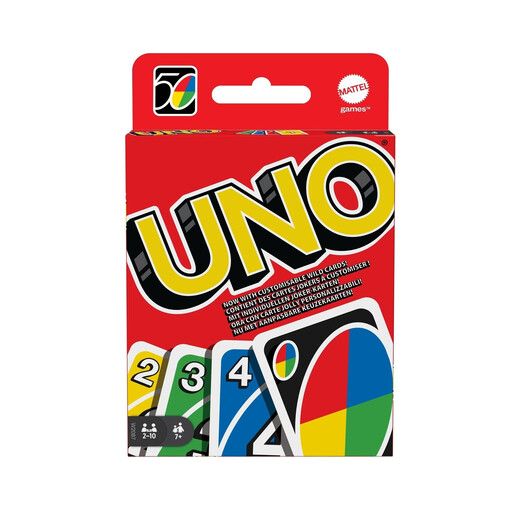
Why this product suits this profile: This card game is designed for 2 to 10 players, requires no batteries and can be started with just a few components.
The player count and recommended age of 7 and over are clearly stated. There is no reliance on an app or batteries.
112 cards, special cards for changing direction and a flexible group size of 2 to 10 players.
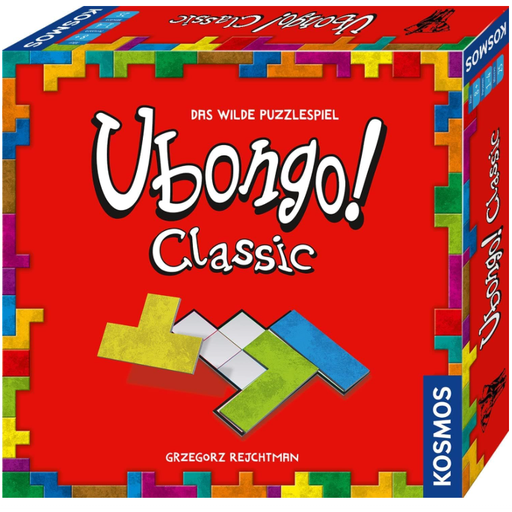
Why this product suits this profile: Two difficulty levels and 648 challenges offer different levels of challenge for children aged 8 and over and adults.
The number of challenges, age recommendation and player count of 1 to 4 are clearly stated. The app is optional.
Everyone plays at the same time, with geometric challenges, an hourglass and cardboard game components.
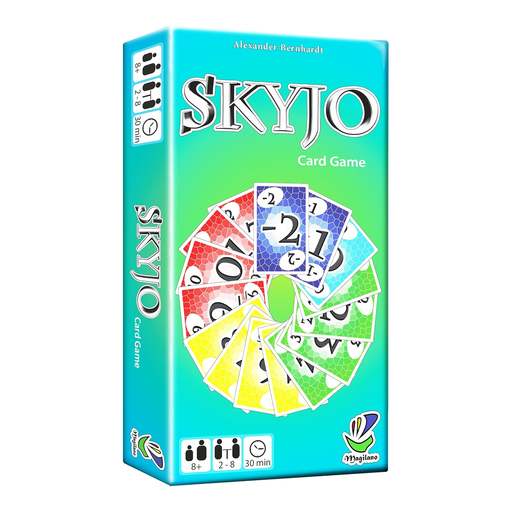
Why this product suits this profile: For regular games with 2 to 8 players, this card game combines quick set-up with varied decisions.
The player count, age recommendation of 8 and over and the fact that no batteries are needed are all stated. The rules are designed for multiple rounds.
150 cards, score pad, compact dimensions of 19,4 × 10,1 × 3,5 cm and multilingual instructions.

Why this product suits this profile: The junior version is designed for 2 to 4 players aged 6 and over and uses simplified trading rules.
The age limit, player count and required set-up are described transparently. Adults can support younger children with the rules.
Pirate theme, island building, trading and a clear objective involving seven hideouts.
We have put together a complete, regularly updated list of products that fully meet these strict selection criteria and the safety regulations applicable in the EU.
Games with manageable rules, a short explanation and a clearly recognisable objective are suitable. According to the product information, Catan Junior and Schmidt Spiele Hands Up! are intended for children aged 6 and over. Actual suitability also depends on concentration, language comprehension and previous gaming experience.
There is no fixed number. A practical collection includes a quick card game, a board game for several players and a game for short two-player rounds. This makes it easy to adapt the choice to the available time, group size and ages of the players.
Cards and game boards should be kept somewhere dry and clean, protected from direct sunlight. Small parts belong in closed compartments or clearly designated sections. Liquid cleaning products are generally unsuitable for cardboard and paper components; a dry, soft cloth is sufficient for cleaning the surfaces.