
Lieferung heute & morgen

Qualitätsgarantie

Willkommens-Angebote freischalten: KOSTENLOSE Lieferung | Bis zu 80 % RABATT | Kostenlose 30-Tage-JoyPlus-Testphase
App herunterladen
A body analysis scale is meant to do more than a classic digital bathroom scale: alongside weight, many models promise readings for body fat, BMI, muscle mass or water percentage. In practice, however, false expectations can quickly arise. Not every body fat scale suits every person, and additional measurements are only useful if the operation, placement and data analysis fit into your daily routine.
Figures like “24 body values” or “56 parameters” sound comprehensive. They are usually based on bioelectrical impedance analysis (BIA) . This involves passing a very weak electrical current through the body. The results depend on factors including body contact, skin moisture, time of day and previous fluid intake.
If you want to measure your body fat percentage, you should therefore pay particular attention to consistent measurement conditions. Individual readings are only of limited significance. For personal progress tracking, regular measurements under similar conditions can be useful, but they are no substitute for a medical examination.
A smart scale with Bluetooth usually only transfers data when your smartphone is within range and the app is open or active in the background. With some models, synchronisation happens automatically via Wi-Fi; with others, the connection must be made manually.
Before buying, users should check:
A glass platform can be easy to clean and unobtrusive, but it must not be used on a wet floor or a carpet. Uneven or soft surfaces can affect the display and increase the risk of slipping. The maximum weight capacity must also suit your needs. A bathroom scale up to 180 kg is sufficient for many households; some models support up to 200 kg.
A simple bathroom scale measures only body weight. That’s enough if daily weight monitoring is your main focus. A scale with body analysis adds values such as body fat percentage, BMI, body water, muscle and bone mass, depending on the model.
The key distinction is between display scope and practical use. If you don’t want to use an app, you may be better served by a scale with a clear display and direct measurement. For long-term tracking, Bluetooth, Wi-Fi or a compatible body analysis scale with an app are more relevant.
Pay attention to three technical specifications:
The scale should stand on a hard, dry and level floor. After moving it, a short initialisation may be required.
BIA functions are not suitable for everyone. If you have a pacemaker, defibrillator or other implanted electronic devices, the body analysis function should not be used. Restrictions also apply for pregnant women, babies and children, depending on the model. Read the instruction manual and, if in doubt, use only the weight function or consult a medical professional.
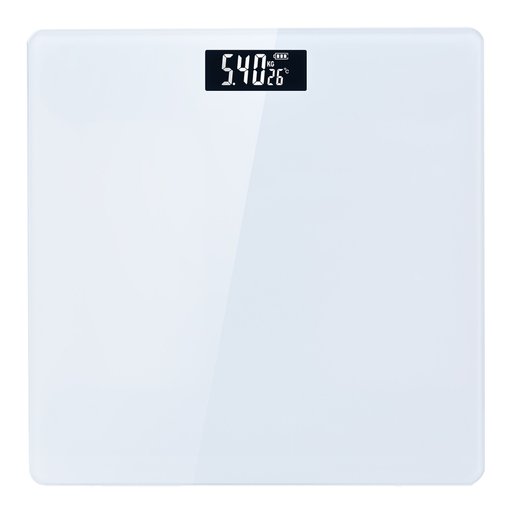
Why this product suits the profile: This digital bathroom scale focuses on daily weight monitoring and requires no app or installation. With a 180 kg weight capacity, it’s suitable for various household members.
It does away with unnecessary analysis functions and focuses on an LCD display, automatic switch-on and a stated graduation of 0.05 kg.
4 mm tempered glass, kg and lb display, and compact dimensions of 26 × 26 cm.
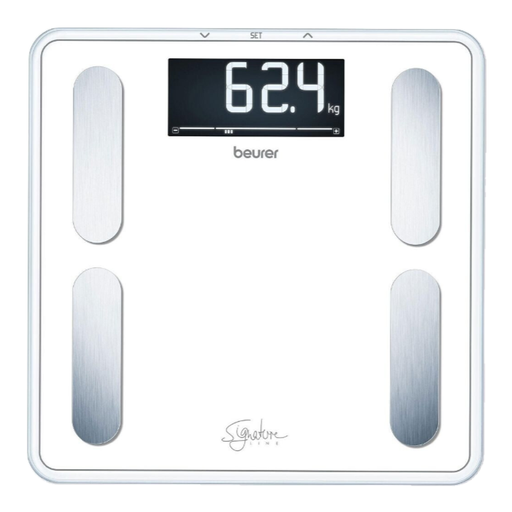
Why this product suits the profile: This model combines body fat measurement, BMI, body water, muscle and bone mass with ten user profiles and a backlit XL LCD display.
The user profiles separate household data, while automatic switch-on allows operation without extra app steps.
Stated maximum weight capacity of 200 kg, ten storage profiles and a platform made from safety glass.

Why this product suits the profile: This scale is aimed at users who want to document body values regularly via an app and therefore use a full-body measurement with an extendable handle.
Bluetooth transmission and VitaDock+ connectivity support progress storage, rather than limiting analysis to the display alone.
20+ stated body metrics, eight sensors, extendable handle and 180 kg maximum weight capacity.
We’ve put together a full, regularly updated list of products that fully meet these strict selection criteria and the safety regulations in force in the EU.
For meaningful progress tracking, you should use your body analysis scale in a consistent way:
A body fat scale usually uses BIA. A weak current is passed through electrodes; based on the electrical resistance, the device calculates body fat, water percentage or muscle mass, depending on the model. These readings are for guidance only and are not intended as a medical diagnosis.
The lifespan depends on battery care, surface, moisture and mechanical stress. A scale should not be dropped, overloaded or stored permanently in damp areas. If not used for a long time, removing the batteries can prevent leakage.
For battery-operated models, the main costs are for replacement batteries. Bluetooth itself uses very little energy during the short data transfer. Models with an app or Wi-Fi may additionally require regular app updates and account setup; therefore, check the manufacturer’s details before buying.