
Lieferung heute & morgen

Qualitätsgarantie

Willkommens-Angebote freischalten: KOSTENLOSE Lieferung | Bis zu 80 % RABATT | Kostenlose 30-Tage-JoyPlus-Testphase
App herunterladen
A modern body composition scale offers far more than just displaying your weight. It provides insights into key health metrics like body fat percentage, muscle mass, and water retention. However, the market is crowded, and many devices overpromise and underdeliver. Before you make a decision, it's essential to understand the most common pitfalls to avoid a poor investment.
This guide will help you cut through the noise and find a scale that delivers accurate data and truly fits your needs.
Many buyers are swayed by marketing promises that disappoint in practice. Pay close attention to these three points to avoid falling into the same trap:
To make an informed decision, focus on the technical fundamentals. These three criteria are crucial for the performance and longevity of a body fat scale.
Modern body composition scales use Bioelectrical Impedance Analysis (BIA). This method sends a very weak, imperceptible electrical current through the body. Because fat, muscle, and water conduct electricity differently, the scale can calculate your body's composition from the measured resistance. Two factors are critical for reliable results:
For households where multiple people want to track their metrics, smart user management is essential. Pay attention to the number of user profiles and whether the device offers automatic user recognition. This saves you from manually selecting a profile before each weigh-in. The maximum weight capacity is equally important. A scale supporting up to 200 kg not only provides security for heavier users but is also often an indicator of a more robust build and higher-quality materials.
The way data is displayed is a key aspect of usability. Some users prefer a large, easy-to-read XL LCD display directly on the scale, showing all key metrics instantly. Others prioritise seamless syncing with a smartphone app via Bluetooth to analyse long-term trends and view metrics like BMI (Body Mass Index) in context. A good BMI scale automatically calculates this value and logs it over time.
Instead of presenting an overwhelming list, we've selected models that meet specific user needs and avoid the pitfalls mentioned earlier.
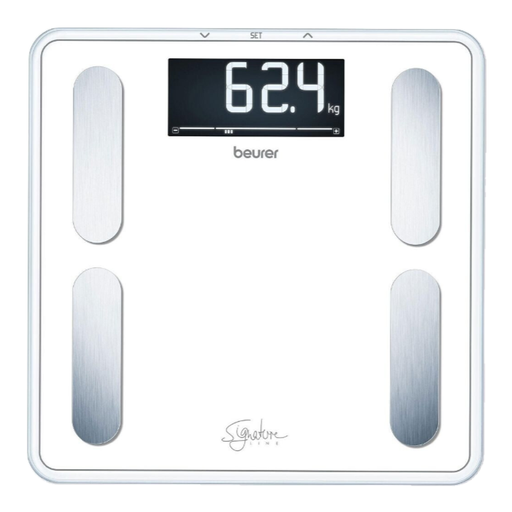
Why This Fits Their Persona: Ideal for families or shared living spaces needing a reliable and easy-to-use scale for daily use. Its high weight capacity and numerous user profiles make it highly versatile.
Solves the poor usability problem with 10 user profiles and simple operation. The automatic power-on function and large display make it straightforward for all family members to use.
High weight capacity of up to 200 kg and an illuminated XL display for excellent readability, even without using an app.
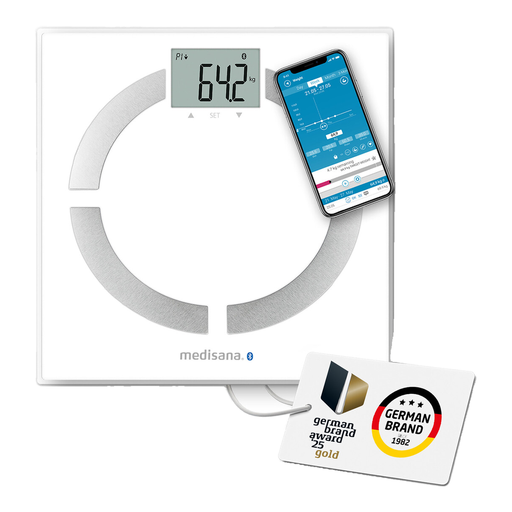
Why This Fits Their Persona: Perfect for users who want to track and analyse their health data in detail. The seamless Bluetooth connection to the VitaDock+ app allows for comprehensive long-term monitoring.
Avoids the useless app trap by connecting to the established VitaDock+ ecosystem. The app is regularly maintained and allows syncing with other health devices from the brand.
Automatic recognition for up to 8 users and measurement of additional metrics like bone mass and calorie requirements (BMR/AMR).
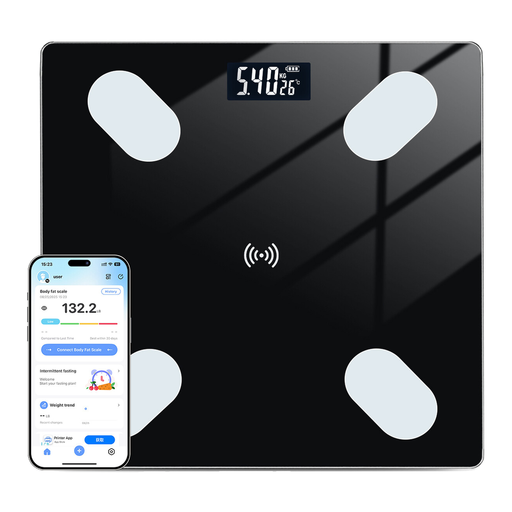
Why This Fits Their Persona: A solid choice for anyone looking to get started with body analysis without a large investment. It offers the essential smart features for tracking health goals.
Offers a clear feature set without unnecessary frills. The connection to the OKOK app focuses on displaying 13 essential health indicators and is available for both iOS and Android.
Supports multiple user profiles with automatic recognition and provides a comprehensive tracking experience at a very accessible price point.
We have compiled a complete, real-time list of products that fully satisfy these strict selection criteria and UK safety regulations.
The accuracy of home-use body composition scales is sufficient for tracking trends and relative changes. They cannot be compared to professional medical devices (like DEXA scans). For consistent results, it's crucial to take measurements under the same conditions every time: at the same time of day, on an empty stomach, and on a hard, flat surface.
Yes, to measure metrics like body fat, muscle mass, or water percentage, direct skin contact with the electrodes on the scale's surface is mandatory. This is the only way the weak electrical current for the Bioelectrical Impedance Analysis can pass through the body. With socks on, the scale can only determine your weight, functioning as a standard digital bathroom scale.
A body fat scale actively measures your body fat percentage using BIA technology. A BMI scale, on the other hand, doesn't necessarily need an analysis function. The BMI (Body Mass Index) is purely a calculated value derived from height and weight (kg/m?). Many body composition scales calculate BMI in addition to other metrics, but a simple digital scale can also be called a BMI scale if it displays this value after you input your height.