
Lieferung heute & morgen

Qualitätsgarantie

Willkommens-Angebote freischalten: KOSTENLOSE Lieferung | Bis zu 80 % RABATT | Kostenlose 30-Tage-JoyPlus-Testphase
App herunterladen
By: Joybuy Product Recommendation OfficerDate: August 28, 2026
A modern body composition scale promises much more than just displaying your weight. It offers insights into body fat, muscle mass, water percentage, and many other metrics. However, the market is flooded with models whose feature sets and marketing promises often create more confusion than clarity. Many users invest in a device, only to discover after a few months that it measures inaccurately, the app is unreliable, or the advertised metrics have no practical use.
Before you make a decision, it's important to understand the most common pitfalls that can lead to a bad purchase:
To avoid these problems, you should focus on the technical fundamentals that constitute a reliable and useful body analysis.
Instead of getting lost in a jungle of marketing terms, three core parameters can help you separate the wheat from the chaff and find a model that meets your needs.
The foundation of every body composition scale is BIA (Bioelectrical Impedance Analysis). This process sends a weak, imperceptible electrical impulse through the body. Since fat, muscle, and water have different levels of resistance, the scale can calculate body composition from the speed of the impulse. The number of electrodes is the decisive factor for accuracy:
The seamless transfer of data to an app for long-term analysis is a key feature of a smart scale. There are two common technologies here:
In addition to pure body composition, some models offer useful extra features. A scale with heart rate monitoring, for example, can record your resting heart rate, an important indicator of cardiovascular fitness. Equally important is a well-structured and privacy-focused scale with body fat measurement and app that provides clear visualisation of progress and can manage multiple user profiles.
Based on the criteria mentioned, we have identified a few models that represent a considered choice for different user profiles.
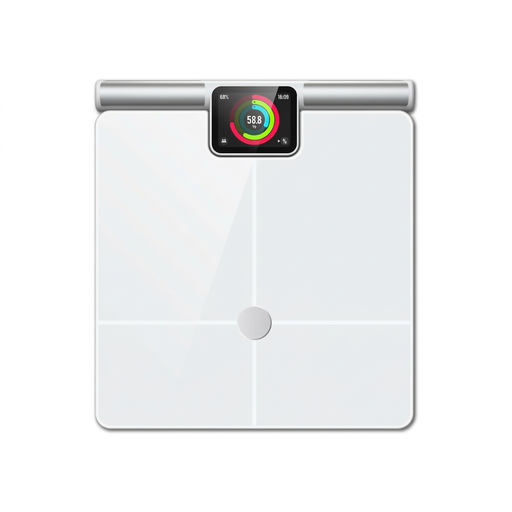
Why This Fits Their Persona: Ideal for athletes and data-driven users who need a detailed, segmental analysis of their arms, legs, and torso to precisely manage training and nutrition plans and identify muscular imbalances.
The 8-electrode technology bypasses the inaccuracy of simpler scales by measuring the upper and lower body separately. The dual-frequency BIA also provides more precise data than single-frequency systems.
Offers segmental body analysis and automatic data sync via Wi-Fi and Bluetooth. The TFT colour display shows key metrics directly on the scale.
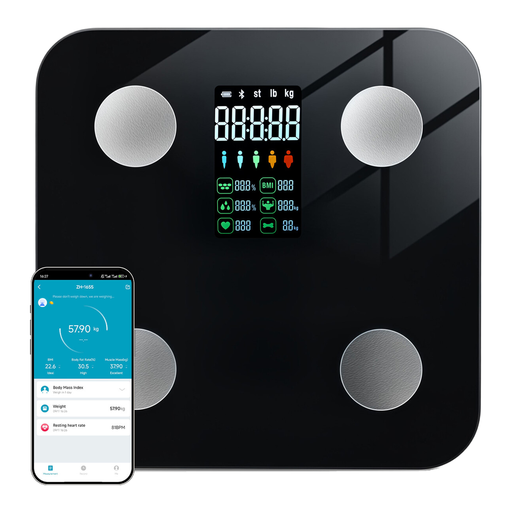
Why This Fits Their Persona: Suitable for health-conscious individuals and families who want a comprehensive overview of their body metrics, including heart rate, and value intuitive operation and an appealing display.
The bright colour LCD displays the most important metrics directly. This means you aren't reliant on the app for every measurement, avoiding the frustration of app-only dependency for quick checks.
Combines a 4-electrode BIA measurement with an integrated heart rate monitor. Syncing via Bluetooth with the app allows for easy progress tracking.
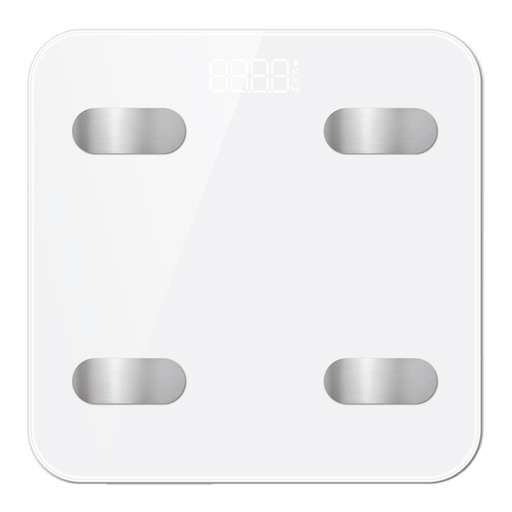
Why This Fits Their Persona: A straightforward and affordable solution for anyone taking their first step into the world of smart health monitoring and wanting to track basic trends in their body composition.
This model focuses on the essential functions. It avoids the cost of premium features like Wi-Fi or 8-electrode technology, which are not essential for beginners.
Provides a solid baseline body analysis with 24 metrics and reliable Bluetooth app connectivity. The large 30x30 cm platform ensures a stable footing.
We've compiled a complete, up-to-date list of products that fully meet these strict selection criteria and safety standards.
Body composition scales for home use that employ BIA technology are not intended to be medical diagnostic devices. Their accuracy can be influenced by factors such as hydration level, time of day, or your last meal. However, their strength lies in providing consistent measurements under the same conditions (e.g., always in the morning after waking up). This allows for reliable tracking of trends and changes in body composition over weeks and months, which is highly valuable for managing fitness and health goals.
The main difference lies in the measurement coverage. A 4-electrode scale measures resistance only in the lower body and estimates the values for the upper body. This can lead to inaccuracies if your body fat distribution is uneven or if you are specifically training your arm and torso muscles. An 8-electrode scale measures the arms, legs, and torso separately, providing a much more detailed and precise picture of your total body composition. For ambitious athletes, this is the more sensible choice.
A Wi-Fi scale is a convenience feature, not a necessity. If you prefer your data to be synchronised automatically after each measurement without any action on your part, then Wi-Fi is ideal. If you don't mind opening the app on your smartphone and being near the scale to sync, a model with only Bluetooth functionality is perfectly adequate and often more budget-friendly.