
Lieferung heute & morgen

Qualitätsgarantie

Willkommens-Angebote freischalten: KOSTENLOSE Lieferung | Bis zu 80 % RABATT | Kostenlose 30-Tage-JoyPlus-Testphase
App herunterladen
A modern body composition scale promises to do much more than just display your weight. It's designed to provide insights into body fat, muscle mass, water percentage, and other health metrics. However, the market is filled with devices whose marketing promises often outweigh their actual performance. As your Joybuy Product Recommendation Officer, I'll help you identify the crucial features and make an informed choice that aligns with your goals.
Before you invest, you should be aware of the typical traps that can lead to disappointment and inaccurate data.
To avoid a bad purchase, focus on the following three technical aspects.
A high-quality body composition scale captures more than just weight and BMI. Look for a scale that provides a wide range of health-related data. This includes:
Accuracy is everything. A reliable scale uses four-electrode technology to ensure a comprehensive analysis. Pay attention to the specified measurement accuracy (graduation), which should ideally be 50 g or 100 g. This ensures that even small changes are reliably detected. Additionally, the scale should be designed for a wide range of users; a maximum capacity of 180 kg is a common and solid standard here.
The connection between the scale and your smartphone must work seamlessly. A body fat scale with Bluetooth should use a modern standard like Bluetooth 5.0 or higher to ensure fast and stable data transmission. Check if the app offers an intuitive interface, detailed progress charts, and the ability to set up multiple user profiles. This is particularly relevant for families or couples.
Here are some recommendations tailored to different needs and priorities.
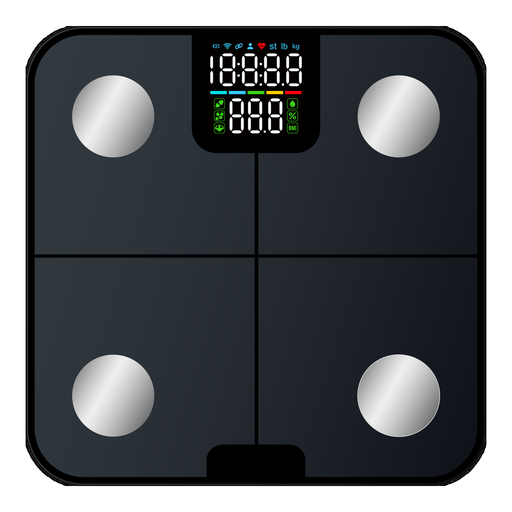
Why This Fits Their Persona: This user wants a deep understanding of their body composition. The scale provides 25 different metrics, including heart rate, and syncs them via a stable Bluetooth 5.4 connection to the app for detailed analysis and trend tracking.
It bypasses the "smart" fallacy by offering a true, comprehensive analysis using four-electrode technology, not just transferring weight. The large color display shows key data directly on the scale.
Comprehensive analysis of 25 body metrics, including heart rate. Stable and fast data transfer thanks to Bluetooth 5.4.

Why This Fits Their Persona: This user values an exact, reliable, and straightforward weight measurement. The minimalist design, high precision, and clearly readable display meet this need perfectly, without any superfluous features.
This model is intentionally positioned as a high-precision *digital bathroom scale*. It helps the user understand that they don't need an expensive analysis function for pure weight measurement, thus preventing a bad purchase.
Very high measurement accuracy with 0.05 kg increments. Instant weight reading thanks to "Step-On" technology and a bright, backlit LCD display.
We have compiled a complete, up-to-date list of products that fully meet these strict selection criteria and safety regulations.
A body composition scale operates using Bioelectrical Impedance Analysis (BIA). It sends a very weak, imperceptible electrical impulse through the body via electrodes on the soles of the feet. Because different types of tissue (fat, muscle, water) offer varying resistance to the current, the scale can calculate the proportions of your body composition from the measured resistance (impedance).
Scales for home use are not medical diagnostic devices, but they offer good accuracy for tracking trends and changes over time. For consistent results, it's important to always take measurements under the same conditions (e.g., in the morning after waking up, before breakfast). Factors like hydration status, meals, or intense exercise can temporarily affect the measurement results.
Your weight is usually also displayed on the scale's screen. However, to view, save, and track the detailed body composition metrics (like body fat, muscle mass, etc.) over time, using the companion smartphone app is essential. The app is the central tool for analysing your health data.